
Entry through the organiser
Entry details on the organiser’s site →
Maratona Clube de Portugal, a third party. We take no entries and have no part in the race.
 Marathon Trip
Your trips on every device: sign in, or make a free account when you save one.
Signed in on this browser.
Sign in My marathons Account and dataLocked out? An export link you keep still opens your list in any browser.
No account: email it to me
One email with this trip and a link to open it again. We do not keep the address and send nothing else.
Only a race from our list can be emailed. An account keeps this one.
What we keep, and what we do notCheck your inbox at to confirm it.
Browse the racesEach edition the day it comes out, and nothing else. Off again with one click. How it is kept.
A slow rise of 20 m to km 11, downhill to km 14, then flat home.
© OpenStreetMap contributors
km 0mile 0
The 2026 race starts at Carcavelos on the Marginal road, a few hundred metres from the Forte de Sao Juliao da Barra.
Photo: Adriao, CC BY 3.0
km 10.9mile 6.8
The sea cave and cliff west of Cascais where the coast road turns the runners back; the line passes 30 m from it at km 10.9.
Photo: Carlos SGP, CC0
km 13.4mile 8.3
km 34.6mile 21.5
The 16th-century tower on the Tagus shore, 240 m south of the line on Avenida da India at km 34.6.
km 35.5mile 22.1
The Monument to the Discoveries beside the river in Belem; the line passes it at km 35.5, 130 m away.
Photo: Jakub Hałun, CC BY 4.0
km 36.6mile 22.8
The Museum of Art, Architecture and Technology on the waterfront; the line passes at km 36.6, 100 m away.
Photo: Jakub Hałun, CC BY 4.0
km 38.1mile 23.7
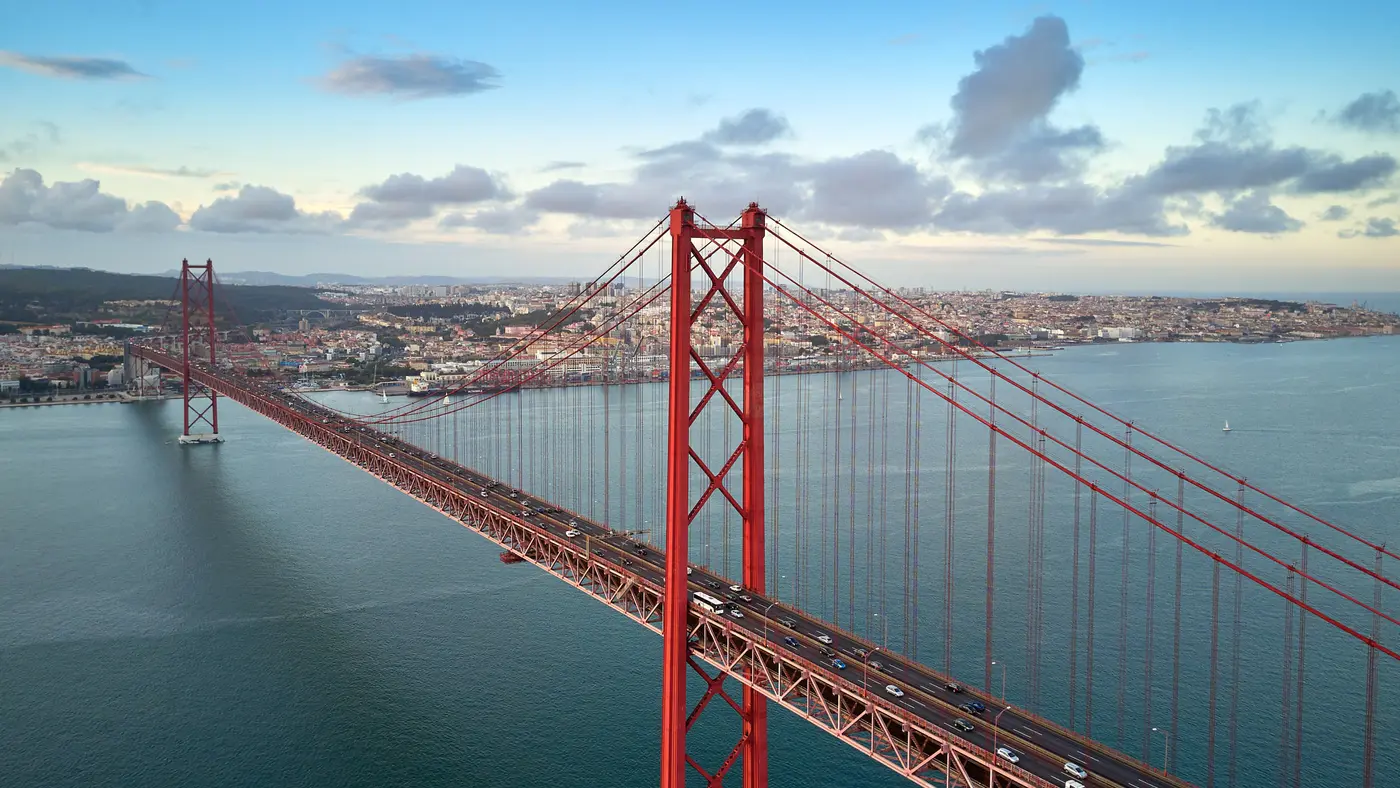
The suspension bridge over the Tagus; the line runs on Avenida da India beside its Alcantara approach at km 38.1.
Photo: Jakub Hałun, CC BY 4.0
km 42.2mile 26.2
The finish is on Praca do Comercio beside the Tagus, after the Rua Augusta arch.
Photo: Jakub Hałun, CC BY 4.0
Height drawn many times taller than life. Heights: GEDTM30.

Your 5 gels, at the orange marksFor a 4:00 finish, one every 40 minutes
Get them on AmazonAmazon partner link
Lisbon puts all its effort up front. Of the 81.1 m the course climbs, 30.7 m comes in the seven kilometres from km 5 to km 12, on the way out to Cascais, and the high point of the race, 33.2 m, is at about km 11.2. From there it is a long run east along the coast and the Tagus to the centre of Lisbon, and from km 30 to the finish the road never leaves the band between 3.3 m and 6.2 m. A runner who stays patient on the gentle climb out west has twelve flat kilometres by the river to finish on.
The marathon is point to point, from Carcavelos to Praça do Comércio, on a course the organiser calls 100% beside the sea and the river. It goes west first, turns at the cliffs past Cascais, and then runs back east past the start and on into the city. The kilometres and heights below are measured along the 2026 course, on a 30 m terrain model smoothed over 1 km. The organiser had not published a 2027 course at the end of October 2026, so check its site before you plan your pacing.
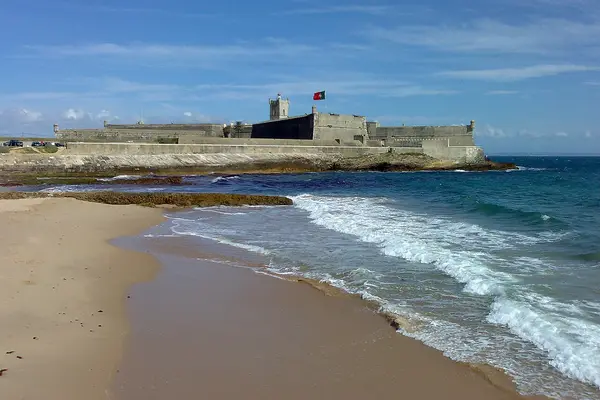
The start is on the N6-7, the coast road, in front of the Nova School of Business and Economics, a few hundred metres from the Forte de São Julião da Barra. It sits at 13.4 m. The road dips to about 7 m by km 2 and is back up to 16.6 m at about km 4.1.
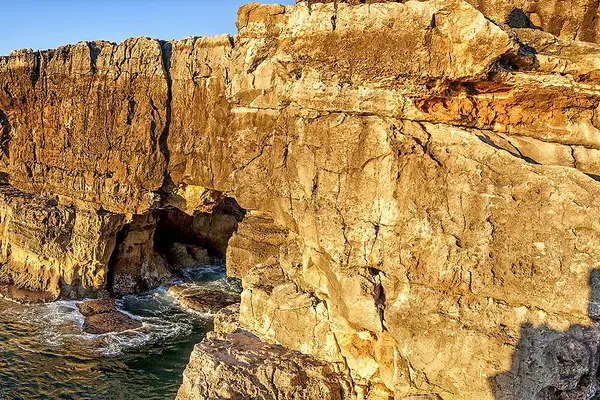
This is the only real climb of the race: 30.7 m over seven kilometres, under half a percent on average, to 33.2 m at about km 11.2. The course runs past Cascais to the Boca do Inferno, the sea cave and cliffs west of the town, at about km 10.9, and turns back at the western end of the course at about km 11.5. The organiser names the Boca do Inferno as a spectator spot.
The road gives the climb back quickly: past Cascais marina at about km 13.4, and down to 10.3 m by km 15. From there to the start area it rolls gently, between about 7 m and 14 m, along the coast. At about km 23 the course passes within a few hundred metres of the start line, and halfway, at about 8 m, has already gone by.
One small rise, to about 13 m near km 24, is the last climb worth the name. After km 25 only 16.6 m of climbing is left in the whole race, spread over 17 km. The course runs on past Paço de Arcos and reaches its lowest point, 2.6 m, at about km 29.1.
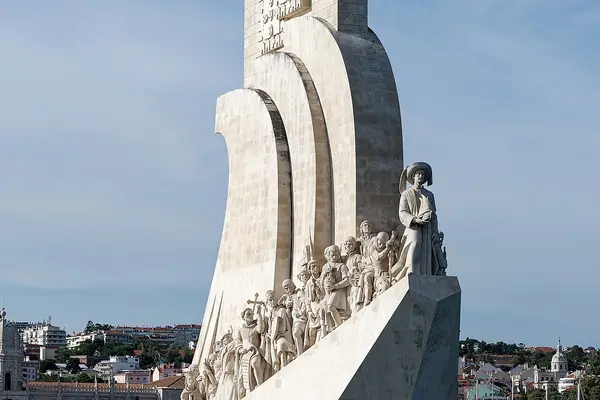
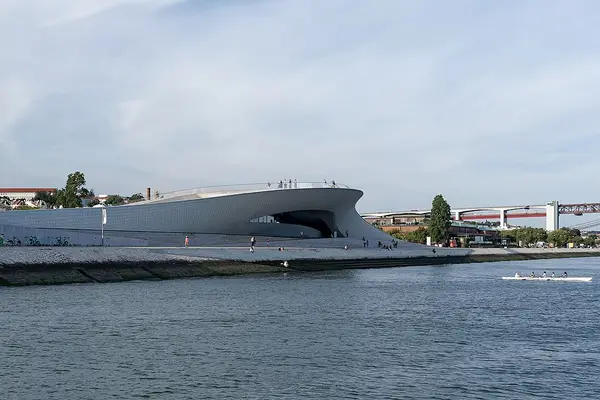
The last 12 km are as flat as a marathon gets, between 3.3 m and 6.2 m. The organiser’s spectator spots mark the way: the Vasco da Gama Aquarium at km 32, the Coaches Museum at km 36 and MAAT at km 36.5. In Belém the course passes the Torre de Belém, 240 m off the road at about km 34.6, and the Padrão dos Descobrimentos at about km 35.5. At about km 38.1 it runs along Avenida da India beside the approach to the Ponte 25 de Abril at Alcântara. It passes Cais do Sodré at about km 41, runs along Avenida da Ribeira das Naus, and finishes on Praça do Comércio, at 6.2 m, where the organiser puts a public grandstand at km 42.
A point-to-point route along the Atlantic coast from Carcavelos through Cascais and into Lisbon, finishing beside the river at Praça do Comércio.
The Lisbon Marathon is a point-to-point course of 42.2 km with 81.1 m of climbing. Its lowest point is 3 m and its highest 33 m above sea level.
The 2027 race-week details are not out yet. This is how race week ran in 2026, from the 2026 Runner’s Guide and the organiser’s FAQ and regulations. Check them again for 2027.
Bibs and kits were handed out at Pavilion 3 of FIL (Feira Internacional de Lisboa), on Rua do Bojador in Parque das Nações, on the Thursday and Friday before the race, from 10:00 to 20:00. No bibs or kits were given out on race day. The expo also opened on the Saturday, race day, but only for the Sunday races. So plan to be in Lisbon by 20:00 on the Friday at the latest.
Bring the registration document, the PDF sent by email; a phone screen is fine. If you have lost it, the Solutions desk at the expo will issue a copy, and someone else may collect your bib for you. The kit holds the bib, an official T-shirt, an official bag and the sponsors’ offers. Pick the T-shirt size with care, because it cannot be changed, and take the safety pins.
The start is about 1 km from Carcavelos station, on the Cascais line. In 2026 trains left Cais do Sodré at 05:30, 06:00 and then every 10 minutes to 07:10, taking about 30 minutes, and trains left Cascais at 05:30, 06:00, 06:30, 07:04 and 07:24, taking about 15. The 07:10 from Cais do Sodré was the last to reach the start in time. Take the train printed on your bib: the organiser says the trains have limited capacity and cannot carry all runners at once. The organiser also ran extra buses from Cais do Sodré to Carcavelos.
Trains were free for marathon runners on showing the bib, and the organiser’s race page made all public transport, trains, buses and the metro, free for runners from 05:30 to 17:00.
The field starts in six waves, a few minutes apart. In 2026 the elite and wave 1 went at 08:00, then 08:08, 08:15, 08:21, 08:27 and wave 6 at 08:35. Your wave is printed on your bib. Pacers run for 3:00, 3:15, 3:30, 3:45, 4:00, 4:15, 4:30, 4:45 and 5:00.
The bag drop is at the start: gear check trucks in the start area take the official bag, with the sticker that comes with your bib, and you collect it from the trucks in the finish area at Praça do Comércio. There is no shuttle back to the start after the race, and no showers at the finish.
The 2026 Runner’s Guide lists 12 aid stations with water, gels and isotonic drinks, four cooling stations with showers at km 21, 32, 38 and 40, 15 toilet areas and six music stages. The older FAQ describes aid every 5 km and cooling at other kilometres; the guide is the newer document. At the finish every runner gets a medal, water, a sports drink, a banana from Madeira, an ice cream and a protein milk. The finish area is for runners only.
Six hours, counted from the last wave’s start. In 2026 the regulations closed the finish at 14:30 and the FAQ said normal traffic returned from 14:35. There is a cut-off at km 30: 12:40 in the regulations and 13:00 in the FAQ, so plan on the earlier time. Runners still out after the close must move to the pavement or board the organiser’s bus.
In 2026 the marathon was on the Saturday. The EDP New Generation race started at 16:00 that day at Rossio dos Olivais, and on the Sunday a half marathon and an 8 km race started at 09:20 on the Vasco da Gama Bridge.
Entry through the organiser
Maratona Clube de Portugal, a third party. We take no entries and have no part in the race.
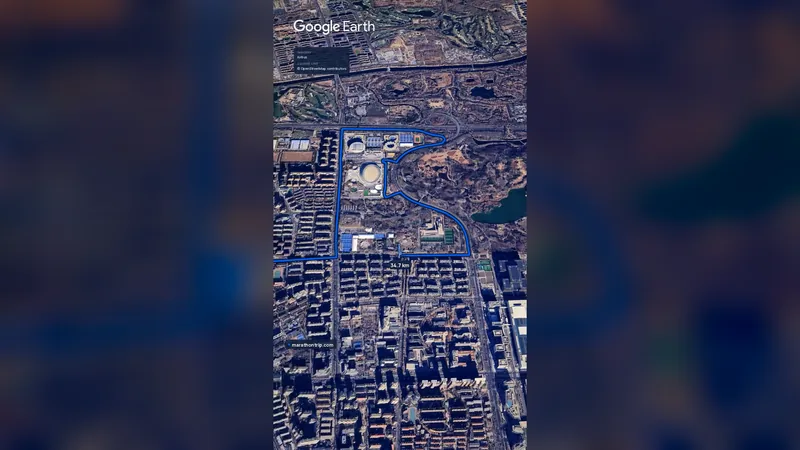 Imagery: Google Earth0:59 film
Beijing, China
Oct 202742.2 kmClimb 41 m
Climb summed after smoothing the heights over 1 km. The edge is this course's height profile on one scale for every race: 250 m above its lowest point fills it.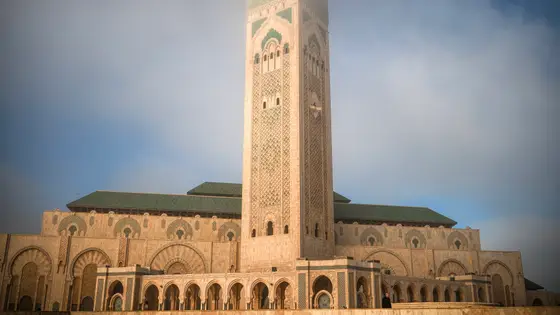
Casablanca, Morocco
Oct 202742.2 kmClimb 119 m
Climb summed after smoothing the heights over 1 km. The edge is this course's height profile on one scale for every race: 250 m above its lowest point fills it. Photo: Hassan II Mosque, by Tinuzzo, CC BY 4.0, via Wikimedia Commons.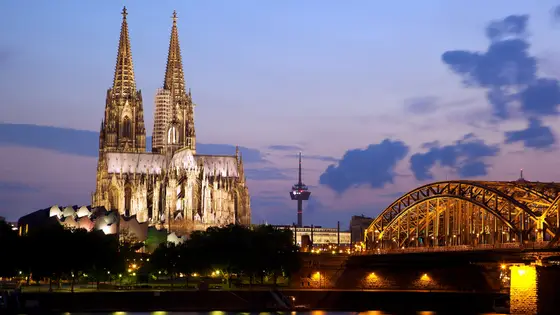
Cologne, Germany
Oct 202742.2 kmClimb 82 m
Climb summed after smoothing the heights over 1 km. The edge is this course's height profile on one scale for every race: 250 m above its lowest point fills it. Photo: Cologne Cathedral, by Jiuguang Wang, CC BY-SA 2.0, via Wikimedia Commons.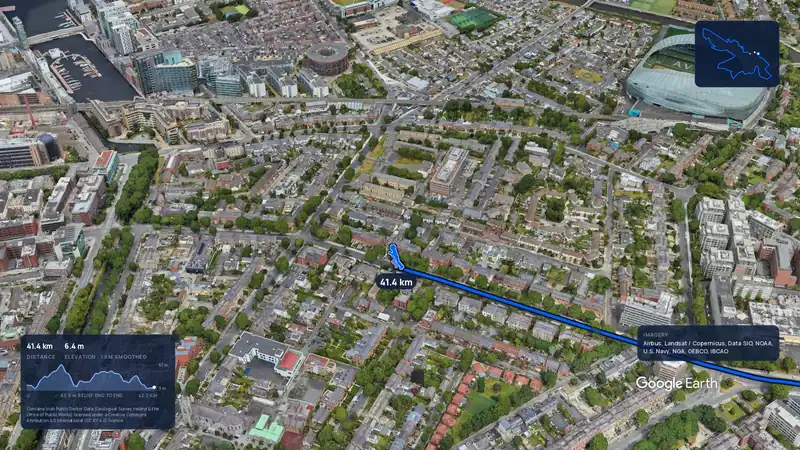 Imagery: Google Earth3:56 filmEntry closes 17 Nov
Dublin, Ireland
Sun 24 Oct 202742.2 kmClimb 142 m
Climb summed after smoothing the heights over 1 km. The edge is this course's height profile on one scale for every race: 250 m above its lowest point fills it.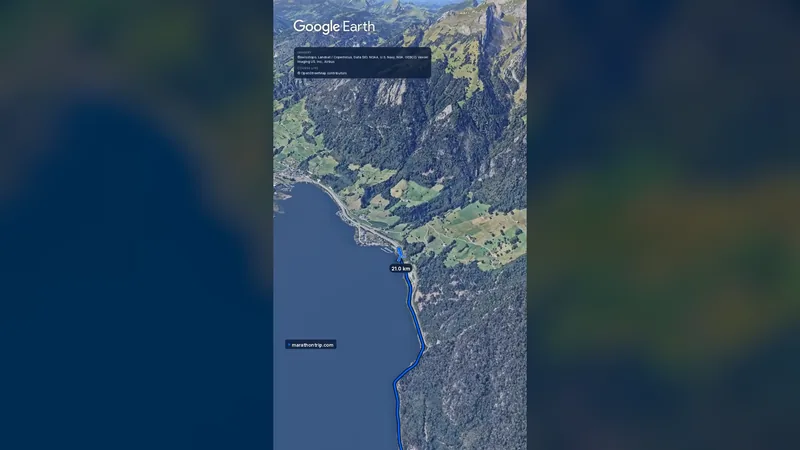 Imagery: Google Earth0:58 film
Lucerne, Switzerland
Sun 31 Oct 202742.2 kmClimb 105 m
Climb summed after smoothing the heights over 1 km. The edge is this course's height profile on one scale for every race: 250 m above its lowest point fills it.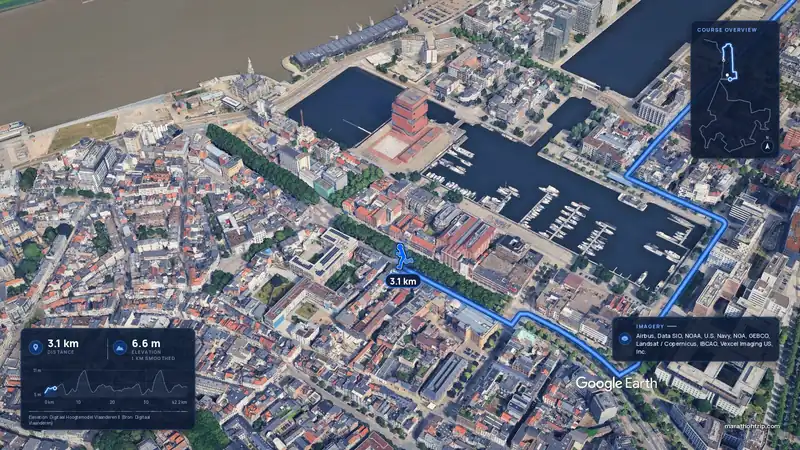 Imagery: Google Earth3:59 filmEntry open
Antwerp, Belgium
Sun 24 Oct 202742.2 kmClimb 22 m
Climb summed after smoothing the heights over 1 km. The edge is this course's height profile on one scale for every race: 250 m above its lowest point fills it.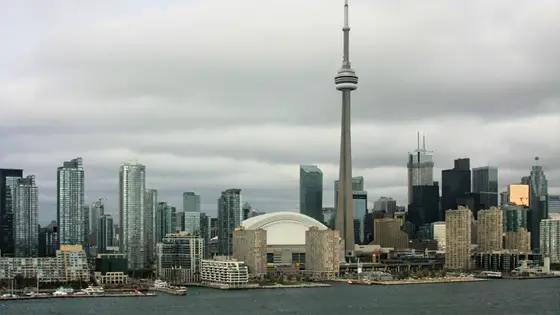
Toronto, Canada
Sun 17 Oct 202742.2 kmClimb 80 m
Climb summed after smoothing the heights over 1 km. The edge is this course's height profile on one scale for every race: 250 m above its lowest point fills it. Photo: CN Tower, by ImagePerson, CC BY 4.0, via Wikimedia Commons.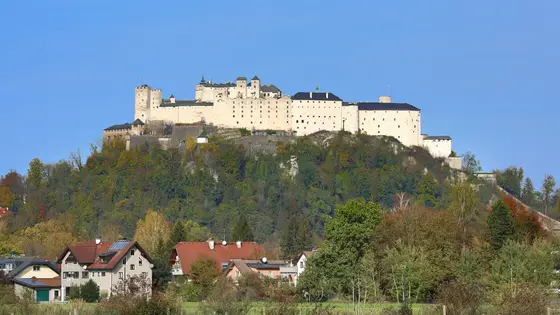
Salzburg, Austria
Sun 23 May 202742.2 kmClimb 79 m
Climb summed after smoothing the heights over 1 km. The edge is this course's height profile on one scale for every race: 250 m above its lowest point fills it. Photo: Hohensalzburg Fortress, by C.Stadler/Bwag, CC BY-SA 4.0, via Wikimedia Commons.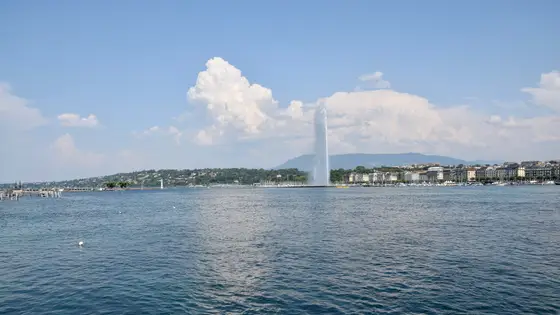
Geneva, Switzerland
Sun 9 May 202742.2 kmClimb 79 m
Climb summed after smoothing the heights over 1 km. The edge is this course's height profile on one scale for every race: 250 m above its lowest point fills it. Photo: Jet d'Eau, by Ank Kumar, CC BY-SA 4.0, via Wikimedia Commons.The organiser had not published the 2027 marathon date by 30 October 2026, though its site says entries for 2027 are open. The day has moved in recent years: Sunday 6 October in 2024, Saturday 25 October in 2025 and Saturday 10 October in 2026, when the start was at 08:00 in Carcavelos.
In 2026 it started on the N6-7 road in Carcavelos, near the Nova School of Business and Economics and about 1 km from Carcavelos station, some 20 km from central Lisbon. It finished on Praça do Comércio, beside the river in the centre of Lisbon.
By train to Carcavelos. In 2026 trains from Cais do Sodré took about 30 minutes and from Cascais about 15, the first leaving at 05:30. Runners take the train printed on their bib, because the trains cannot carry everyone at once, and after the 07:10 from Cais do Sodré no train reached the start in time. Trains, buses and the metro were free for runners with a bib from 05:30 to 17:00. The organiser also ran extra buses from Cais do Sodré.
In 2026 at Pavilion 3 of FIL, Rua do Bojador, Parque das Nações, on the Thursday and Friday before the race, 10:00 to 20:00, with the registration document (the PDF, a phone screen is fine). Someone else may collect it for you. No bibs or kits were handed out on race day.
Mostly. It climbs 81.1 m in all, and 30.7 m of that comes between km 5 and km 12, to the high point of 33.2 m at about km 11.2 near Cascais. After km 25 only 16.6 m of climbing is left, and from km 30 to the finish the road stays between 3.3 m and 6.2 m.
Six hours, counted from the last wave's start. In 2026 the regulations closed the finish at 14:30, and the FAQ said normal traffic returned from 14:35. There was also a cut-off at km 30: 12:40 in the regulations and 13:00 in the FAQ, so plan on the earlier time.
Andualem Belay Shiferaw ran 2:05:45 in 2022, breaking his own course record. The women's record is 2:24:13, by Sarah Chepchirchir in 2016.
Runners have 6 hours to finish.
These figures come from travel guides rather than the operators, so check them before you fly. Lisbon airport has its own metro station, Aeroporto, on the Red Line outside the Terminal 1 arrivals hall. The ride to the centre takes about 20 minutes by one guide and 25 to 35 minutes, with a change at Alameda, by another; a single metro ticket is EUR 1.90. A taxi to central Lisbon takes about 15 to 25 minutes and costs around EUR 10 to 20, with a surcharge at night. The dedicated Aerobus airport shuttle no longer runs.
Race morning is a train ride, so the choice is which end of the line to sleep at. Cais do Sodré is the Lisbon end: the trains to Carcavelos start there, it is on the course at about km 41, and Praça do Comércio, the finish and the bag collection, is a short walk along the river. The Baixa behind Praça do Comércio is the same walk from the finish. Cascais is the other end of the line, 15 minutes from Carcavelos, but you finish in Lisbon with no shuttle back, so it means a train home after the race. Bib collection is at Parque das Nações, in the east of the city and away from the course, so plan one trip there on the Thursday or Friday.
The 2026 race documents give no street-by-street closure list. The FAQ says normal road traffic returns from 14:35, six hours after the last wave. Public transport is the way around the city on race day, and in 2026 it was free for runners with a bib until 17:00.
The first Lisbon Marathon was run on 26 October 1986. Cidálio Caetano of Portugal won it in 2:16:49 and Maria Lousada in 3:20:26. The race is organised by Maratona Clube de Portugal, with the support of the city councils of Lisbon, Oeiras and Cascais, and carries a World Athletics Elite Label. Until 2024 the start was in Cascais; from 2025 it moved to Carcavelos, while the finish stayed on Praça do Comércio.
The field was small for years: 1,887 finished in 2021. In 2025 the organiser set a limit of 15,000 and entries reached about that number, which its president, Carlos Móia, called a first for a marathon in Portugal; the race had had about 7,000 entrants for years, and he credited a partnership with the London Marathon for the jump. The 2026 race kept the limit at 15,000.
The course is fast. In 2018 Limenih Getachew won in 2:07:34, 47 seconds under the record of the day. Andualem Belay Shiferaw holds the men’s record now: 2:05:45 in 2022, when he broke his own course record. The women’s record is 2:24:13, by Sarah Chepchirchir in 2016. In 2026 Martin Musau of Uganda won in 2:08:07, and Meskerem Mamo of Ethiopia won the women’s race in 2:28:04, in her first marathon.
Checked against these sources on .