Entry through the organiser
Entry details on the organiser’s site →
The organiser, a third party. We take no entries and have no part in the race.
 Marathon Trip
Your trips on every device: sign in, or make a free account when you save one.
Signed in on this browser.
Sign in My marathons Account and dataLocked out? An export link you keep still opens your list in any browser.
No account: email it to me
One email with this trip and a link to open it again. We do not keep the address and send nothing else.
Only a race from our list can be emailed. An account keeps this one.
What we keep, and what we do notCheck your inbox at to confirm it.
Browse the racesEach edition the day it comes out, and nothing else. Off again with one click. How it is kept.
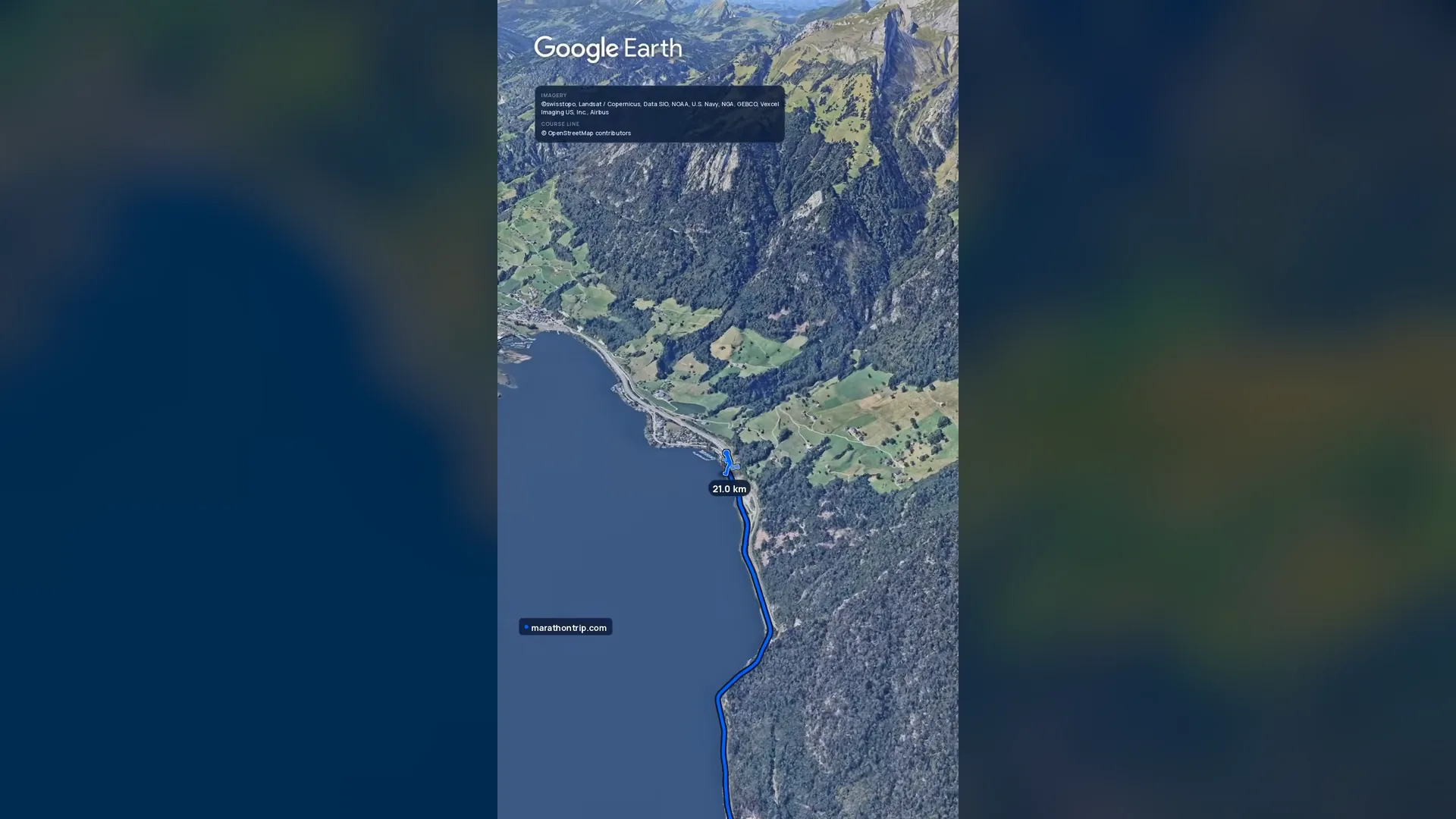
Imagery: Google Earth and its imagery providers
A climb of 24 m from km 3 to km 8, downhill to km 32, then downhill home from km 36.
© OpenStreetMap contributors
km 1.9mile 1.2
The organiser's route runs through the Culture and Congress Centre.
km 15.5mile 9.6
Hergiswil is a spectator zone on the way out along the lake.
km 32.8mile 20.4
Horw is an atmosphere zone, and the course goes round the Horw peninsula.
km 38.9mile 24.2
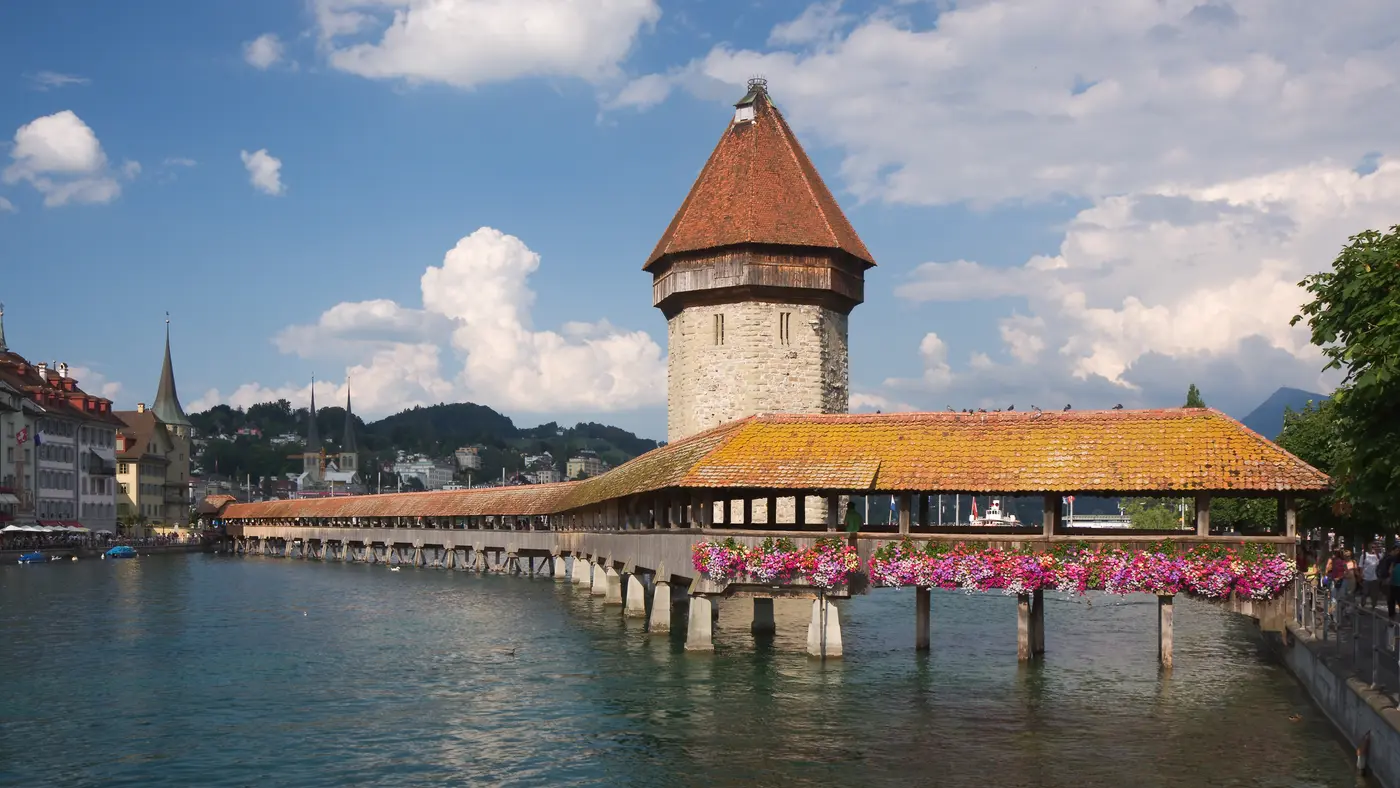
The organiser's route passes the Chapel Bridge in the heart of the city.
Photo: Chinalace, CC BY 3.0
km 42.1mile 26.1
The start and the finish line are at the Swiss Museum of Transport.
Height drawn many times taller than life. Heights: GEDTM30.
Dashed: bridge

Your 5 gels, at the orange marksFor a 4:00 finish, one every 40 minutes
Get them on AmazonAmazon partner link
Lucerne runs at lake level for most of its 42 km. The whole course stays between 434.2 m and 462.4 m above the sea, and from km 9 to km 33 the road never rises above 442.6 m. The work comes in two short pieces at either end: a climb of about 25 m to km 7.7 that drops straight back to the lake within a kilometre and a bit, and a rise of about 16 m between km 32 and km 35.7, when the legs have least to give. Run the first one easy and save something for the second.
Since 2025 the marathon has been a single lap: out from the Swiss Museum of Transport, through the city, south along the shore to a turn at Alpnachstad on Lake Alpnach, and back through the old town to the same finish, with a pass by the football stadium on the way. The heights and kilometres below are measured along the organiser’s single-lap course file, matched to OpenStreetMap, on a 30 m bare-earth elevation model smoothed over a kilometre, so they can sit a little off the organiser’s own markers. Check the organiser’s marathon page for any change to the route before race day.
The start is on Haldenstrasse, on the lake east of the centre, and the opening kilometres run along the shore into the city at about 437 to 441 m. At about km 1.9 the course goes through the Culture and Congress Centre, the KKL, beside the station.
This is the highest ground of the race. From about 437 m at km 3 the road climbs to 462.4 m at km 7.7, about 25 m over 4.7 km, which is a gentle gradient on fresh legs. The way down is steeper: the road falls back to 436.3 m by km 8.9, so about 26 m in 1.2 km. Early in a marathon that descent is the place to hold back rather than let gravity set the pace.
From here the course is flat for 24 km. It goes round the Horw peninsula along the lake and through the spectator zone at Hergiswil at about km 15.5. It then follows the shore of Lake Alpnach to the one turn of the race, at Alpnachstad, where the organiser places bell-ringers. On the measured line the far point of the lap comes at about km 22.
The return runs back along the lake past the lowest point of the course, 434.2 m at km 25.1, and comes into the atmosphere zone at Horw at about km 32.8. This is the long, level middle of the race: no turn and no climb.
The second rise starts after km 32 and tops out at 453.4 m at km 35.7, 16.5 m above the road at km 32. It is shorter and lower than the first, but it comes after 32 km.
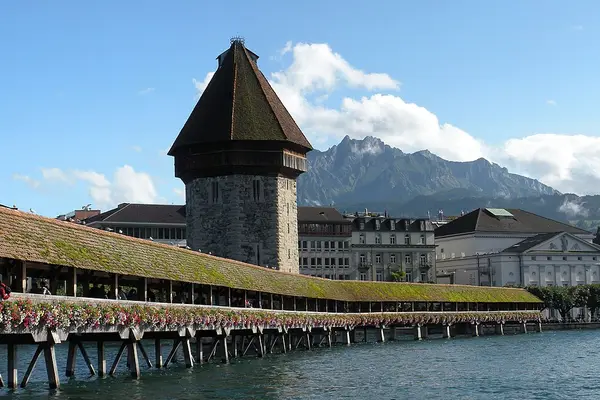
The last 5 km come back down to the lake. The course runs through the old town, past the Chapel Bridge and the Water Tower at about km 38.9, and back along the lakefront to the finish at the Swiss Museum of Transport, at 435.4 m.
A single lap from the Swiss Museum of Transport along Lake Lucerne to the turn at Alpnachstad, back through the old town to the same finish.
The Lucerne Marathon is a loop of 42.2 km with 105 m of climbing. Its lowest point is 435 m and its highest 461 m above sea level. Next race: Sunday 31 October 2027.
The Runner Expo for 2027 is on Schweizerhofquai, on the lakefront about five minutes from Lucerne station. It is open on Friday 29 October from 4pm to 8pm and on Saturday 30 October from 10am to 5pm, with free entry. You collect your race number and Runner shirt there on showing your starter guide, which is emailed to you before the race. One person can collect several numbers at once with copies of each runner’s starter guide.
There is no collection at the expo on Sunday. Runners who live abroad can collect on race morning at the Troubledesk with the starter guide and personal ID; in 2026 it was open from 7.30am to 11.30am in front of the Swiss Museum of Transport. Runners in Switzerland and Liechtenstein can instead have the number posted by A-Post from the Monday before the race. The timing chip is built into the number, and you cannot run on someone else’s number without a formal transfer.
The marathon starts from Haldenstrasse 28, and the organiser runs it in three stages: you get into the start only with your race number. The slots are staggered and lettered, A to U. On the organiser’s current start page the first slot goes at 8.25am for women under 3:30 and men under 3:00, and the others follow at 8.26, 8.29, 8.32, 8.34, 8.36 and 8.38am, grouped around the pacemaker times. Those times carry no year on the page, so check them against the 2027 starter guide.
About 60 pacemakers run the marathon, at 3:00, 3:15, 3:30, 3:40, 3:50, 4:00, 4:15, 4:30, 4:45 and 5:00. On the current slot list the 4:00 group goes at 8.32am and the 5:00 group at 8.38am.
There is no supervised bag drop. Cloakrooms with showers open from 6.30am to 4pm, women’s at the Würzenbach Sports Centre on Kreuzbuchstrasse and men’s in the Würzenbach school building on the same street, about 300 m from the start and finish. Only runners with a race number get in, and the rooms are not guarded. A guarded valuables depot takes phones, keys and wallets, but not clothes or bags. There are also coin lockers on Lidostrasse that take a CHF 2 coin.
The organiser promises sufficient and regular refreshments for all runners but does not publish where the stations are. The drinks and gels on the course are named on its nutrition page, and an Eichhof Runner Beer waits after the finish.
The limit is 6 hours 15 minutes, and the finish for the marathon closes at 3pm; runners who arrive after that are not classified. No intermediate cut-off points are listed. In 2026 the award ceremony for the overall winners was at noon in the finish arena.
Entry through the organiser
The organiser, a third party. We take no entries and have no part in the race.
Every participant travels free by public transport within Switzerland with the Swiss Runners Ticket, to Lucerne and back. The organiser’s journey page gives the window as up to three days before the race and up to two days after, though a tip on the same page says two days before, so read the conditions on your own ticket. The organiser lists Zurich Airport among the border stations where the free travel begins, so a runner flying in can use it from the airport. The organiser strongly recommends public transport and does not provide parking for private cars.
The start, the cloakrooms and the finish all sit on the lake east of the centre, around the Swiss Museum of Transport. The organiser’s journey page sets out three ways there from Lucerne station: on foot along the lakeshore, by train to the Verkehrshaus stop by the museum, or by the race-day boat shuttle. Check the shuttle times on that page for 2027.
The organiser’s own advice is to stay in the city, near the start and finish or near the station. The lakefront between the station and the Museum of Transport puts you on the course and within walking distance of the start; the old town and the streets by the station put you next to the expo and the course at both ends of the race. Horw, on its peninsula along the lake, is on the marathon course and is where the 10 km race starts.
No roads close before the race, on the Friday or the Saturday. On the Sunday numerous roads close in Lucerne, Horw, Hergiswil, Stansstad and Alpnach. The organiser has not published a street list for 2027.
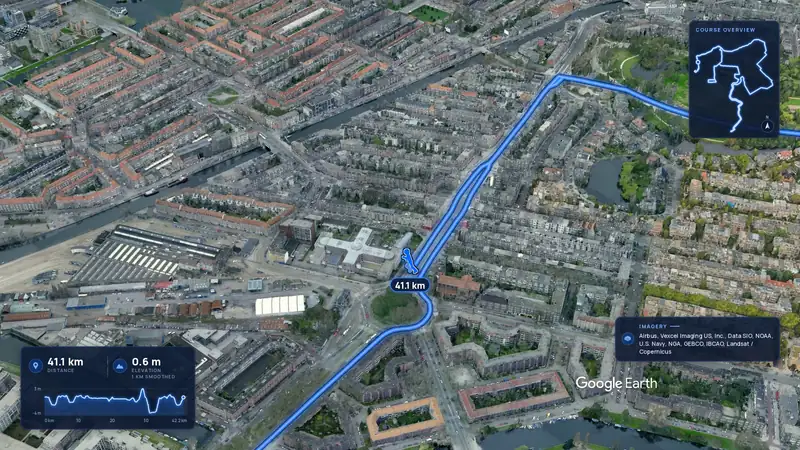 Imagery: Google Earth3:49 film
Amsterdam, Netherlands
Sun 31 Oct 202742.2 kmClimb 22 m
Climb summed after smoothing the heights over 1 km. The edge is this course's height profile on one scale for every race: 250 m above its lowest point fills it.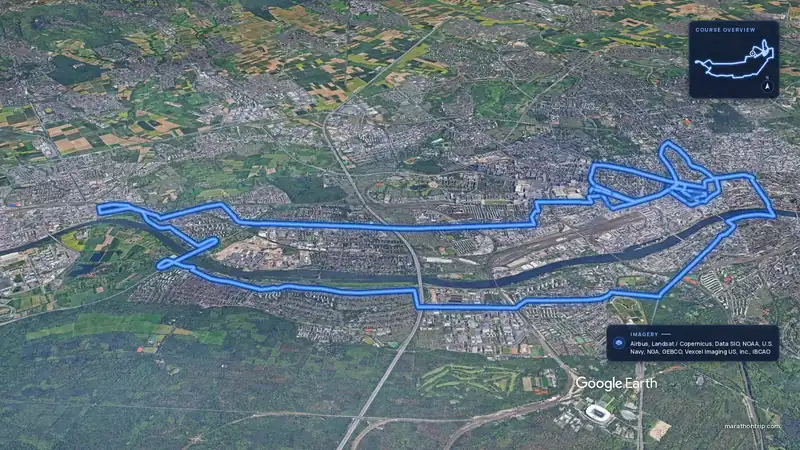 Imagery: Google Earth4:00 filmEntry open
Frankfurt, Germany
Sun 31 Oct 202742.2 kmClimb 44 m
Climb summed after smoothing the heights over 1 km. The edge is this course's height profile on one scale for every race: 250 m above its lowest point fills it.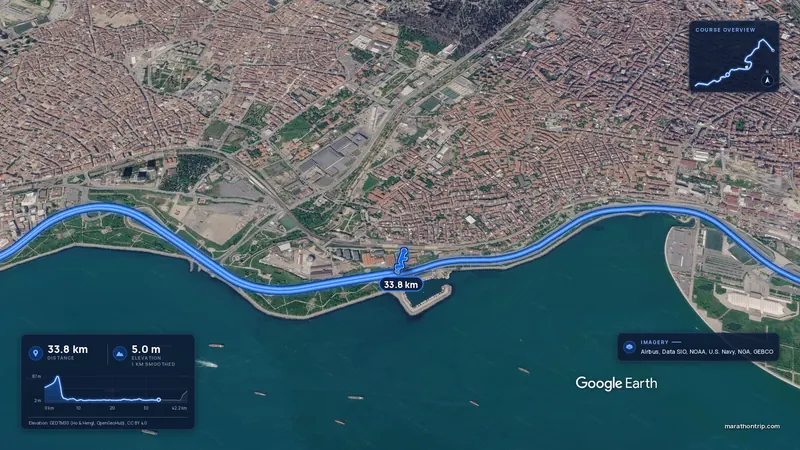 Imagery: Google Earth4:06 film
Istanbul, Turkey
Nov 202742.2 kmClimb 96 m
Climb summed after smoothing the heights over 1 km. The edge is this course's height profile on one scale for every race: 250 m above its lowest point fills it.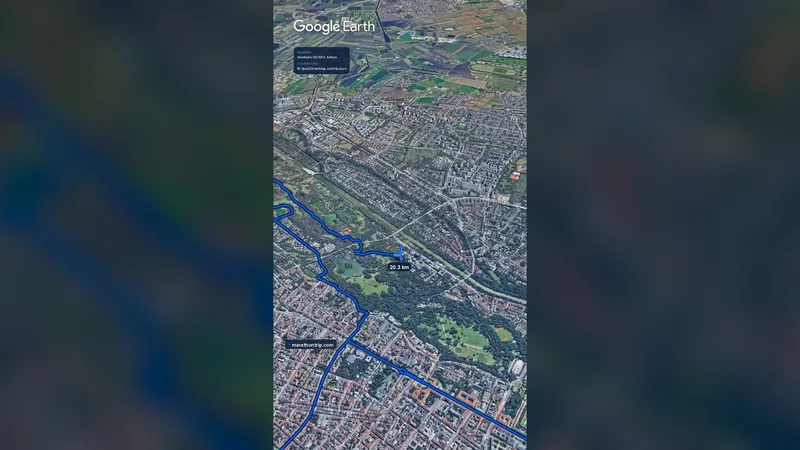 Imagery: Google Earth1:00 film
Munich, Germany
Oct 202742.2 kmClimb 59 m
Climb summed after smoothing the heights over 1 km. The edge is this course's height profile on one scale for every race: 250 m above its lowest point fills it.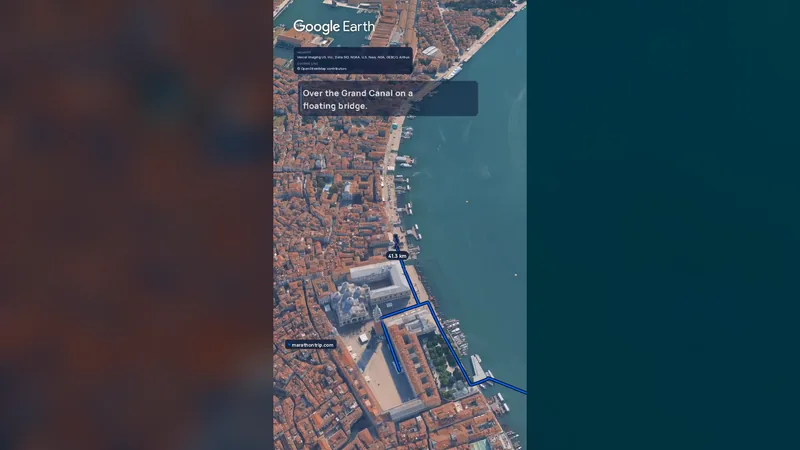 Imagery: Google Earth0:59 film
Venice, Italy
Sun 24 Oct 202742.2 kmClimb 25 m
Climb summed after smoothing the heights over 1 km. The edge is this course's height profile on one scale for every race: 250 m above its lowest point fills it.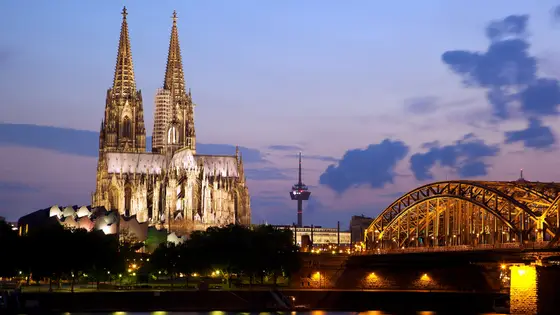
Cologne, Germany
Oct 202742.2 kmClimb 82 m
Climb summed after smoothing the heights over 1 km. The edge is this course's height profile on one scale for every race: 250 m above its lowest point fills it. Photo: Cologne Cathedral, by Jiuguang Wang, CC BY-SA 2.0, via Wikimedia Commons.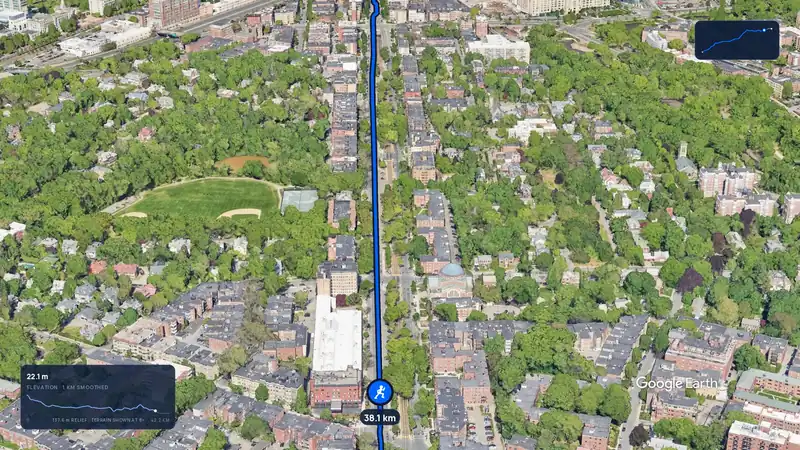 Imagery: Google Earth3:12 film
Boston, United States
Mon 19 Apr 202742.2 kmClimb 105 m
Climb summed after smoothing the heights over 1 km. The edge is this course's height profile on one scale for every race: 250 m above its lowest point fills it.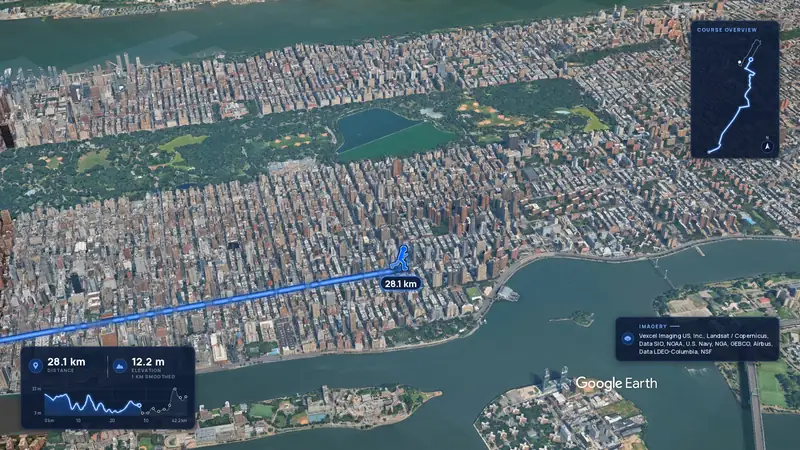 Imagery: Google Earth4:02 film
New York, United States
Nov 202742.2 kmClimb 104 m
Climb summed after smoothing the heights over 1 km. The edge is this course's height profile on one scale for every race: 250 m above its lowest point fills it.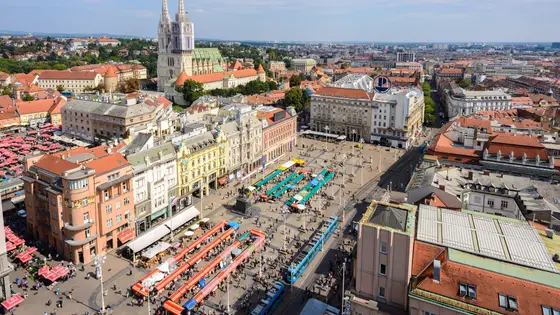
Zagreb, Croatia
Oct 202742.2 kmClimb 104 m
Climb summed after smoothing the heights over 1 km. The edge is this course's height profile on one scale for every race: 250 m above its lowest point fills it. Photo: Ban Jelačić Square, by Nick Savchenko from Kiev, Ukraine, CC BY-SA 2.0, via Wikimedia Commons.Sunday 31 October 2027, the 20th edition of the SwissCityMarathon Lucerne. The first start slot goes at 8.25am on Haldenstrasse, by the Swiss Museum of Transport, where the race also finishes.
Mostly. It runs at lake level, between 434.2 m and 462.4 m above the sea, with two rises: about 25 m up to km 7.7 and about 16 m up to km 35.7. Between km 9 and km 33 the road never goes above 442.6 m. The organiser gives the total climb as 175 m from its own measurement.
Six hours 15 minutes of running, and the finish for the marathon closes at 3pm. Runners who reach the finish after that are not classified. The organiser lists no intermediate cut-off points.
At the Runner Expo on Schweizerhofquai, about five minutes from Lucerne station, on Friday 29 October 2027 from 4pm to 8pm and Saturday 30 October 2027 from 10am to 5pm. Bring the starter guide that is emailed to you. Someone else may collect for you with a copy of it. There is no collection on Sunday, except for runners who live abroad.
Not a supervised one. Cloakrooms with showers open from 6.30am to 4pm at the Würzenbach sports centre and school, about 300 m from the start and finish, for runners with a race number. They are not guarded. Phones, keys and wallets can go in a guarded valuables depot, but clothes and bags cannot.
Yes, within Switzerland. Every participant gets the Swiss Runners Ticket, which covers the journey to Lucerne and back by public transport. The organiser offers no parking and strongly recommends public transport.
18 or over, according to the organiser's marathon page.
Runners have 6 h 15 min to finish.
3,159 runners finished in 2025.
Men: 2:24:24, Andrea Salvisberg, 2022. Women: 2:39:15, Martina Strähl, 2013.
Yes. A 3D flyover film of the whole course, start to finish (0:58), plays at the top of this page.
The race was first run in 2007, when it was still called the Lucerne Marathon. It has grown into a weekend of over 13,000 participants across all its distances, with around 4,000 marathon runners at the start each year, from over 90 nations. In 2025 its 14,000 entries sold out; almost 12,700 runners started that October and 12,550 finished, and 3,159 of them finished the marathon. The 2026 race doubled as the Swiss Marathon Championships, and 2027 is the 20th edition.
The biggest change came in 2025, the 18th edition, when the marathon was run as a single lap for the first time in the race’s history. The half marathon has its own pedigree: its records were set at the 2023 CISM world military championships, 1:01:29 by Mohamed Reda El Aaraby and 1:07:59 by Violah Jepchumba Kilonzo.
The marathon records depend on which course you count. The organiser’s facts page still lists Andrea Salvisberg’s 2:24:24 from 2022 for the men and Martina Strähl’s 2:39:15 from 2013 for the women, both set before the single-lap course. In 2025, on the new course, the Austrian Lukas Hollaus won in 2:18:41, which the running site hdsports called the fastest time yet run at the SwissCityMarathon, 5 minutes 43 seconds inside Salvisberg’s mark. The women’s race that year went to Doris Nagel-Wallimann in 2:43:11, so Strähl’s time stands.
Checked against these sources on .