Entry open for the 2027 race As read 26 October 2026.
Past years and every way in
Entry details on the organiser’s site →
motion events GmbH, a third party. We take no entries and have no part in the race.
 Marathon Trip
Your trips on every device: sign in, or make a free account when you save one.
Signed in on this browser.
Sign in My marathons Account and dataLocked out? An export link you keep still opens your list in any browser.
No account: email it to me
One email with this trip and a link to open it again. We do not keep the address and send nothing else.
Only a race from our list can be emailed. An account keeps this one.
What we keep, and what we do notCheck your inbox at to confirm it.
Browse the racesEach edition the day it comes out, and nothing else. Off again with one click. How it is kept.
Imagery: Google Earth and its imagery providers
A slow rise of 16 m to km 10, downhill to km 13, then flat home.
© OpenStreetMap contributors
km 0mile 0
The start is on Friedrich-Ebert-Anlage by the Messe, heading south-east; the Messeturm is 78 m right of the runner at km 0.00 and 25 m left at km 42.04.
Photo: Cs 21 at German Wikipedia, Public domain
km 2.2mile 1.4
Main Tower. 27 m right of the runner at km 2.21 on Neue Mainzer Strasse, 83 m right at km 6.35 and 37.90.
Photo: Tilman AB, CC0
km 6mile 3.7
The Alte Oper on the Opernplatz: bombed in 1944, reopened on 28 August 1981; the first Frankfurt Marathon was run on 17 May 1981. 101 m left at km 6.00, 68 m right at km 8.88, 103 m left at km 37.60, 81 m right at km 40.33.
Photo: Daderot, CC0
km 8mile 4.9
The Eschenheimer Turm, a gate tower of Frankfurt's late-medieval fortifications, early 15th century. 10 m left at km 7.96, 16 m right at km 11.61, 10 m left at km 39.50.
Photo: Karsten Ratzke, CC0
km 13.2mile 8.2
The Alte Bruecke, first recorded in 1222 and destroyed and rebuilt at least 18 times. The course crosses it southbound from km 13.16 to 13.40.
Photo: Rhetos, CC0
km 13.8mile 8.6
The Eiserner Steg, an iron footbridge over the Main, 170 m long, 1911/12. Not on the course: 111 m right of the runner, across the river, at km 13.78 on Sachsenhaeuser Ufer.
Photo: Bohao Zhao, CC BY 3.0
km 26.9mile 16.7
Hoechst, an independent town until 1928; the Bolongaropalast is 58 m left of the runner at km 26.88; the far point of the course, the turn at km 27.13, is 7.49 km from the start in a straight line.
Photo: Mylius, Public domain
km 38.4mile 23.8
The Commerzbank Tower, 259 m to the roof, 300.1 m with its spire, the tallest building in Germany. 88 m right at km 2.01, 39 m left at km 6.81 and km 38.36.
Photo: Tilman AB, CC0
km 39.1mile 24.3
The Hauptwache, the baroque guardhouse of the city's soldiers, built 1729-30. 27 m left of the runner at km 7.57 and km 39.11.
Photo: Tilman AB, CC0
km 42.2mile 26.2
The finish line is inside the Festhalle.
Photo: Bohao Zhao, CC BY 3.0
Height drawn many times taller than life. Heights: ATKIS DGM1 - Digitales Geländemodell Hessen.
Tall ticks: food or drink short: water dashed: bridge

Your 5 gels, at the orange marksFor a 4:00 finish, one every 40 minutes
Get them on AmazonAmazon partner link
km 5mile 3.1
water, sports drink, sponges, medicalWater and sports drink. Tables on both sides of the road.
km 10mile 6.2
water, sports drink, sponges, medicalWater and sports drink. Tables on both sides of the road.
km 12.5mile 7.8
water, spongesWater point, with tubs for sponges.
km 15mile 9.3
water, sports drink, gels, food, sponges, medicalWater and sports drink; bananas and gels.
km 17.5mile 10.9
water, spongesWater point, with tubs for sponges.
km 20mile 12.4
water, sports drink, gels, food, sponges, medicalWater and sports drink; bananas and gels.
km 22.5mile 14
water, spongesWater point, with tubs for sponges.
km 25mile 15.5
water, sports drink, gels, food, sponges, medicalWater and sports drink; bananas and gels.
km 27.5mile 17.1
water, spongesWater point, with tubs for sponges.
km 30mile 18.6
water, sports drink, gels, food, sponges, medicalWater and sports drink; bananas and gels; cola.
km 32.5mile 20.2
water, spongesWater point, with tubs for sponges.
km 35mile 21.7
water, sports drink, food, sponges, medicalWater and sports drink; bananas; cola.
km 37.5mile 23.3
water, spongesWater point, with tubs for sponges.
km 40mile 24.9
water, sports drink, food, sponges, medicalWater and sports drink; bananas; cola.
Read on frankfurt-marathon.com, strecke.
Checked, against the organiser’s own pages.
Frankfurt is flat and it is not simple. The loop climbs 44.1 m in 42 km and 91 percent of it lies within 5 m of the start’s height, with one real rise, about 9.5 m between km 9.2 and km 10.2. What the profile does not show is the shape of the road. The course turns 68 times, and outside one 4.19 km straight on Mainzer Landstrasse it is never straight for long. Fifteen of those corners come between km 35 and km 40, back in the city centre, just when rhythm is hardest to find again. The reward is the finish: a turn into the Messe and a red carpet inside the Festhalle.
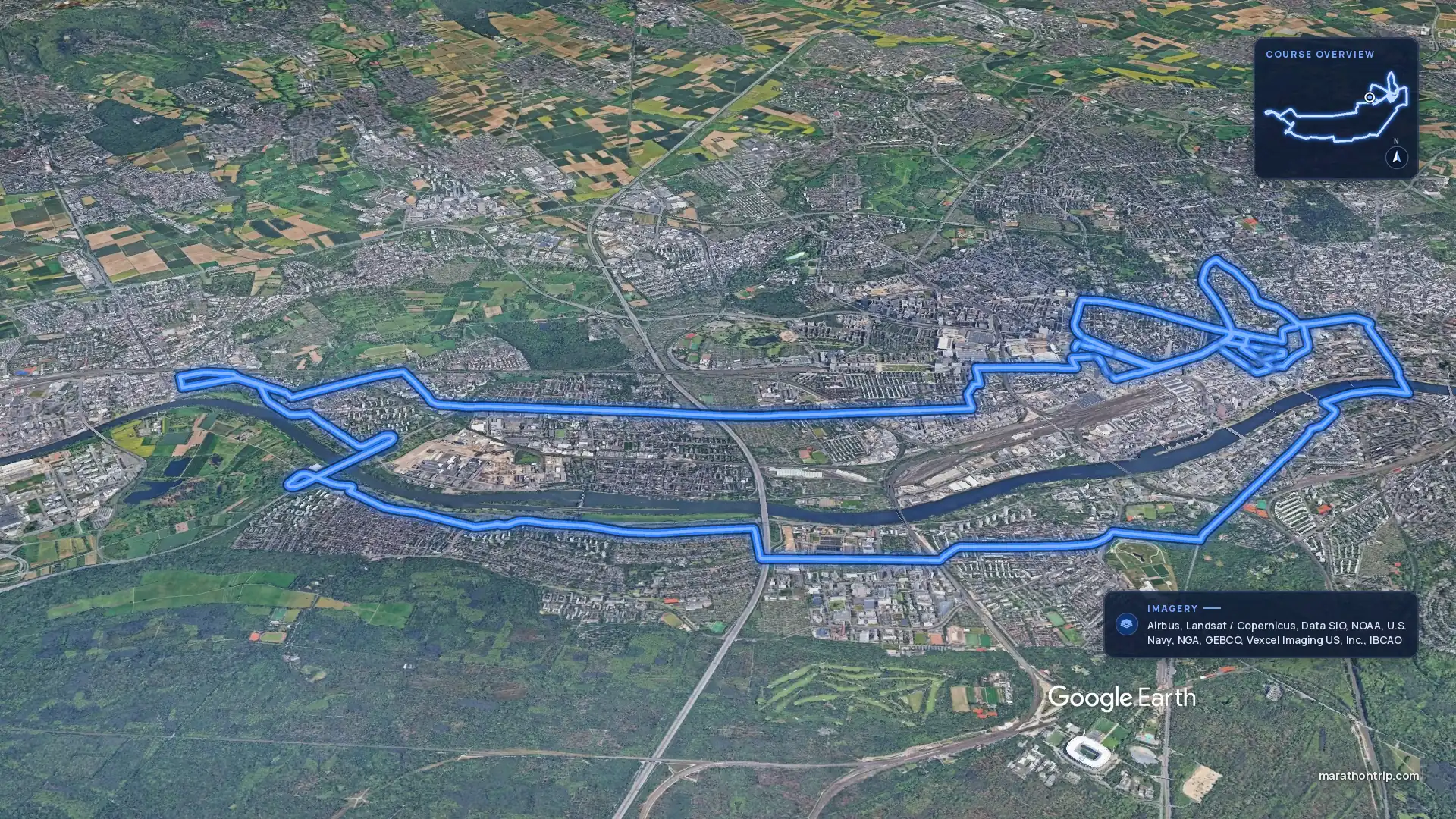
The course is one loop from Friedrich-Ebert-Anlage by the Messe, out through the banking district, south across the Main into Sachsenhausen, west to Höchst and back along Mainzer Landstrasse to the centre and the Festhalle. The kilometres and heights below are measured along the organiser’s 2026 course file, on Hesse’s 1 m lidar terrain model. The 2026 course was the same as 2025’s, but the organiser has not yet published the 2027 course, so check its course page before you plan your pacing.
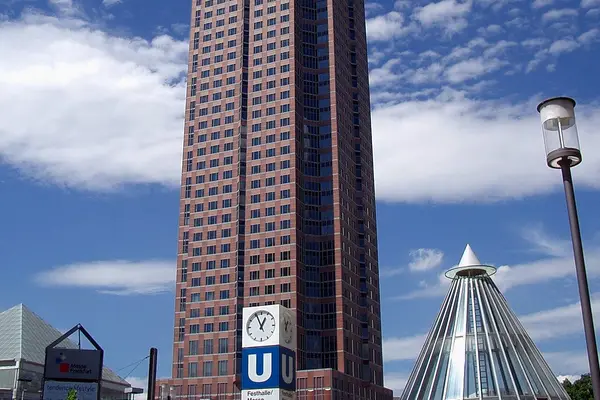
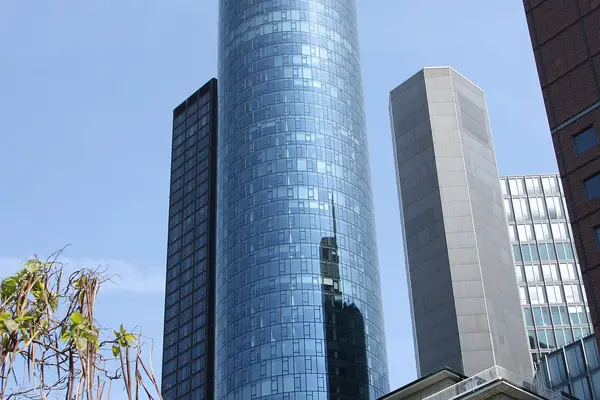
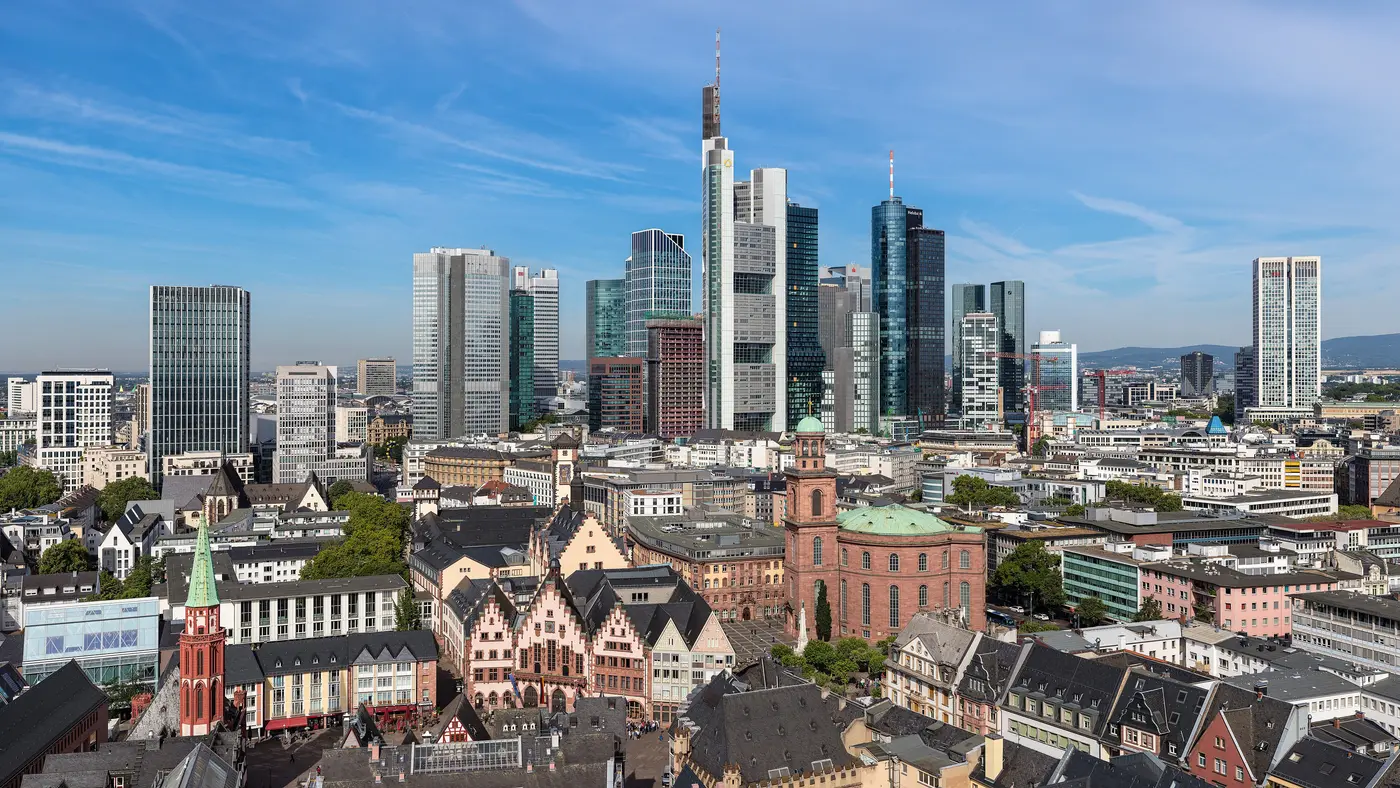
The start faces south-east on Friedrich-Ebert-Anlage, with the Messeturm on your right. At km 0.6 the course swings at the Platz der Republik onto Mainzer Landstrasse, a few hundred metres from the Hauptbahnhof, and by km 1.25 it is on the Taunusanlage, in the banking district. Between km 2.0 and 2.2 it runs up Neue Mainzer Strasse under the Commerzbank Tower and the Main Tower.
It then doubles back west, past the Messe again on Friedrich-Ebert-Anlage at about km 3.3, and out along Bockenheimer Landstrasse near km 4.7. From km 6 comes the first of two loops between the Opernplatz and the Hauptwache: the Alte Oper at km 6.0, the Commerzbank Tower again at km 6.8, the Hauptwache at km 7.6, the Eschenheimer Turm at km 8.0 and the Opernplatz once more at km 8.9. The road barely moves through all of this, between 97 m and 102 m.
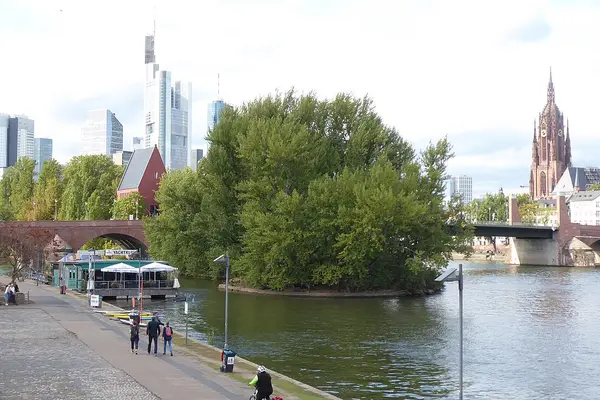
Reuterweg and Bremer Strasse carry the course up to Eschersheimer Landstrasse between about km 9.2 and km 10.2, the only sustained climb of the race. It gains about 9.5 m, around 1 percent at its steepest, and tops out near km 10.2 at the highest point of the course. From there the road falls 14.7 m over three kilometres to the river, passing the Eschenheimer Turm again at km 11.6 and the Konstablerwache at km 12.6. At km 13.16 the course crosses the Main southbound on the Alte Brücke, the first of its two river crossings.
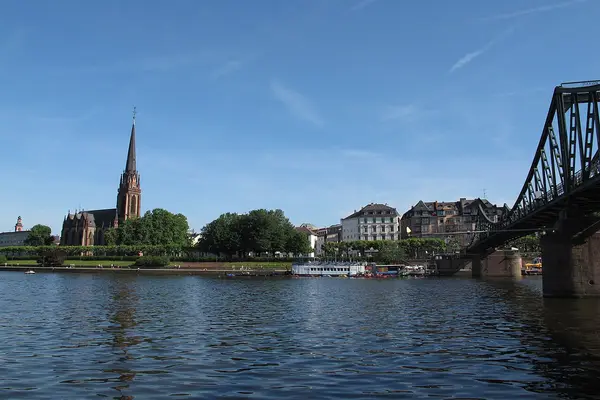
Off the bridge the course turns west along the Sachsenhausen bank, with the Eiserner Steg across the water at km 13.8 and the museums of the Schaumainkai alongside. Kennedyallee begins at about km 14.75, and the course runs on through Niederrad between km 16.5 and 18.3, past Goldstein at km 18.5, and reaches halfway at km 21.1 on Zur Frankenfurt in Schwanheim. Through all of it the road drifts gently down, from 98 m to about 94 m.
At Schwanheimer Ufer, near km 23.1, the course turns onto the second river crossing, the Schwanheimer Brücke (the B 40), and crosses the Main north-east from km 23.9 to km 24.4. The ramp up to it gains about 5 m, and the road rises about as much again into Höchst before the turn. Neither is steep.
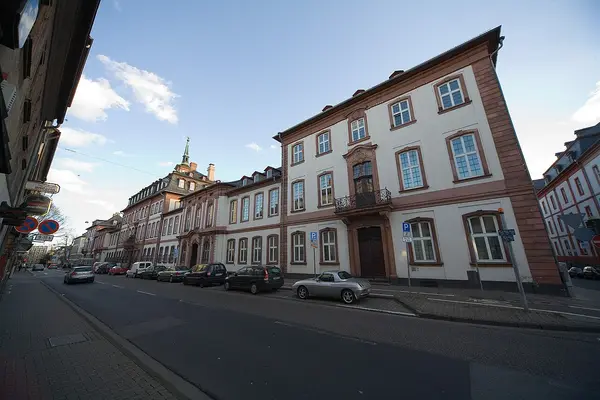
North of the river the course enters Höchst on Bolongarostrasse around km 26.3, and passes the Bolongaropalast at km 26.9. The turn at km 27.13 is the farthest point of the course, 7.49 km from the start in a straight line. On the way back it crosses the Nidda on the Alte Niddabrücke at about km 28.2, and around km 28.75 it reaches its lowest point away from the bridges, on Oeserstrasse.
From about km 29.8 to km 33.9 the course runs 4.19 km along Mainzer Landstrasse without a single course turn, the longest straight of the race. It is level, and it is the place to check your effort honestly before the centre, because the next six kilometres will not let you settle.
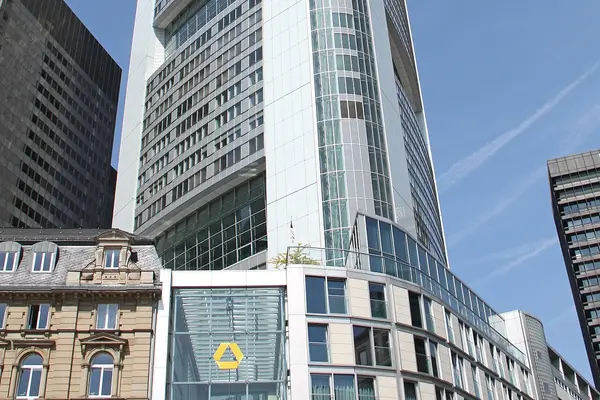
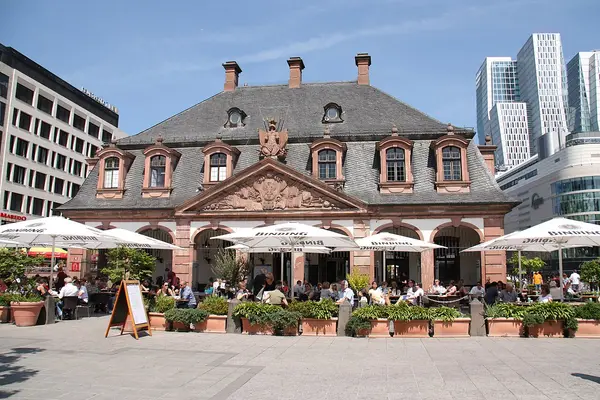
At about km 34.6 the course turns onto Europa-Allee through the Europaviertel, rejoins Mainzer Landstrasse at km 36.1 and reaches the Taunusanlage at km 37.3 for the second loop of the centre. Fifteen of the course’s 68 corners fall between km 35 and km 40: past the Alte Oper, the Commerzbank Tower at km 38.4, the Hauptwache at km 39.1 and the Opernplatz at km 40.3. Over the last 10 km the road ends just 2.4 m higher than it began, so the difficulty here is turning, not climbing. The run-in comes back along Friedrich-Ebert-Anlage from km 41.4, passes the Messeturm at km 42.04 and takes the sharpest corner of the course, about 145 degrees left, into the Messe grounds. The last metres are indoors, on the red carpet in the Festhalle.
A flat loop through Frankfurt that starts by the Messe and finishes on a red carpet inside the glass-domed Festhalle, crossing the Main twice: into Sachsenhausen on the Alte Brücke, and back to Höchst on the B 40 bridge.
The Frankfurt Marathon is a flat loop of 42.2 km with 44.1 m of climbing. Its lowest point is 93 m and its highest 113 m above sea level. Next race: Sunday 31 October 2027.
The organiser has not yet published the 2027 race week. What follows is the 2026 pattern, which is the best guide to what to expect.
The expo, the marathonmall, filled Messe Frankfurt, Halle 1, Ebene 2 in 2026, with close to 100 exhibitors on 2,600 square metres beside race packet pickup and the help desk. Packets were handed out on the Friday from 12:00 to 19:00, on the Saturday from 10:00 to 19:00, and on race Sunday from 07:00 to 09:30. You show your start pass (Startpass), emailed in October and also in your dashboard. Someone else may collect for you with your start pass, a signed authorisation and a copy of your ID. Packets are not posted.
On the Saturday the pasta party ran in the Festhalle from 13:30 to 19:00, with the voucher on your race number. Overnight into race day, summer time ended and the clocks went back an hour at 03:00. 31 October 2027 is again the last Sunday of October, the day summer time ends in Germany, so the same change falls on the 2027 race night.
On race morning the clothing bag drop opened at 08:00 in Halle 1, Ebene 1. Only the official starter bag with the sticker from your packet is accepted; anything else goes to a paid cloakroom, 4 EUR per item, and there is no bag drop at the start. Changing rooms and showers for women and men are on the ground floor of Halle 1, and bags could be collected until 17:00.
The marathon is started in waves from 10:00, and every runner had to be across the line by 10:35 in 2026. The organiser’s own pages disagree on the number of waves: five in the race regulations, four in the 2026 programme. Runners are placed in six start blocks by target time, from under 3:00 in the first to 4:30 and slower in the sixth, and the block is shown by the sponsor logo beside your number. Experienced pacers run the whole distance for target times from 2:59 to 5:29, among them 2:59, 3:14, 3:29, 3:44 and 3:59.
There is an aid station every 5 km, on both sides of the road at km 5 and 10 and on one side after that, with extra water points at km 12.5, 17.5, 22.5, 27.5, 32.5 and 37.5. Powerbar gels are handed out at km 15, 20, 25 and 30, and Vita Cola at km 30, 35 and 40. Own bottles for the stations from km 5 to km 40 were handed in at the expo info point; the organiser’s English page limits that to men under 2:45, women under 3:00 and runners with a medical need.
There are no intermediate cut-offs. In 2026 the finish in the Festhalle was open until 16:45, and runners arriving later were not timed. A broom-wagon bus follows the back of the field, and your number takes you home free on public transport.
Entry open for the 2027 race As read 26 October 2026.
motion events GmbH, a third party. We take no entries and have no part in the race.
The S-Bahn lines S8 and S9 take about 12 minutes between Frankfurt’s main station and the airport regional station, and a train for the airport leaves the main station about every 10 minutes.
The start and finish are both at the Messe, so race morning and the walk out after the finish happen in the same place. The U4 stops at Festhalle/Messe and the S-Bahn lines S3 to S6 at Messe. In 2026 the race number was a ticket on all buses and trains in the RMV network on race Sunday, until close of service, and a runner collecting on the Sunday could use the registration confirmation to get to the Messe. First class cost a surcharge.
Anywhere with an easy walk or a short ride to the Messe works. The Europaviertel, which the course passes at km 34.6, lies just west of it, and the streets around the Hauptbahnhof are a few hundred metres from the course at km 0.6, with S-Bahn trains to both the Messe and the airport. The Westend, which the course crosses on Bockenheimer Landstrasse, and Gallus are close as well.
In 2026 the area around the start and finish on Friedrich-Ebert-Anlage was closed to traffic from 05:00 to about 20:00. Neue Mainzer Strasse, the Opernplatz and Kaiserstrasse closed from about 09:00 to 16:45, Mainzer Landstrasse in the inner city until 18:00, Kennedyallee from 10:13 to 13:15 and the Schwanheimer Brücke from 10:39 to 14:15. Buses and trams were shortened and diverted between 07:00 and 18:00, while the U-Bahn and S-Bahn ran as normal; the U4 ran more often between 06:30 and 18:30, and S-Bahn trains were lengthened.
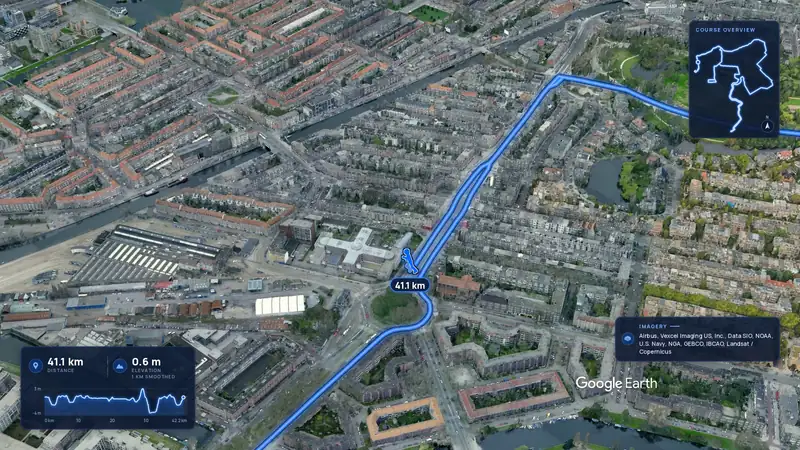 Imagery: Google Earth3:49 film
Amsterdam, Netherlands
Sun 31 Oct 202742.2 kmClimb 22 m
Climb summed after smoothing the heights over 1 km. The edge is this course's height profile on one scale for every race: 250 m above its lowest point fills it.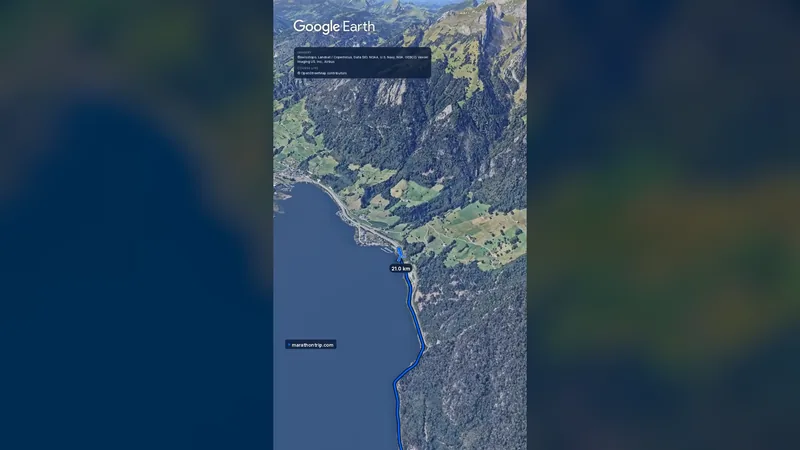 Imagery: Google Earth0:58 film
Lucerne, Switzerland
Sun 31 Oct 202742.2 kmClimb 105 m
Climb summed after smoothing the heights over 1 km. The edge is this course's height profile on one scale for every race: 250 m above its lowest point fills it.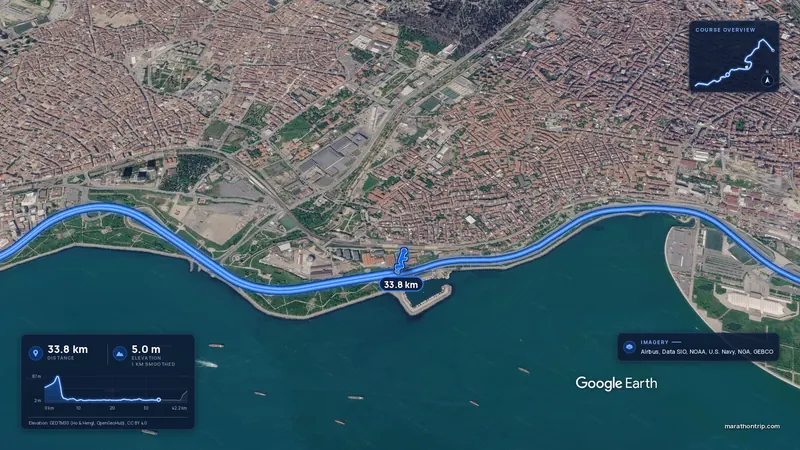 Imagery: Google Earth4:06 film
Istanbul, Turkey
Nov 202742.2 kmClimb 96 m
Climb summed after smoothing the heights over 1 km. The edge is this course's height profile on one scale for every race: 250 m above its lowest point fills it.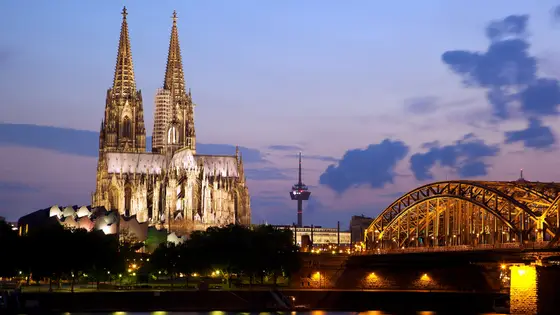
Cologne, Germany
Oct 202742.2 kmClimb 82 m
Climb summed after smoothing the heights over 1 km. The edge is this course's height profile on one scale for every race: 250 m above its lowest point fills it. Photo: Cologne Cathedral, by Jiuguang Wang, CC BY-SA 2.0, via Wikimedia Commons.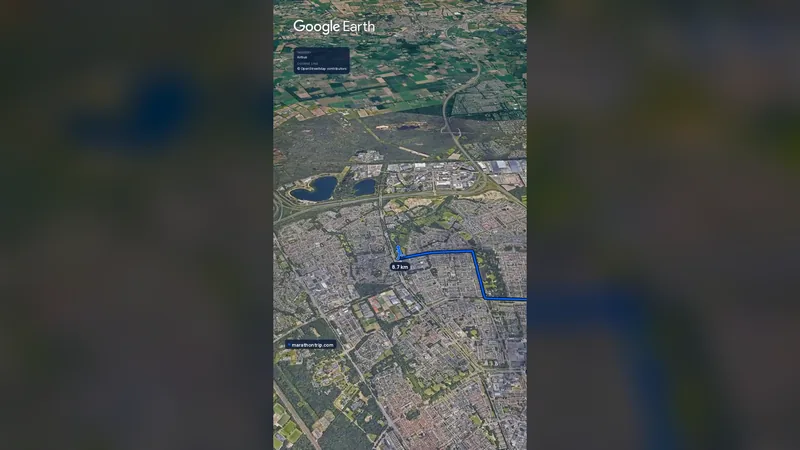 Imagery: Google Earth0:58 film
Eindhoven, Netherlands
Sun 10 Oct 202742.2 kmClimb 17 m
Climb summed after smoothing the heights over 1 km. The edge is this course's height profile on one scale for every race: 250 m above its lowest point fills it.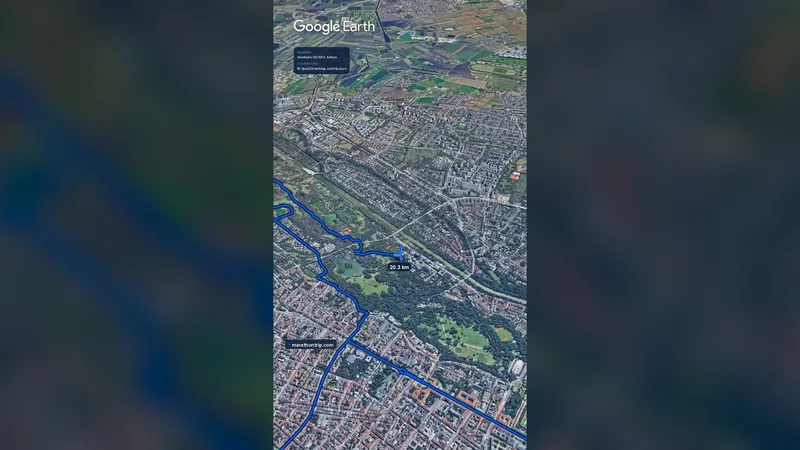 Imagery: Google Earth1:00 film
Munich, Germany
Oct 202742.2 kmClimb 59 m
Climb summed after smoothing the heights over 1 km. The edge is this course's height profile on one scale for every race: 250 m above its lowest point fills it.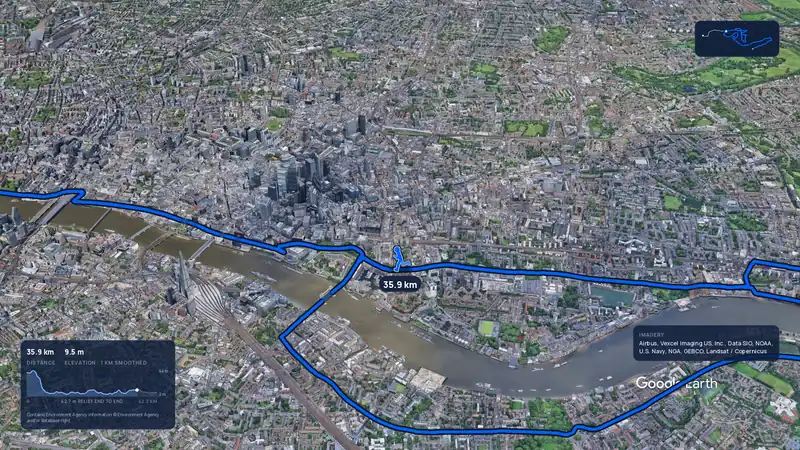 Imagery: Google Earth4:02 film
London, United Kingdom
Sun 25 Apr 202742.2 kmClimb 42 m
Climb summed after smoothing the heights over 1 km. The edge is this course's height profile on one scale for every race: 250 m above its lowest point fills it.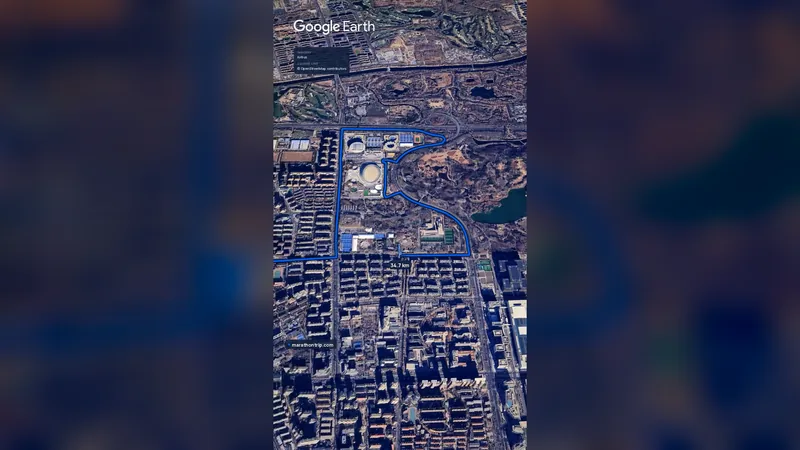 Imagery: Google Earth0:59 film
Beijing, China
Oct 202742.2 kmClimb 41 m
Climb summed after smoothing the heights over 1 km. The edge is this course's height profile on one scale for every race: 250 m above its lowest point fills it.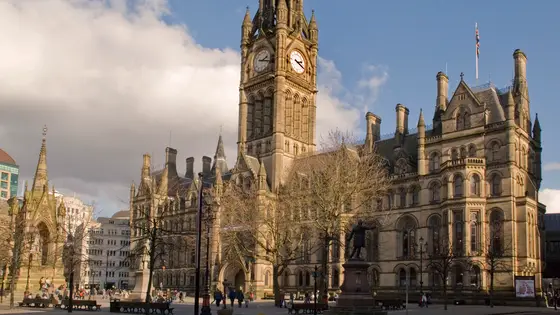
Manchester, United Kingdom
Sun 18 Apr 202742.2 kmClimb 48 m
Climb summed after smoothing the heights over 1 km. The edge is this course's height profile on one scale for every race: 250 m above its lowest point fills it. Photo: Manchester Town Hall, by Mark Andrew., CC BY 2.0, via Wikimedia Commons.Sunday 31 October 2027. Registration opened on 23 October 2026. The organiser has not yet published the 2027 start time; in 2026 the first wave started at 10:00 on Friedrich-Ebert-Anlage, by the Messe.
Yes. It climbs 44.1 m over the whole distance and 91 percent of the course lies within 5 m of the start's height. The only sustained rise is about 9.5 m between km 9.2 and km 10.2, on Reuterweg and Bremer Strasse. The organiser's course page gives 83 m and 27.8 m: the first matches the climb and the descent added together, the second the gap between the lowest and highest points.
Indoors, on a red carpet inside the Festhalle at the Messe, a few hundred metres from the start. In 2026 the finish was open until 16:45, six hours and 45 minutes after the first wave; later finishers were not timed.
In 2026 numbers were handed out at the marathonmall in Messe Frankfurt, Halle 1, Ebene 2: Friday 12:00 to 19:00, Saturday 10:00 to 19:00 and race Sunday 07:00 to 09:30. You show your start pass (Startpass), emailed in October and in your dashboard. Someone else may collect for you with your start pass, a signed authorisation and a copy of your ID. The 2027 days are not yet published.
By S-Bahn. Lines S8 and S9 take about 12 minutes between the main station and the airport regional station, with a train about every 10 minutes. From the main station, the S3 to S6 run to Messe, the station for the start and finish.
In 2026 it did: on race Sunday the number was valid on all buses and trains in the RMV network until close of service. A runner collecting on Sunday could use the registration confirmation for the trip to the Messe.
Yes. In 2026 experienced pacers ran the whole distance for target times from 2:59 to 5:29, among them 2:59, 3:14, 3:29, 3:44 and 3:59.
Entry for the 2027 race is open. It opened on 23 October 2026. Entry details on the organiser’s site
Runners have 6 hours to finish.
12,327 runners finished in 2025.
Men: 2:03:42, Wilson Kipsang, 2011. Women: 2:17:25, Hawi Feysa, 2024.
Yes. A 3D flyover film of the whole course, start to finish (4:00), plays at the top of this page.
The race began on 17 May 1981 as the Hoechst-Marathon, with 3,169 runners entered. Kjell-Erik Ståhl of Sweden won in 2:13:20 and Doris Schlosser in 2:47:18. A year later 5,529 started, which made it the largest road race in Germany, and 1994 brought a record 9,308. In 2008 the race earned its first IAAF Gold Label and passed 12,000 marathon entries; in 2011 it took 15,210 marathon registrations and was fully booked for the first time. In 2019 27,052 athletes ran across all its events. The 2020 and 2021 races were cancelled.
The course records both stand on this flat loop. Wilson Kipsang of Kenya ran 2:03:42 in 2011, and Hawi Feysa of Ethiopia ran 2:17:25 in 2024. The organiser’s course page also records Arne Gabius’s German record of 2:08:33, run here in 2015.
The 2026 race, the 43rd, sold out on 30 August with more than 18,500 starters expected. Ethiopians Jirata Dinki and Zeineba Yimer won it in 2:05:26 and 2:19:45, so neither record fell, and Blanka Dörfel ran 2:20:46 on her debut, the second fastest marathon ever run by a German woman.
Checked against these sources on .
Film stills: Google Earth
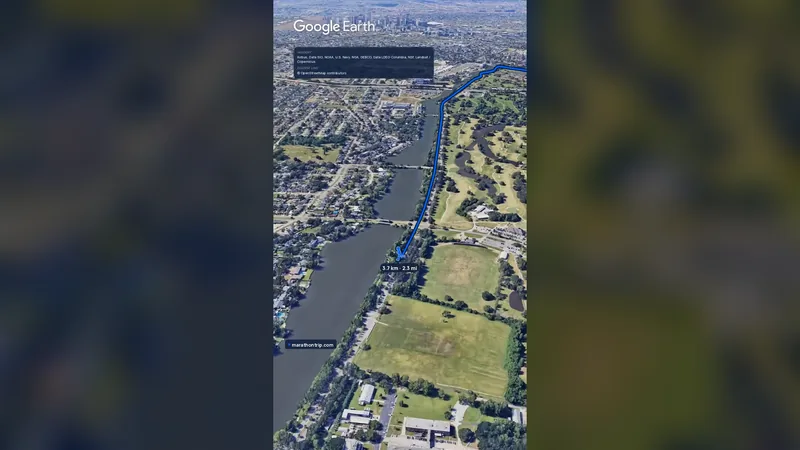 Google Earth
42.2 km
42.2 km
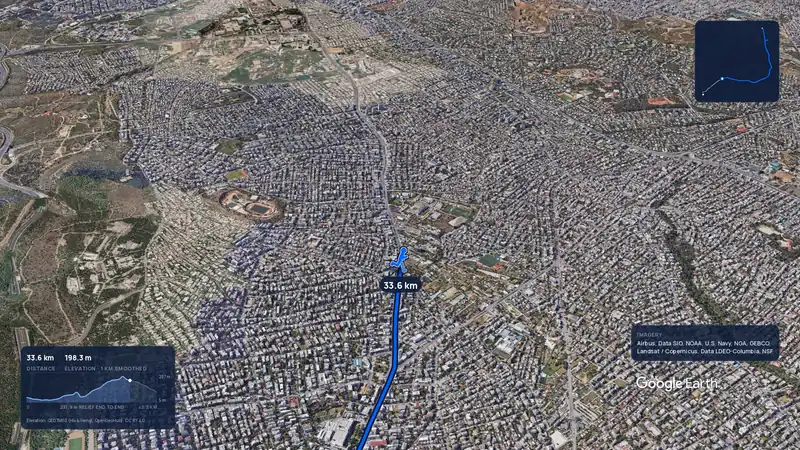 Google Earth
Race week