Sold out for the 2026 race As read 13 October 2026.
Past years and every way in
Entry details on the organiser’s site →
SEGAS (Hellenic Athletics), a third party. We take no entries and have no part in the race.
 Marathon Trip
Your trips on every device: sign in, or make a free account when you save one.
Signed in on this browser.
Sign in My marathons Account and dataLocked out? An export link you keep still opens your list in any browser.
No account: email it to me
One email with this trip and a link to open it again. We do not keep the address and send nothing else.
Only a race from our list can be emailed. An account keeps this one.
What we keep, and what we do notCheck your inbox at to confirm it.
Browse the racesEach edition the day it comes out, and nothing else. Off again with one click. How it is kept.
Imagery: Google Earth and its imagery providers
Downhill to km 8, a long climb of 232 m to km 31, then downhill home.
© OpenStreetMap contributors
km 0mile 0
At the Marathon stadium in the town of Marathon, where the organiser's 2026 race page puts the start line; the start blocks run along the line, the stadium's ring road and into the stadium, and the first 200 m run downhill out of the facility onto Marathonos Avenue.
km 4.7mile 2.9
The Soros, the burial mound raised for the 192 Athenians who fell at the Battle of Marathon in 490 BC.
Photo: Ondřej Žváček, CC BY 4.0
km 10.1mile 6.2
The coastal town on the Petalioi Gulf of the Aegean. The organiser calls km 6 to 10 flat and km 11 to 17 uphill in parts: the climb starts here.
km 17.7mile 11
The crossroads with the road to Rafina, where the organiser's steep downhill after km 17 ends and the long climb starts.
km 31.2mile 19.4
The organiser calls the Stavros junction, km 30 to 31, the last and most difficult part of the route, an intense and prolonged climb followed by a steep descent to Agia Paraskevi square.
km 37.3mile 23.2
Santiago Calatrava's cable-stayed footbridge over Mesogeion Avenue, completed just before the 2004 Olympics: 94 m long, hung from a curved 50 m pylon.
km 39.9mile 24.8
The Megaron, inaugurated in 1991, on Vasilissis Sofias Avenue. The organiser names it with the US Embassy and Eleftherias Park, where the last aid station stands at km 40.
km 41.6mile 25.9
The official residence of the President of Greece, built as the Crown Prince's Palace to Ernst Ziller's design and a royal palace until 1974.
km 42.2mile 26.2
The marble stadium Herodes Atticus rebuilt around AD 144 and George Averoff's money restored for the 1896 Olympics, the finish of the 1896 and 2004 Olympic marathons.
Photo: George E. Koronaios, CC0
Height drawn many times taller than life. Heights: GEDTM30.
Tall ticks: food or drink short: water dashed: bridge upright dashes: cut-offs

Your 5 gels, at the orange marksFor a 4:00 finish, one every 40 minutes
Get them on AmazonAmazon partner link
km 5mile 3.1
water, medical, toilets
km 7.5mile 4.7
water, sponges, medical, toilets
km 10mile 6.2
water, sports drink, gels, medical, toilets
km 12.5mile 7.8
water, sponges, medical, toilets
km 15mile 9.3
water, sports drink, medical, toilets
km 17.5mile 10.9
water, sponges, medical, toilets
km 20mile 12.4
water, sports drink, gels, food, medical, toiletsBananas.
km 22.5mile 14
water, sponges, medical, toilets
km 25mile 15.5
water, sports drink, food, medical, toiletsBananas; physiotherapists.
km 27.5mile 17.1
water, sponges, medical, toilets
km 30mile 18.6
water, sports drink, food, medical, toiletsBananas and savoury snacks; cola; physiotherapists.
km 32.5mile 20.2
water, sponges, medical, toilets
km 35mile 21.7
water, sports drink, food, medical, toiletsBananas and savoury snacks; cola.
km 37.5mile 23.3
water, sponges, medical, toilets
km 40mile 24.9
water, sports drink, medical, toiletsCola.
Read on athensauthenticmarathon.gr, marathonios-dromos-33.
Checked, against the organiser’s own pages.
Athens is the classic course with the honest profile: it starts low, gets lower, and then spends the middle of the race going up. Between the Rafina junction at about km 17.7 and the top of the course just past Stavros at about km 31.2, the road rises 201.7 m without a single downhill stretch to rest on. Everything before km 17.7 is a warm-up for that, and everything after km 31.2 is payment for it: 11 km of descent into the marble stadium. A runner who treats the first 17 km as easy and the climb as the race will have the downhill left to use.
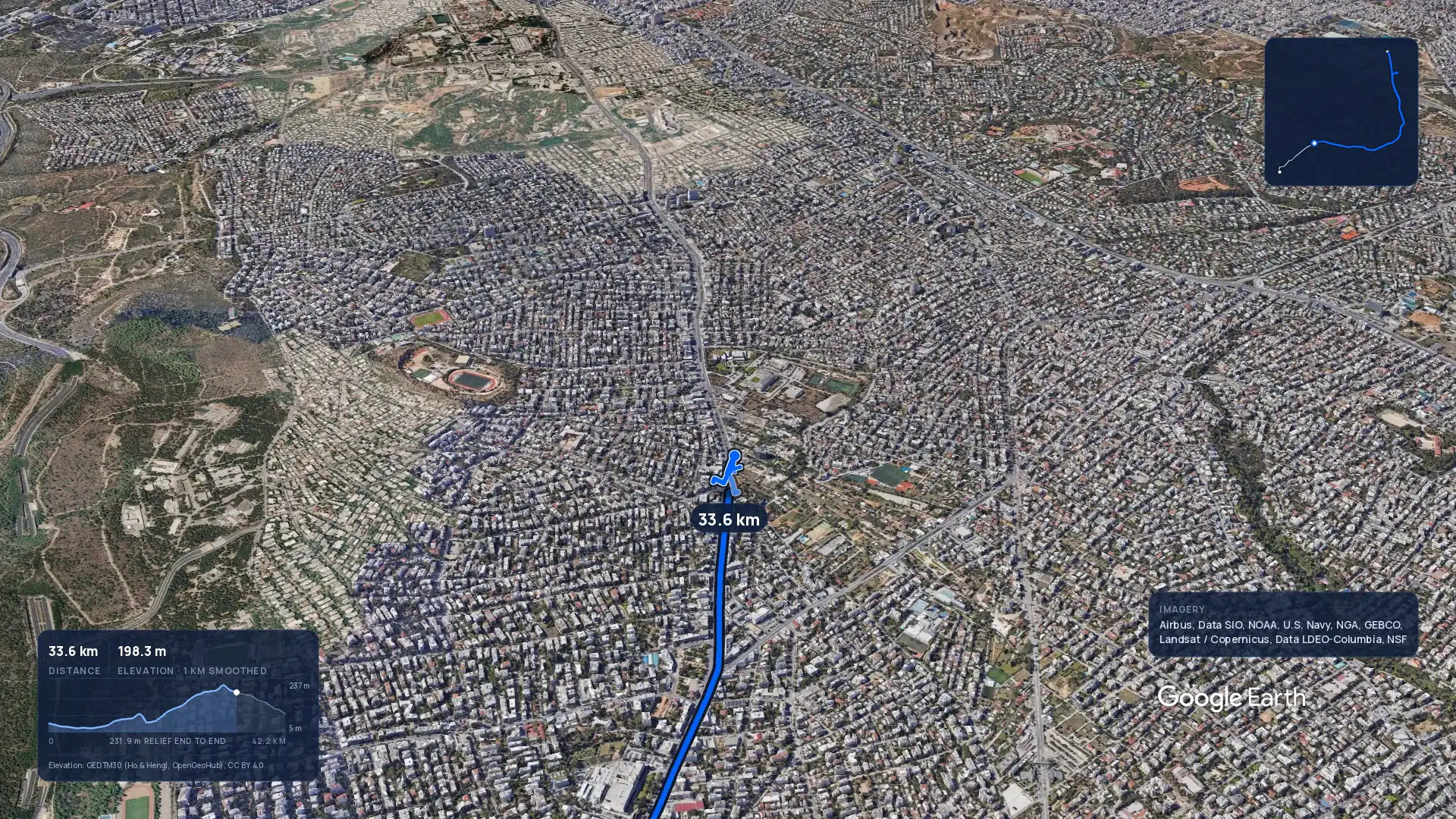
The course runs point to point from the stadium in the town of Marathon to the Panathenaic Stadium in central Athens, almost all of it on one long road: Marathonos Avenue, then Mesogeion Avenue, then Vasilissis Sofias. The kilometres and heights below are measured along the walked 2026 course, on a 30 m terrain model smoothed over 1 km. The climbing adds up to 281.2 m, and the finish is about 55 m higher than the start.
The start blocks line up along the start line, around the stadium’s ring road and inside the stadium itself. The first 200 m run downhill out of the facility, and the course reaches Marathonos Avenue at about km 0.3. The road keeps falling gently towards the coast, from about 31 m at the start to about 9 m by km 4.
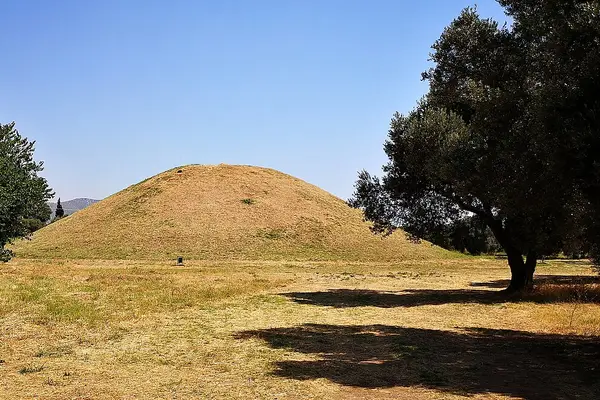
At km 4 the course leaves the avenue for Marathonomachon Street and runs an almost circular 2.2 km loop around the Tomb of Marathon, the mound raised for the 192 Athenians who fell in the battle of 490 BC. The mound sits inside the loop, about 120 m from the road at its nearest, and the course rejoins the avenue at about km 6.3.
The organiser calls km 6 to 10 flat, and the lowest point of the race comes here: 4.7 m on the plain at about km 7.7. Nea Makri, the coastal town at about km 10, marks the start of the climbing. The course stays inland on the avenue, never closer than about 600 m to the sea.
The organiser calls km 11 to 17 uphill in parts. The road rises from about 16 m at km 10 to a first top of 82.3 m at about km 16.2, then gives almost all of it back: a steep drop of 47.4 m in about 1.5 km to the bottom at the Rafina junction, at about km 17.7. It is the last downhill for 13.6 km.
From the Rafina junction the road climbs through Pikermi, Pallini and Gerakas, and on the smoothed profile it does not lose a metre for 13.6 km. Halfway comes early in this climb, at around 90 m. The steepest full kilometre averages about 2.75%, near km 24, and by km 26 the road is at about 179 m. The course crosses the Marathonos Avenue overpass in Pallini at about km 28.3.
The organiser calls the Stavros junction, km 30 to 31, the last and most difficult part of the route: an intense, prolonged climb. The junction is at about km 30.7, where the course passes under the A621 motorway, and the top of the course is half a kilometre on: 236.6 m at about km 31.2, just before Marathonos Avenue becomes Mesogeion Avenue. From the Rafina junction that is 201.7 m of climbing. Pace it by effort rather than by the watch: everyone slows here.
The organiser warns of a steep descent from Stavros to Agia Paraskevi square, and from there Mesogeion Avenue points straight at the city centre. The steepest of the late downhills runs from the Ministry of National Defence to Katehaki, where the course passes under Santiago Calatrava’s footbridge over the avenue at about km 37.3. The road is at about 152 m by km 38. A runner who went too hard up to Stavros finds out here, on tired legs.
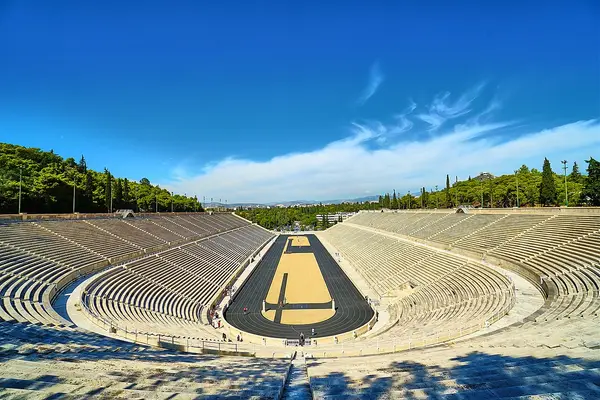
The course joins Vasilissis Sofias at about km 39 and runs downhill on it towards Syntagma, past the US Embassy, the Athens Concert Hall and Eleftherias Park, where the last aid station stands at km 40. At about km 41.2, some 250 m short of Syntagma Square, the course turns off onto Irodou Attikou, past the Maximos Mansion and the Presidential Mansion beside the National Garden. It enters the Panathenaic Stadium from the forecourt, and the last 170 m are on the track. The finish line is on the left side of the stadium.
A point to point run from the town of Marathon to the Panathenaic Stadium, retracing the 1896 Olympic route past the Tomb of Marathon and a long climb through the eastern suburbs before finishing inside the marble stadium.
The Athens Marathon is a hilly point-to-point course of 42.2 km with 281.2 m of climbing. Its lowest point is 5 m and its highest 237 m above sea level. Next race: Sunday 8 November 2026, starting at 08:30.
Bib pickup at Faliro Indoor Hall & Exhibition Centre (former Tae Kwon Do venue), Olympic Faliro Coastal Zone, Palaio Faliro
25 Sept 2026
25 Sept 2026
12:0012:00 PM–21:009:00 PM
12:0012:00 PM–22:0010:00 PM
10:0010:00 AM–21:009:00 PM
10:0010:00 AM–22:0010:00 PM
10:0010:00 AM–21:009:00 PM
10:0010:00 AM–22:0010:00 PM
18:306:30 PM–22:0010:00 PM
10:0010:00 AM–20:008:00 PM
10:0010:00 AM–18:006:00 PM
10:0010:00 AM–21:009:00 PM
12:3012:30 PM–13:151:15 PM
13:501:50 PM–14:102:10 PM
15:003:00 PM–22:0010:00 PM
16:004:00 PM
16:454:45 PM–16:554:55 PM
17:005:00 PM–20:108:10 PM
20:008:00 PM–21:109:10 PM
05:005:00 AM–06:306:30 AM
06:306:30 AM–07:307:30 AM
07:307:30 AM
07:307:30 AM
08:308:30 AM
10:0910:09 AM
11:3011:30 AM–12:0012:00 PM
18:156:15 PM
08:008:00 AM–18:006:00 PM
08:008:00 AM–10:1010:10 AM
08:328:32 AM
08:358:35 AM
08:398:39 AM
08:448:44 AM
08:498:49 AM
08:548:54 AM
09:009:00 AM
09:069:06 AM
09:129:12 AM
09:189:18 AM
09:459:45 AM
09:519:51 AM
09:579:57 AM
10:0310:03 AM
11:0811:08 AM
11:4011:40 AM
12:1012:10 PM
12:3712:37 PM
13:051:05 PM
13:331:33 PM
14:022:02 PM
14:142:14 PM
14:312:31 PM
14:582:58 PM
15:273:27 PM
15:543:54 PM
16:284:28 PM
16:524:52 PM
17:225:22 PM
17:495:49 PM
Times as published by SEGAS (Hellenic Athletics), in Athens time, checked .
The forecast for Sunday
Add to calendar .ics file, times in Athens time
Bibs and race kits are handed out at the Runners’ Center, at the allwyn Marathon EXPO in the Faliro Indoor Hall and Exhibition Centre, the former Tae Kwon Do venue on the Olympic coastal zone at Palaio Faliro. It opens from 12:00 to 21:00 on Wednesday 4 November, 10:00 to 21:00 on the Thursday and Friday, and 10:00 to 20:00 on Saturday 7 November. Bring a copy of the bib number email and an ID card or passport. Bib numbers and blocks arrive by email about ten days before the race. A representative can collect up to four kits, with a photocopy of each runner’s ID and their bib email. Nothing is handed out on race day.
This rule changes how you plan race morning. There is no clothing bag service at the start on race day. Bags go in at a designated area inside the expo, in the official bag with your bib sticker, from Wednesday to Friday until 22:00 and on Saturday until 21:00. You collect it after the finish on Vassilisis Olgas Avenue, on the lower side of the Zappeion, by bib number. Bags not collected are stored for 15 days and then thrown away. So whatever you wear on the bus to Marathon, you either run in or leave behind.
The organiser’s buses are free for registered runners and need no booking. For blocks 1 to 10 they leave between 05:00 and 06:30 from six points in central Athens: Syngrou-Fix (last bus 06:15), Syntagma, Panepistimio, Evangelismos, Katechaki and Omonia metro stations. For blocks 11 to 15 they leave between 06:30 and 07:30 from metro line 3 stations on Mesogeion Avenue, among them Ethniki Amyna, Katechaki and Nomismatokopio. The organiser’s page is inconsistent on how many stops this group has, so check it in race week. There is no organiser transport after the last bus of each group. Anyone driving must arrive by 07:30, the drop-off parking is about 800 m from the start, and the organiser advises against it.
The field starts in 15 blocks in two waves. Blocks 1 to 10 go between 08:30 and 09:18, with a block for runners with disabilities at 08:54; blocks 11 to 15 go between 09:45 and 10:09. The times are indicative. Block 1 holds 20 elite athletes, 180 runners in the Greek championships and about 600 more of the fastest. Blocks are assigned on a certified race result from 2024 to 2026; runners without one go to the last blocks, and anyone starting from a block they were not assigned is disqualified. Warm-up ends 20 minutes before your start, and you enter your block from the back 15 minutes before it goes.
Supply stations stand every 2.5 km from km 5 to km 40, each with water, medical or rescue staff and toilets. The ones between (km 7.5, 12.5 and so on) add sponges. Electrolyte drinks are at km 10, 15, 20, 25, 30, 35 and 40, gels at km 10 and 20, bananas from km 20 to km 35, savoury snacks at km 30 and 35, and cola at km 30, 35 and 40. Physiotherapists wait at km 25 and 30. The finish hands out water, isotonic drinks, juice and bananas. The organiser’s pages say nothing about pacers.
The time limit is eight hours, and all finishes close at 18:15. The limits along the course are single clock times, from 11:08 at 5 km and 14:14 at halfway to 17:49 at 40 km, and they apply to every block alike. A runner in block 15 therefore has a good deal less time in hand than one in block 1. Past a limit you continue at your own risk while the traffic police reopen the road, and a sweeper bus follows the last runners to the finish.
On Saturday 7 November the flame is carried from the Tomb of Marathon at 12:30 and the cauldron lit at the historic start at 13:50. From 17:00 that day the 5 km races start from Vasilissis Amalias Avenue and finish in the stadium, and on Sunday the 10 km starts there at 08:00.
Sold out for the 2026 race As read 13 October 2026.
SEGAS (Hellenic Athletics), a third party. We take no entries and have no part in the race.
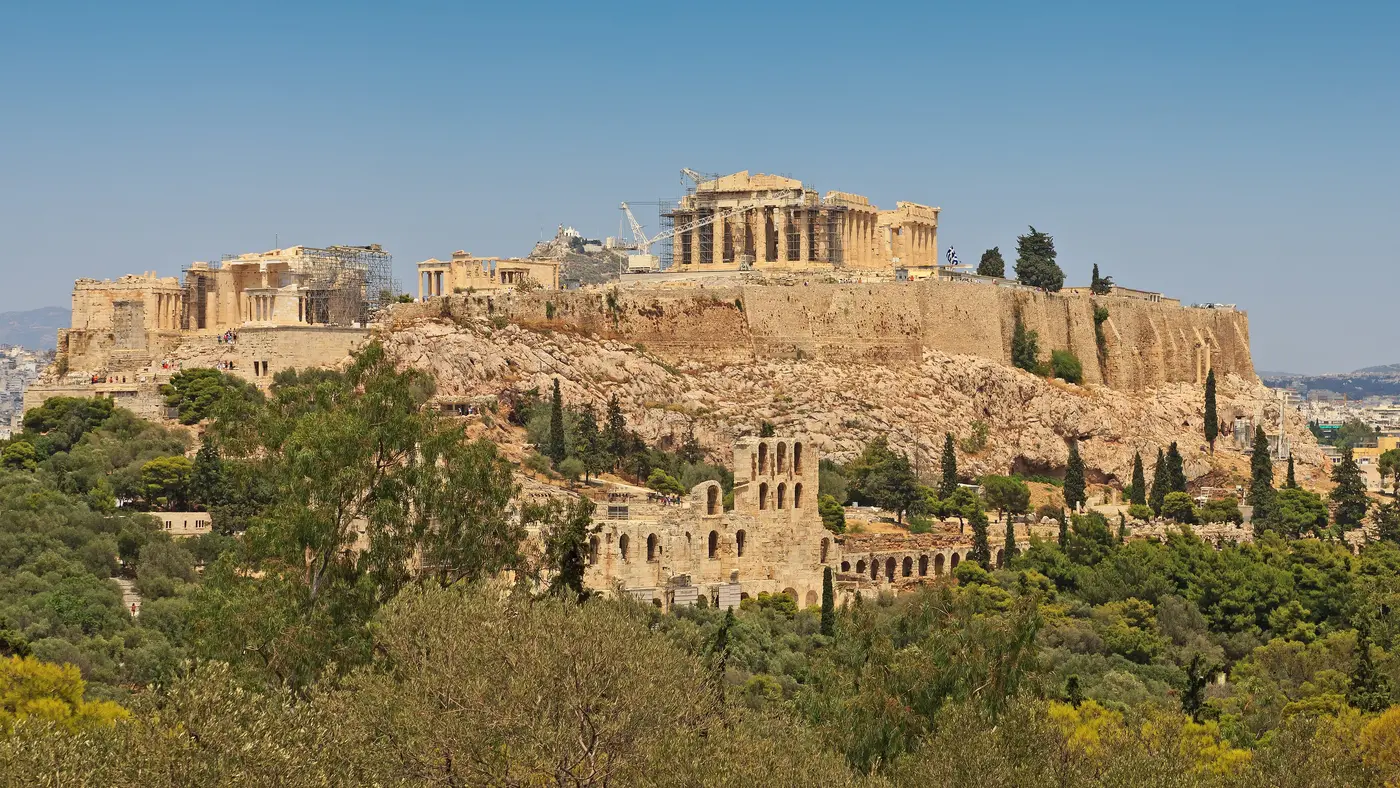
Metro line 3 runs from Athens International Airport to Syntagma in central Athens in about 40 minutes. The X95 express bus runs around the clock to Syntagma Square, takes about an hour, and costs EUR 5.50 per OASA.
Marathon is a town of about 5,000 people, and the buses to the start leave from central Athens, so central Athens is the base, ideally close to one of the bus points. Syntagma and the streets around Panepistimio and Omonia have first-wave buses on the doorstep, and so does Syngrou-Fix. Runners in the second wave can also stay along metro line 3 towards Mesogeion Avenue. Pangrati reaches south as far as the Panathenaic Stadium, so it puts the finish and the bag collection a short walk away. The expo is on the coast at Palaio Faliro, well south of the centre, so plan one trip there.
In 2026 rolling closures start on both carriageways of Marathonos Avenue at 07:30, and roads reopen behind the last runners as they pass. The 2026 metro and tram changes were not out at the end of October. In 2025 traffic measures started at 05:00, Marathonos and Mesogeion Avenues were shut from early morning to late afternoon, the last closures were expected to lift by 18:30, metro lines 1, 2 and 3 ran extra trains, tram line 6 ended at Fix, and the Syntagma and Zappeio tram stops were out of service. Check the 2026 transit changes in race week.
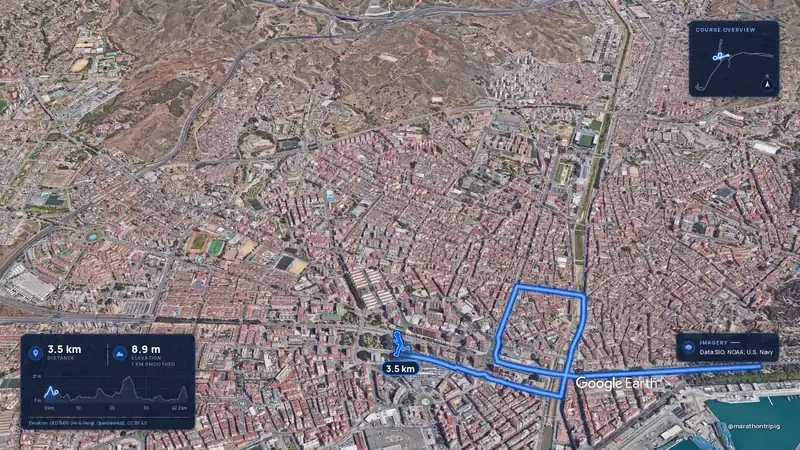 Imagery: Google Earth3:50 filmRace week
Malaga, Spain
Sun 8 Nov42.2 kmClimb 63 m
Climb summed after smoothing the heights over 1 km. The edge is this course's height profile on one scale for every race: 250 m above its lowest point fills it.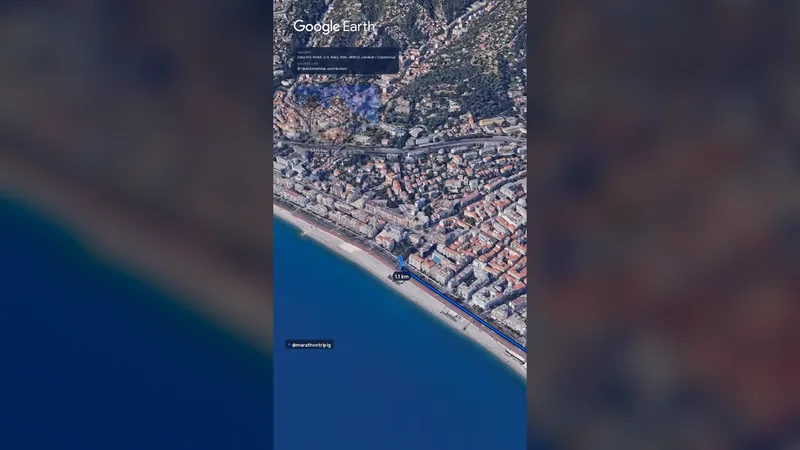 Imagery: Google Earth1:14 filmRace week
Nice, France
Sun 8 Nov42.2 kmClimb 71 m
Climb summed after smoothing the heights over 1 km. The edge is this course's height profile on one scale for every race: 250 m above its lowest point fills it.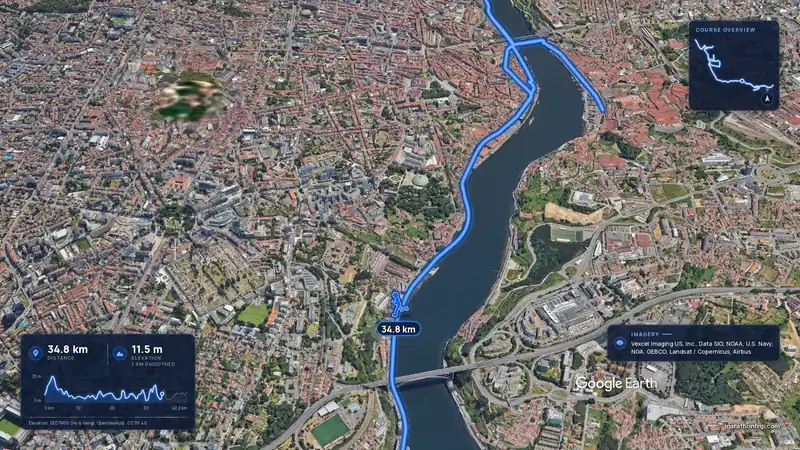 Imagery: Google Earth3:53 filmRace week
Porto, Portugal
Sun 8 Nov42.2 kmClimb 133 m
Climb summed after smoothing the heights over 1 km. The edge is this course's height profile on one scale for every race: 250 m above its lowest point fills it.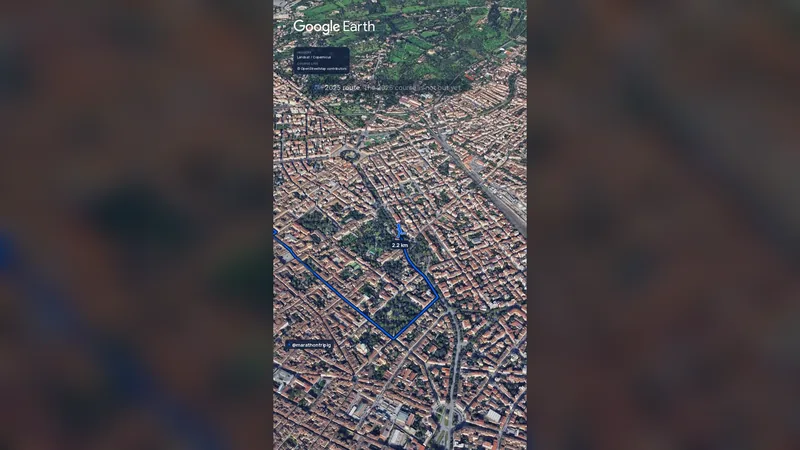 Imagery: Google Earth1:14 filmSold out
Florence, Italy
Sun 29 Nov42.2 kmClimb 86 m
Climb summed after smoothing the heights over 1 km. The edge is this course's height profile on one scale for every race: 250 m above its lowest point fills it.
Turin, Italy
Sun 29 Nov42.2 km
Photo: Turin, by Uccio “Uccio2” D'Ago…, CC BY-SA 3.0, via Wikimedia Commons.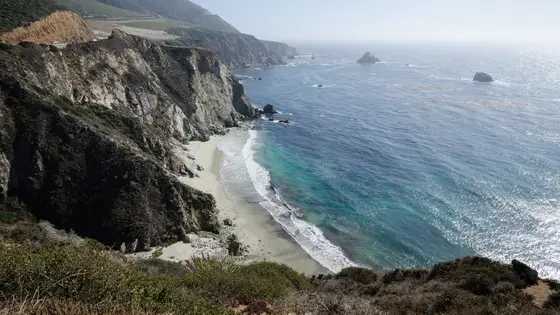
Big Sur, United States
Sun 25 Apr 202742.2 kmClimb 288 m
Climb summed after smoothing the heights over 1 km. The edge is this course's height profile on one scale for every race: 250 m above its lowest point fills it. Photo: Bixby Creek Bridge, by Tuxyso, CC BY-SA 3.0, via Wikimedia Commons.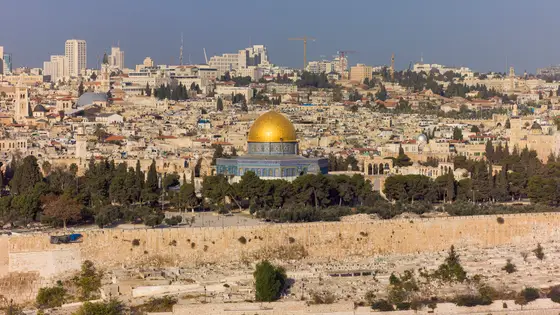
Jerusalem, Israel
Fri 19 Mar 202742.2 kmClimb 337 m
Climb summed after smoothing the heights over 1 km. The edge is this course's height profile on one scale for every race: 250 m above its lowest point fills it. Photo: Dome of the Rock, by Godot13, CC BY-SA 4.0, via Wikimedia Commons.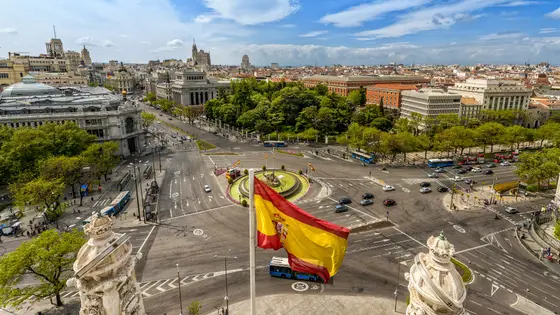
Madrid, Spain
Sun 25 Apr 202742.2 kmClimb 206 m
Climb summed after smoothing the heights over 1 km. The edge is this course's height profile on one scale for every race: 250 m above its lowest point fills it. Photo: Plaza de Cibeles, by Miguel Diaz from Boadilla del Monte, España-Spain, CC BY-SA 2.0, via Wikimedia Commons.Sunday 8 November 2026, the 43rd edition. The first block starts at 08:30 in the town of Marathon, earlier than in previous years (the 2025 race started at 09:00), and the last of the 15 blocks is due off at 10:09. Both 2026 registration levels are sold out.
By the organiser's free buses, which need no booking. For blocks 1 to 10 they run from 05:00 to 06:30 from six points in central Athens: Syngrou-Fix (last bus 06:15), Syntagma, Panepistimio, Evangelismos, Katechaki and Omonia metro stations. For blocks 11 to 15 they run from 06:30 to 07:30 from metro line 3 stations on Mesogeion Avenue, among them Ethniki Amyna, Katechaki and Nomismatokopio. There is no organiser transport after those times. Anyone driving must be at the start by 07:30, and the organiser advises against it.
No. The organiser runs no clothing bag service at the start on race day. Bags are handed in at the expo at Faliro from Wednesday 4 to Saturday 7 November, in the official bag with your bib sticker, and collected after the finish on Vassilisis Olgas Avenue, below the Zappeion. Bags not collected are kept for 15 days and then thrown away.
At the Runners' Center in the Faliro Indoor Hall and Exhibition Centre, the former Tae Kwon Do venue in Palaio Faliro: Wednesday 4 November 12:00 to 21:00, Thursday and Friday 10:00 to 21:00 and Saturday 10:00 to 20:00. Bring a copy of the bib number email and an ID card or passport. Nothing is handed out on race day. A representative may collect up to four kits with a photocopy of each runner's ID and their bib email.
Yes, by big-city standards. The course climbs 281.2 m in all. The hard part is the 13.6 km from the Rafina junction at about km 17.7 to the top past Stavros at about km 31.2, which rises 201.7 m with no downhill on the smoothed profile. The last 11 km fall about 151 m to the stadium, and the finish sits about 55 m higher than the start.
Eight hours, with the finish closing at 18:15. The limits along the course are single clock times for everyone, from 11:08 at 5 km and 14:14 at halfway to 17:49 at 40 km, so a runner in a late block has less time in hand than one in an early block. Runners past a limit go on at their own risk as the police reopen the roads, and a sweeper bus follows the last runners.
Edwin Kiptoo of Kenya ran 2:10:34 in 2023, three seconds inside the 2:10:37 Felix Kandie set in 2014. The women's record is 2:31:06, by Rasa Drazdauskaite of Lithuania in 2010.
No, it is a hilly course: 281.2 m of climbing over 42.2 km. The highest point is 232 m above the lowest. It finishes 55 m higher than it starts.
The 2026 race is sold out. Entry opened on 24 April 2026. Entry fee: €75 (€165 for runners without EU citizenship or residency, for the 2026 race). Entry details on the organiser’s site
Runners have 8 hours to finish. The finish closes at 18:15.
Start: Historic Marathon start venue, Marathon town.
17,041 runners finished in 2024.
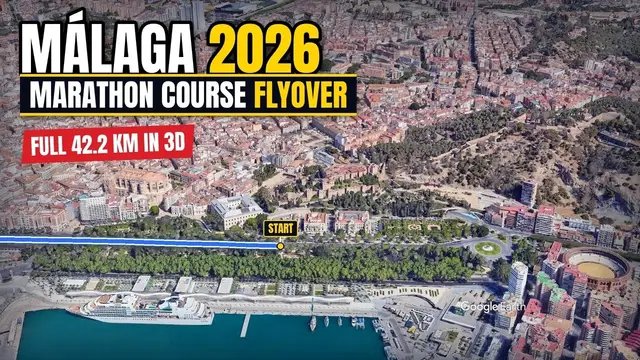
Yes. A 3D flyover film of the whole course, start to finish (3:56), plays at the top of this page.
The course is the one the first Olympic marathon ran in 1896, which Spyros Louis won, and it finishes in the stadium Herodes Atticus rebuilt around AD 144 and George Averoff’s money restored for those Games. The 2004 Olympic marathons finished there too. The race as an annual event began in 1972, as a joint venture between the Greek tourist board and the athletics association. Since 1982 it has been dedicated to Gregoris Lambrakis, and the organiser, SEGAS, credits the arrival of OPAP as grand sponsor in 2011 with a significant upgrade of the race.
It grew slowly and then quickly: 1,779 finishers in 2002, 3,855 in 2009, then 10,371 in 2010 and 15,279 in 2018. The 2020 race was cancelled. In 2024, 17,041 runners finished the marathon. For 2026, the 43rd edition, the organiser set a limit of 25,000 marathon runners, and both entry levels sold out.
A course this hilly is not built for fast times. Edwin Kiptoo of Kenya set the men’s record of 2:10:34 in 2023, three seconds inside the 2:10:37 Felix Kandie had run in 2014. The women’s record is older: Rasa Drazdauskaite of Lithuania ran 2:31:06 in 2010.
Checked against these sources on .
Film stills: Google Earth
42.2 km
42.2 km
Google EarthRace week