Photo: Daniel from Glasgow, United Kingdom, CC BY 2.0
Photo: Dguendel, CC BY 4.0
Photo: Robino Robokow, CC BY 3.0
Photo: W. Punt for Anefo, CC0
Photo: Han Jongeneel, CC BY 3.0
Photo: Han Jongeneel, CC BY 3.0
Photo: Alf van Beem, Public domain
Photo: Mister No, CC BY 3.0
Photo: Fons Heijnsbroek, CC0
Photo: Bram Wisman / Anefo, CC0
km 0mile 0
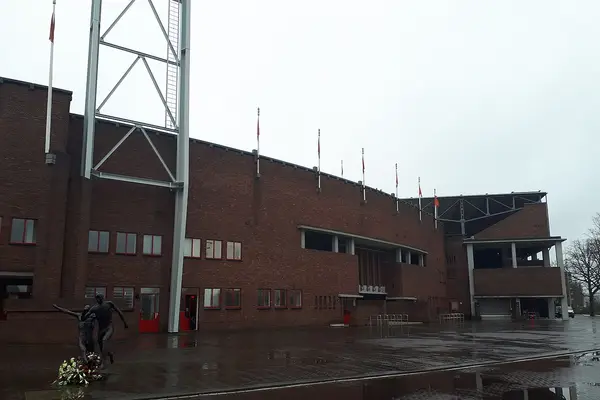
The start, inside the Olympic Stadium
Start Area A is the field inside the Olympic Stadium and Start Area B is Stadionweg just outside, 16,000 runners each; the first wave goes at 09:00 and the last at 09:43.
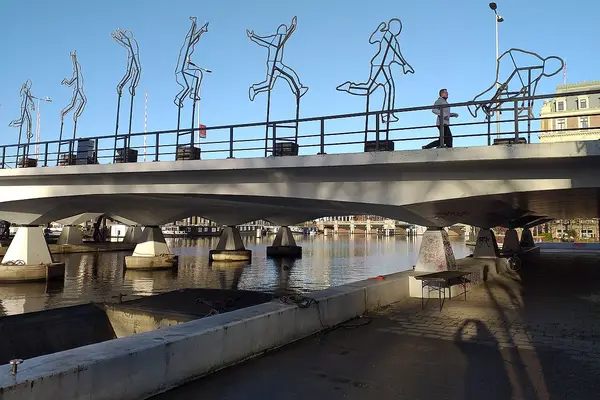
Photo: Daniel from Glasgow, United Kingdom, CC BY 2.0
km 2.6mile 1.6
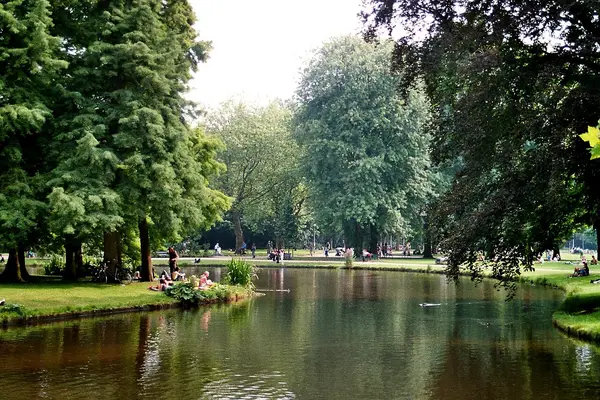
Vondelpark
Opened in 1865 as the New Park and renamed after the poet Joost van den Vondel once his statue went up in 1867; 47 hectares, about ten million visitors a year.
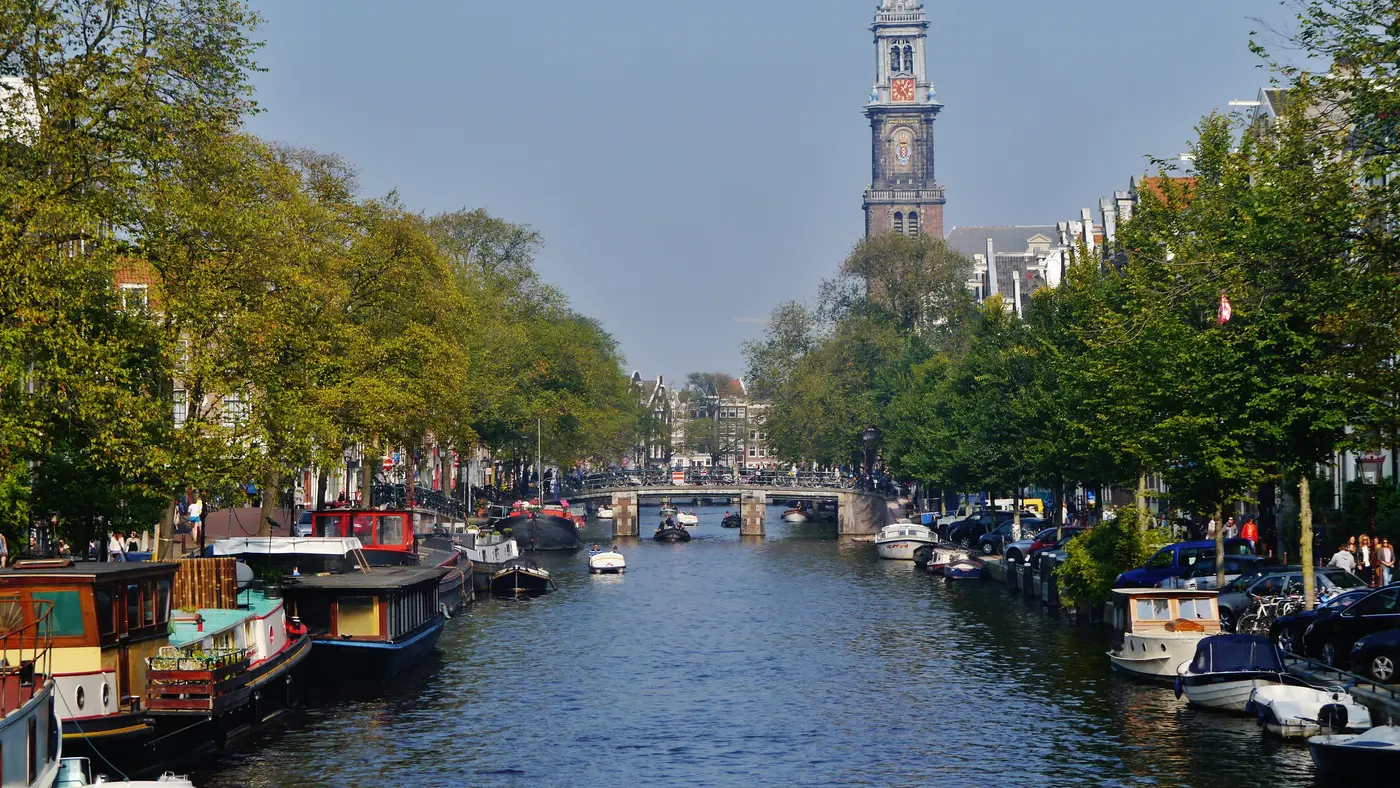
Photo: Dguendel, CC BY 4.0
km 4.1mile 2.5
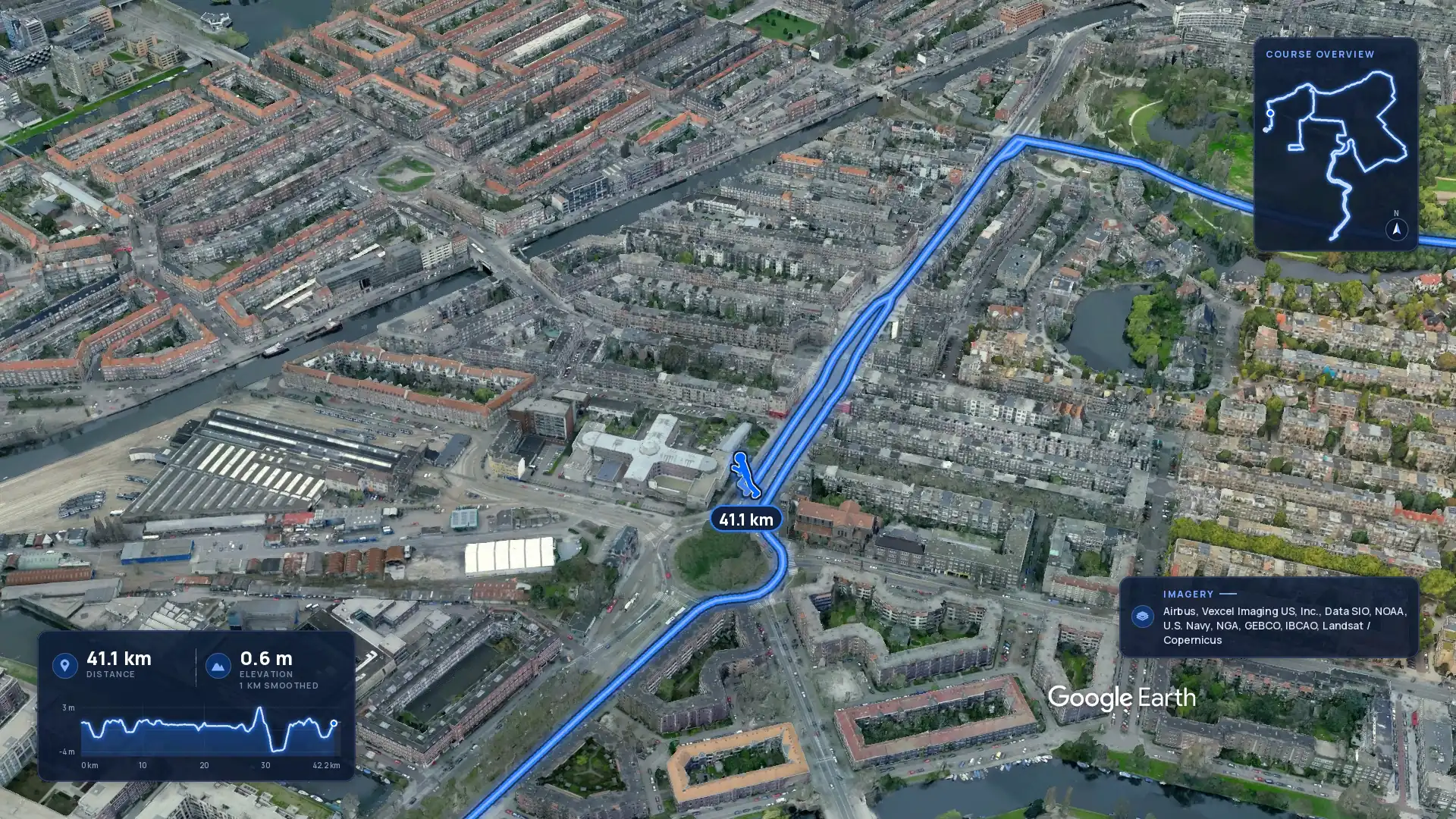
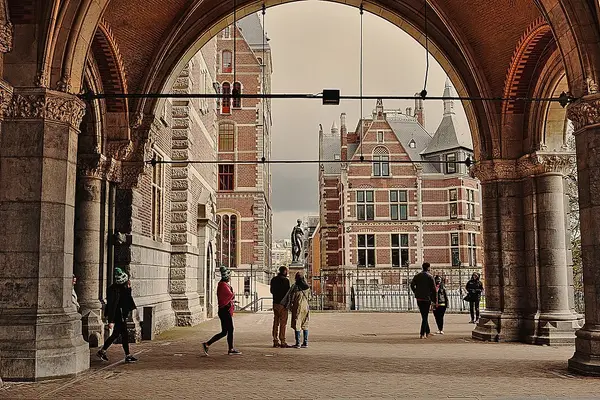
The passage under the Rijksmuseum
Pierre Cuypers' Rijksmuseum, opened on 13 July 1885, is built over a public passage, the Museumstraat, a condition the city set so the building would act as a gate to the new district south of it; closed to cars since 1931, it reopened to cyclists on 13 May 2013 after the museum's ten-year rebuild.
Photo: Robino Robokow, CC BY 3.0
km 15.4mile 9.5
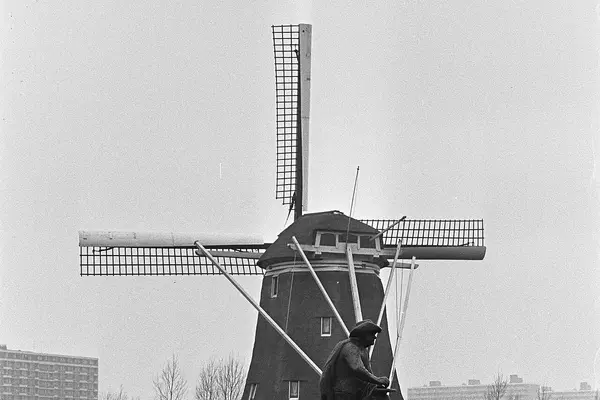
The Riekermolen and Rembrandt on the Amstel
A polder mill of 1636 that stood in the Riekerpolder near Sloten until the Nieuwe Meer was dug out; it was rebuilt here beside the Amstel in 1961. Beside it stands Han Wezelaar's statue of Rembrandt, unveiled in 1969, because the painter drew often along these banks.
Photo: W. Punt for Anefo, CC0
km 19.7mile 12.3
The turn at Ouderkerk aan de Amstel
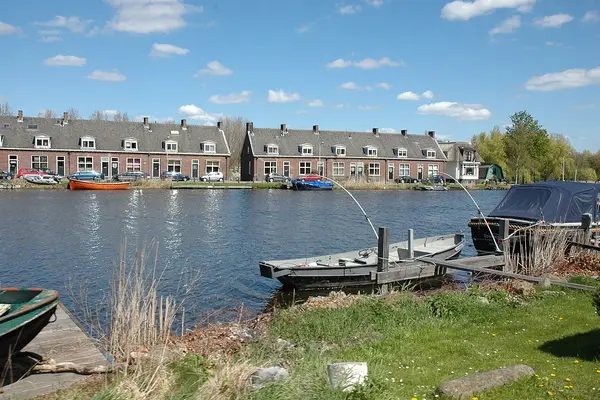
The village, first recorded in 1308 as Ouderkerken, grew where the Bullewijk meets the Amstel, about 9 km south of Amsterdam; its Beth Haim, bought in 1614, is the oldest Jewish cemetery in the Netherlands.
Photo: Han Jongeneel, CC BY 3.0
km 20.5mile 12.7
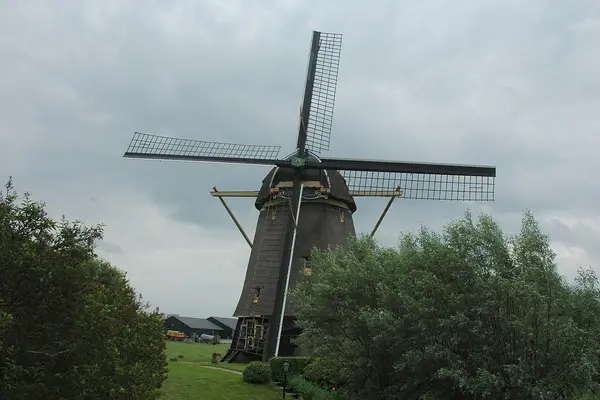
De Zwaan windmill
A polder mill built around 1638 to drain the Klein-Duivendrecht and Binnenbullewijk polders into the Amstel, sails 25.6 m across, owned since 2016 by Stadsherstel Amsterdam.
Photo: Han Jongeneel, CC BY 3.0
km 32.5mile 20.2
The Watergraafsmeer, below sea level
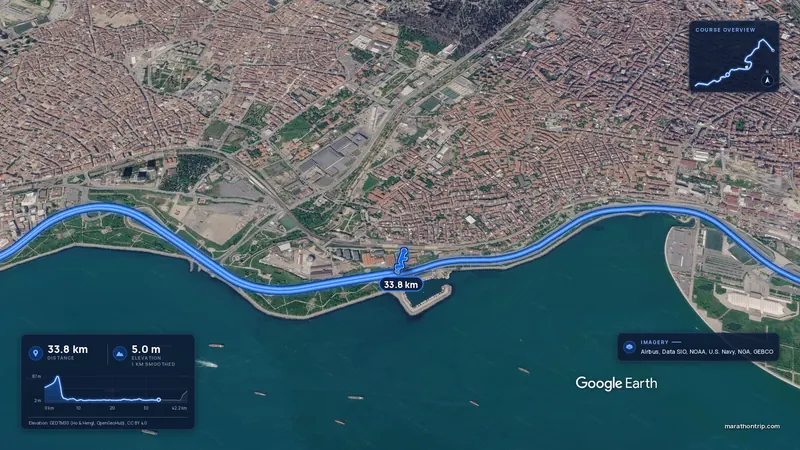
A polder drained in 1629 from the Diemermeer lake and among the lowest parts of Amsterdam, about 5 m below NAP, the Amsterdam datum close to mean sea level. The organiser's own elevation profile puts the course about 4 m below NAP from about 31 km to 34 km, its lowest stretch.
Photo: Alf van Beem, Public domain
km 35.1mile 21.8
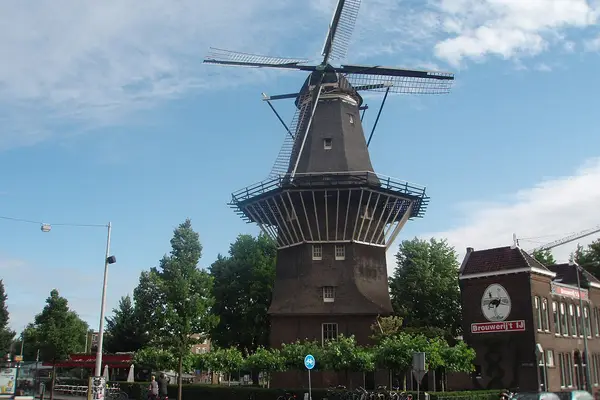
De Gooyer windmill
The last of the corn mills that stood on the bastions of Amsterdam's outer canal; rebuilt at this site on the Funenkade in 1814 on the base of an older water mill, after an earlier move in 1725, and bought and restored by the city in 1928.
Photo: Mister No, CC BY 3.0
km 36.9mile 22.9
Over the Amstel on the Torontobrug
A double bascule bridge carrying the Mauritskade and Stadhouderskade across the Amstel, with the Amstel Hotel beside it on the east bank.
Photo: Fons Heijnsbroek, CC0
km 42.2mile 26.2
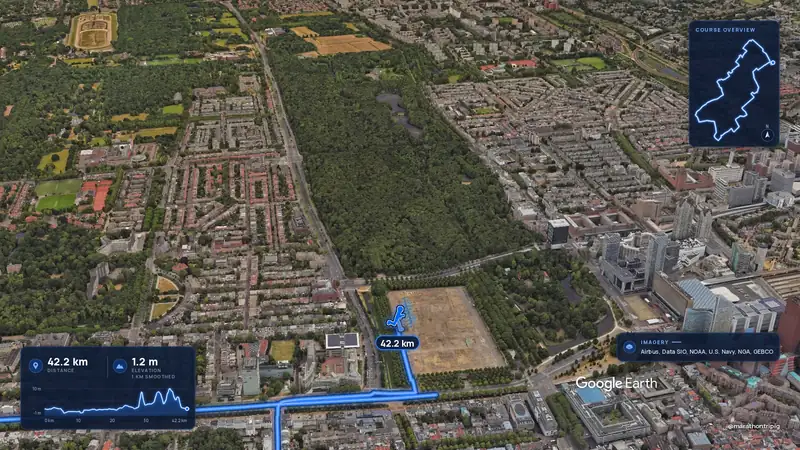
The finish, in the Olympic Stadium
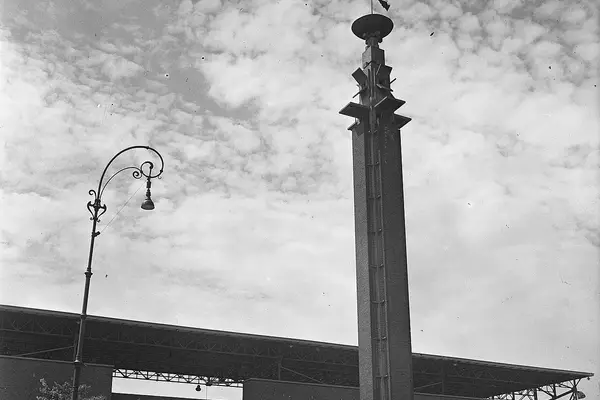
Runners finish on the track in front of the grandstand, after passing the Marathon Tower at the stadium's east entrance, where the first Olympic flame burned during the 1928 Games; there was no torch relay until 1936.
Photo: Bram Wisman / Anefo, CC0
Height drawn many times taller than life. Heights: Actueel Hoogtebestand Nederland (AHN4).
0 10 20 30 40 km
0 10 20 26.2 mi
Dashed: bridge upright dashes: cut-offs
flat all the way
Your 5 gels, at the orange marksFor a 4:00 finish, one every 40 minutes
Pierre Cuypers' Rijksmuseum, opened on 13 July 1885, is built over a public passage, the Museumstraat, a condition the city set so the building would act as a gate to the new district south of it.
A polder mill built around 1638 to drain the Klein-Duivendrecht and Binnenbullewijk polders into the Amstel, sails 25.6 m across, owned since 2016 by Stadsherstel Amsterdam.
A polder drained in 1629 from the Diemermeer lake and among the lowest parts of Amsterdam, about 5 m below NAP, the Amsterdam datum close to mean sea level.
Runners finish on the track in front of the grandstand, after passing the Marathon Tower at the stadium's east entrance, where the first Olympic flame burned during the 1928 Games.
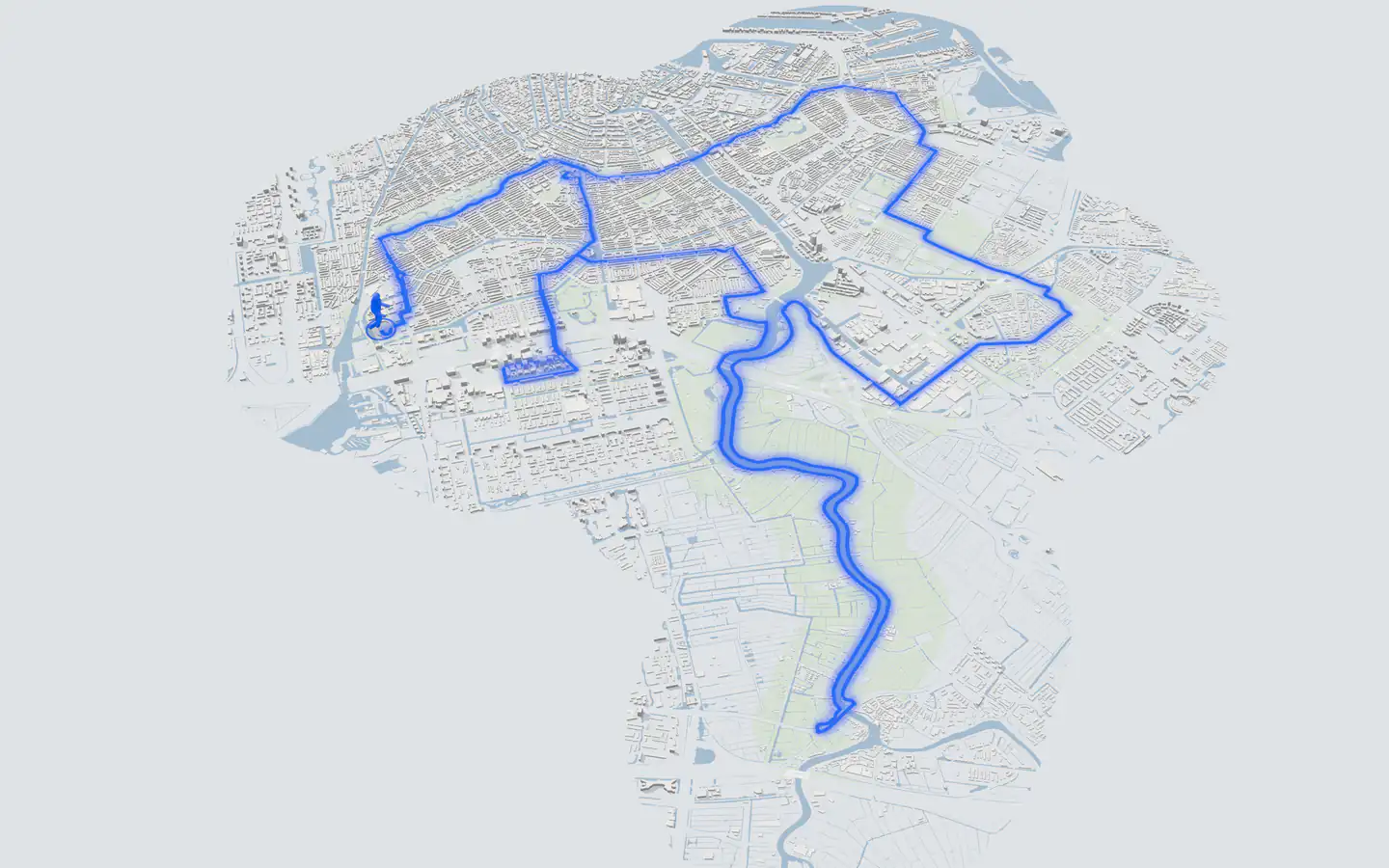
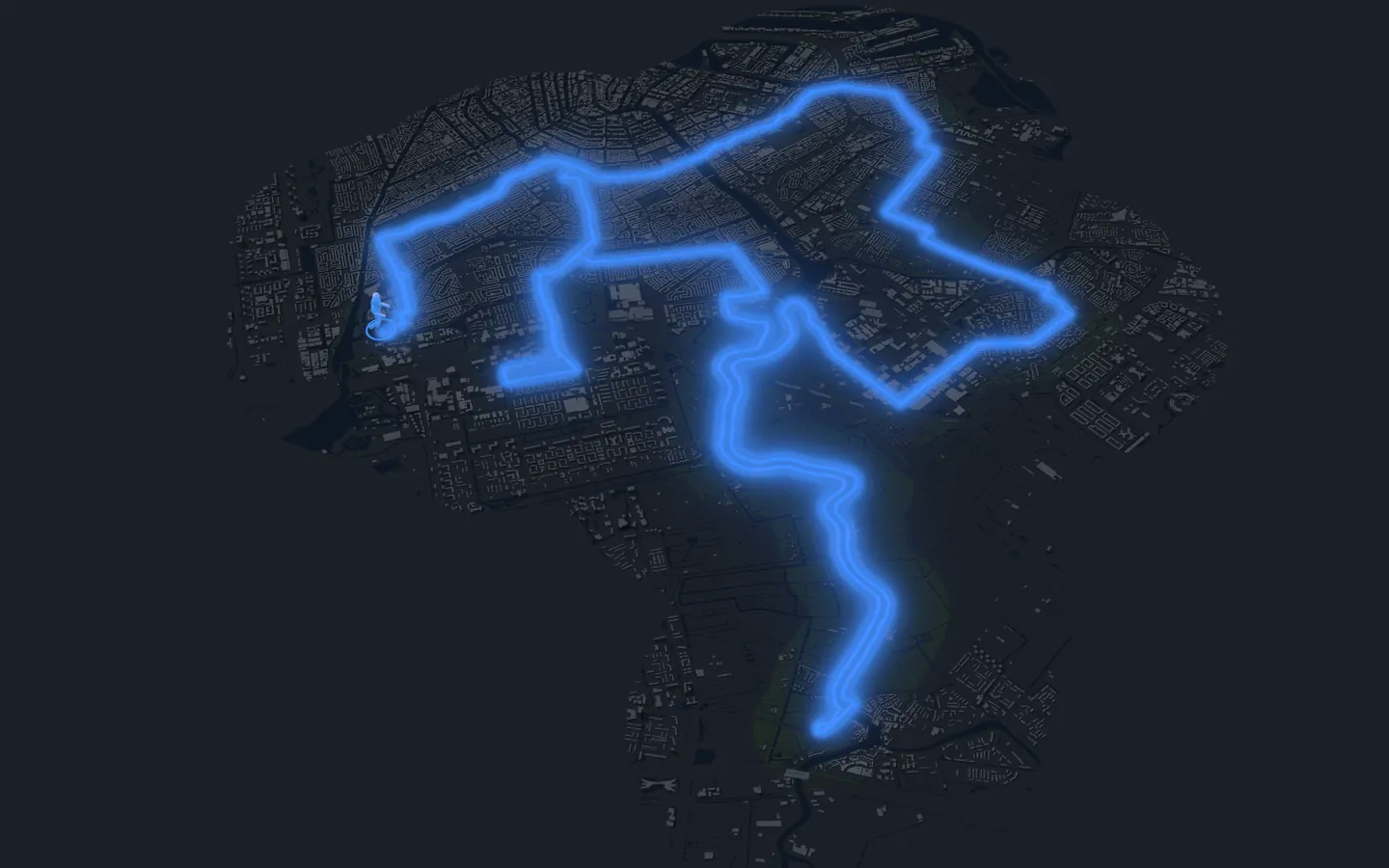
Amsterdam is a single loop from the Olympic Stadium and back, and the shape of it is simple to
hold in your head: out through the Vondelpark and the Rijksmuseum, a long middle along both banks
of the Amstel, a swing east through the polders, and home along the canal ring and the same park.
The whole race lies between 3.9 m below and 3.2 m above NAP, the zero every Dutch height is read
from. It is flat. It is not straight: the course turns 56 times, and no straight on it reaches a
mile. Plan your race around the corners and the river, not around hills.
Km 0 to 5: the stadium, the park and the museum
km 4.1 The passage under the Rijksmuseum
Km 0.0 The start, inside the Olympic Stadium
Photo: Daniel from Glasgow, United Kingdom, CC BY 2.0Km 2.6 Vondelpark
Photo: Dguendel, CC BY 4.0
The start is split. Start Area A is on the field inside the Olympic Stadium, Start Area B on
Stadionweg just outside it, and the two streams merge after about a kilometre. From Area A you
leave the track through the marathon gate and Stadionplein, then run north on Amstelveenseweg to
km 1.7. The Vondelpark follows, nearly two kilometres of park path to km 3.7, and part of it is
below sea level.
At the park’s far end the course takes Stadhouderskade and turns into Museumstraat, the cycle
passage that runs through the middle of the Rijksmuseum. From km 4.02 to 4.10 the building is over
your head. Hobbemastraat and Hobbemakade bring you back south to km 5.3.
Km 5 to 13.5: the Zuidas loop and the long straights
Stadionweg and Beethovenstraat take the course south into the Zuidas business district, where a
loop on Gustav Mahlerlaan, Parnassusweg and De Boelelaan turns it round at about km 8. Back north
on Beethovenstraat comes one of the longest straights, 1.31 km, then Stadionweg again, Apollolaan
and Muzenplein. Churchill-laan, from km 10.5 to 11.8, is the longest straight on the course at
1.32 km. Rijnstraat, President Kennedylaan and De Mirandalaan lead to the river at km 13.5.
This first third repeats itself more than it looks on a map. A quarter of the race, 11.2 km, is
run within 40 m of a stretch already run: the park, the stadium approach, and Stadionweg and
Beethovenstraat out to the Zuidas and back.
Km 13.5 to 25: the Amstel
km 20.5 De Zwaan windmill
Km 15.3 The Riekermolen and Rembrandt on the Amstel
Photo: W. Punt for Anefo, CC0Km 19.7 The turn at Ouderkerk aan de Amstel
Photo: Han Jongeneel, CC BY 3.0
The middle of the race is the river. From km 13.5 the
course follows the Amstel’s west bank south on the Amsteldijk, under the A10 ring road and out of
the city to Ouderkerk aan de Amstel. This is the stretch that follows part of the 1928 Olympic
marathon route. At Ouderkerk the course loops round and crosses the river on the bascule bridge
at km 19.7; the sharpest corner of the race, 122 degrees, comes in that loop at km 19.8.
Then back north on the east bank, on Binnenweg and the Ouderkerkerdijk, to km 25.0. Halfway, km
21.1, falls on the east bank with the city ahead of you. It is 11.6 km within 100 m of the river,
open and flat, one bank out and the other back.
Km 25 to 34: Overamstel and the Watergraafsmeer
Km 32.5 The Watergraafsmeer, below sea level
Photo: Alf van Beem, Public domain
Jan Vroegopsingel and Joan Muyskenweg, a 1.28 km straight beside the A2 motorway, take the course
east. On Van der Madeweg it reaches its highest point, which is not a hill but the embankment
beside the railway at Duivendrecht, 3.2 m above NAP at km 29.0.
From there it drops into the Watergraafsmeer, a drained lake that is now a polder. The steepest
half-kilometre of the whole course falls 0.49% on the way down. The stretch from km 30.2 to 33.9,
on Rozenburglaan, Kruislaan, Maxwellstraat, Hugo de Vrieslaan and Galileiplantsoen, is the longest
of the seven below sea level, and the lowest point of the race, 3.9 m below NAP, is on Rozenburglaan
at km 31.2. Archimedesweg and Molukkenstraat lead north.
Km 34 to the finish: the canal ring and the park again
km 42.2 The finish, in the Olympic Stadium
Km 35.1 De Gooyer windmill
Photo: Mister No, CC BY 3.0Km 36.9 Over the Amstel on the Torontobrug
Photo: Fons Heijnsbroek, CC0
The turns onto and off Borneostraat at km 34 are among the sharpest on the course, and they come
when the legs are tired. Zeeburgerdijk and Mauritskade take you west towards the canal ring, and at km 36.8 the course crosses the Amstel a second time, on the Torontobrug. Stadhouderskade
runs past the front of the Rijksmuseum at km 38.3.
From km 38.6 to 40.6 you run the same Vondelpark path as in the first five kilometres, westward
this time. Amstelveenseweg brings you south to km 41.7, the marathon gate takes you back into the
stadium, and the race ends on its track.
At a glance
distance
42.2 km26.2 mi
Loop, asphalt
climb
21.5 m71 ft
Highest point 7 m above lowest
cut-off
6:00 h
6 hours
places
32,000
Places
first held
1975
A loop from the Olympic Stadium and back that never strays more than 4 m from sea level, running through the Rijksmuseum at 4 km and 11.6 km beside the Amstel.
The Amsterdam Marathon is a flat loop of 42.2 km with 21.5 m of climbing. Its lowest point is 4 m below sea level and its highest 3 m above it. Next race: Sunday 31 October 2027.
Amsterdam has no ballot. Entries are sold in the order they arrive until a distance is full, and
registration for the 2027 race opens on Saturday 19 December 2026. The organiser has not given a
time of day or a 2027 price yet; the 2026 marathon opened at 12:00, cost 145 euro and sold out at
32,000 places. It sells fast: in 2023 the race was sold out more than three months before the
start. There is no late registration and no waiting list with the organiser. The one sanctioned
resale is the Atleta platform, which in 2026 ran until Wednesday 14 October.
The expo and your bib
Every runner collects their bib at the International Marathon Expo in RAI Amsterdam. In 2026 it
was open Thursday 13:00 to 20:00, Friday 10:00 to 20:00 and Saturday 09:00 to 19:00. It is closed
on Sunday and there is no bib pick-up on race day, so arrive by Saturday evening at the latest. Bibs
are not posted, including to runners abroad.
Bring the personal QR code that comes by email in early October and sits in the official app; it
also covers anything you ordered in advance. Someone else may collect for you with it. There is no
cash machine at the expo, and most stands take cards.
The rest of the weekend
Saturday carries the smaller races: a 7.5 km run from Stadionweg through Amsterdam-Zuid and the
Vondelpark into the stadium (14:15 in 2026, one-hour limit), kids’ runs and a morning city run.
The International Pasta Party runs on Saturday evening in the VIP tent at the Olympic Stadium, in
two sittings, 18:00 to 19:15 and 19:30 to 21:00 in 2026. The half marathon is on Sunday afternoon,
from Stadionweg at 13:20, and joins the marathon course after Churchill-laan, Rijnstraat and the
Utrechtse Brug.
In 2027 race day is also the morning the clocks change: summer time ends on the last Sunday of
October, and 31 October 2027 is that Sunday. The clocks go back an hour overnight, so check your
watch and alarm on Saturday night.
Race morning
The 2027 start times are not out yet. In 2026 the marathon went in six waves from both start areas
at once, chosen by your expected finish time and shown by the colour on your bib: white (invited
runners and up to 2:40) at 09:00, yellow (2:40 to 3:15) at 09:02, pink (3:15 to 3:45) at 09:11,
orange (3:45 to 4:00) at 09:24, green (4:00 to 4:30) at 09:34 and blue (4:30 to 6:00) at 09:43,
with the last runners over the line by about 09:50. You may start in a later wave than your colour,
never an earlier one. An email tells you your start area and time.
Start Area A has an Athletes Only Zone in the stadium that opened at 07:00, with toilets, water
and room to warm up; you show your bib to enter, and you can enter only once. Its corrals opened at
07:45, and runners in waves 1 and 2 had to be on the field by 08:50. The Area B pens on Stadionweg
opened at 08:00.
Clothing storage is free and in tents: in the Athletes Only Zone for Area A (from 07:30) and at
the IJsbaanpad for Area B (from 07:45), both until 17:00. There are no lockers, loose clothing may
not be taken into the stadium, and the organiser takes no responsibility for lost items.
The cut-off
The limit is six hours. In 2026 a sweeper vehicle ran to a published table: 10:31 at 5 km, 11:13
at 10 km, 11:55 at 15 km, 12:36 at 20 km and 13:18 at 25 km, and the finish closed at 17:00.
Runners it catches are asked to leave the race and get no medal. The table moves about 42 minutes
for every 5 km. If you cross the start at 09:50, the back of the last wave, you have 41 minutes to
reach 5 km, so the opening kilometres are where a slow runner has the least room.
The train from Schiphol to Amsterdam
Zuid takes about six minutes, and to Amsterdam Centraal 14 to 18 minutes. Fares quoted online in
2026 were 3.30 euro one way to Zuid, 3.50 to RAI and 4.90 to Centraal, with a surcharge for a
ticket from a machine.
Where to stay
Everything a runner needs on race weekend is in the south of the city. The start, the finish and
the Saturday pasta party are at the Olympic Stadium, the expo is at RAI, and Station Zuid, which
the organiser names as the station for race day, is also the station six minutes from the airport.
Amsterdam-Zuid, around the station, the Zuidas and the Vondelpark, keeps the expo, the start and
the airport all within a short ride. If you stay in the centre, the course runs between you and
the start: in 2026 Stadhouderskade was closed from 07:00 to 18:00 and Hobbemakade from 07:00 to
15:00, so plan the morning by metro rather than by road.
Race day transport
The organiser asks runners to come by public transport and to take the metro, because trams and
buses run a reduced service on race day. From Station Zuid, signs lead to the Olympic Stadium and
Sporthallen Zuid. You cannot park at the stadium or at Sporthallen Zuid; the organiser points
drivers to Bedrijventerrein Schinkel, RAI parking on Europaplein, P ArenA and the car park at
Station Noord, and to the Kiss and Ride on Jachthavenweg, a few minutes’ walk from the stadium.
Going home, note that the metro station at Amstelveenseweg was closed from 13:00 to 18:00 in 2026,
so walk to Station Zuid for the metro and train. Large parts of the city are closed to traffic on
the Sunday; the 2026 closures ran on the Amsteldijk from 09:30 to 14:00, President Kennedylaan
from 08:30 to 16:00 and Zeeburgerdijk from 10:15 to 19:00, among others. The organiser lists
every closure on its page for residents.
Climb summed after smoothing the heights over 1 km. The edge is this course's height profile on one scale for every race: 250 m above its lowest point fills it.
Climb summed after smoothing the heights over 1 km. The edge is this course's height profile on one scale for every race: 250 m above its lowest point fills it.
Climb summed after smoothing the heights over 1 km. The edge is this course's height profile on one scale for every race: 250 m above its lowest point fills it.
Climb summed after smoothing the heights over 1 km. The edge is this course's height profile on one scale for every race: 250 m above its lowest point fills it.
Climb summed after smoothing the heights over 1 km. The edge is this course's height profile on one scale for every race: 250 m above its lowest point fills it.
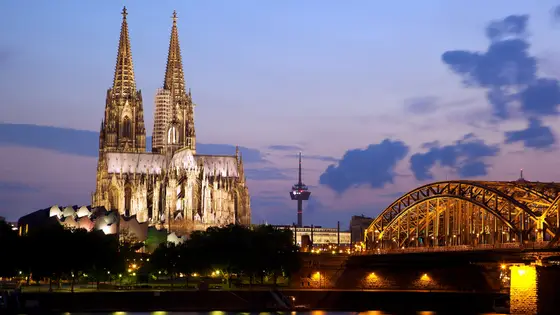
Climb summed after smoothing the heights over 1 km. The edge is this course's height profile on one scale for every race: 250 m above its lowest point fills it. Photo: Cologne Cathedral, by Jiuguang Wang, CC BY-SA 2.0, via Wikimedia Commons.
Climb summed after smoothing the heights over 1 km. The edge is this course's height profile on one scale for every race: 250 m above its lowest point fills it.
Climb summed after smoothing the heights over 1 km. The edge is this course's height profile on one scale for every race: 250 m above its lowest point fills it.
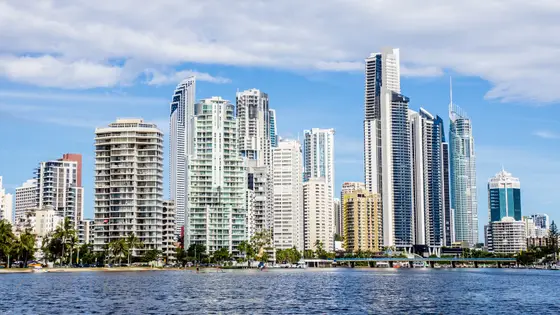
Climb summed after smoothing the heights over 1 km. The edge is this course's height profile on one scale for every race: 250 m above its lowest point fills it. Photo: Surfers Paradise, by chillmimi, CC BY 2.0, via Wikimedia Commons.
Questions about the Amsterdam Marathon
When is the Amsterdam Marathon 2027?
Sunday 31 October 2027. The organiser has set the race weekend for Saturday 30 and Sunday 31 October 2027, nearly two weeks later in the year than the 2026 race on 18 October. Start times and waves for 2027 are not published yet; in 2026 the first wave went at 09:00.
How do I get an entry for the Amsterdam Marathon?
There is no ballot. Entries are sold online in the order they arrive until the distance is full, and registration for 2027 opens on Saturday 19 December 2026. The 2026 marathon cost 145 euro and sold out at 32,000 places. There is no late registration and no waiting list with the organiser; the only resale is the official Atleta platform, which ran until 14 October in 2026.
Is the Amsterdam Marathon flat?
Yes. Measured on the AHN4 height model, the whole course lies between 3.9 m below and 3.2 m above NAP, the Dutch sea-level datum, and about 13 km of it is below sea level. The total climb is about 21.5 m. What slows it is not hills but corners, 56 of them, and no straight longer than 1.32 km.
9 more questions
What is the cut-off time for the Amsterdam Marathon?
Six hours. In 2026 a sweeper vehicle ran to a published table, 10:31 at 5 km, 11:13 at 10 km, 11:55 at 15 km, 12:36 at 20 km and 13:18 at 25 km, and the finish in the Olympic Stadium closed at 17:00. Runners the sweeper reaches are asked to leave the race and get no medal.
How do I get to the start of the Amsterdam Marathon?
By public transport to Station Zuid, where signs lead to the Olympic Stadium. The organiser advises taking the metro, since trams and buses run a reduced service on race day. There is no parking at the stadium or at Sporthallen Zuid; the drop-off point is the Kiss and Ride on Jachthavenweg, a few minutes' walk from the stadium.
Where do I pick up my bib for the Amsterdam Marathon?
At the expo in RAI Amsterdam, from Thursday to Saturday of race week. In 2026 it opened Thursday 13:00 to 20:00, Friday 10:00 to 20:00 and Saturday 09:00 to 19:00. There is no bib pick-up on race day and bibs are not posted. Bring the personal QR code from the race email or the app; someone else can collect for you with it.
Where does the Amsterdam Marathon start and finish?
In and beside the Olympic Stadium. The field is split between Start Area A on the stadium field and Start Area B on Stadionweg just outside, about 16,000 runners each, and the two streams merge after about a kilometre. Everyone finishes on the stadium track.
Is the Amsterdam Marathon course flat?
Yes. It has 21.5 m of climbing over 42.2 km. The highest point is 7 m above the lowest.
How do I enter the Amsterdam Marathon?
The dates for entry for the 2027 race are out. It opens on 19 December 2026. There are 2 ways in: Open entry and Atleta Resale. Entry fee: €145 (for the 2026 race). Entry details on the organiser’s site
What is the time limit at the Amsterdam Marathon?
Runners have 6 hours to finish.
What are the course records at the Amsterdam Marathon?
The first Amsterdam Marathon was run on 3 May 1975, as part of the city’s 700th anniversary.
Jørgen Jensen won it in 2:16:51, and Plonie Scheringa was the first woman home in 3:13:38. The
1978 race was cancelled when its sponsor withdrew, and the 2020 race was not run in person because
of Covid. Gerard Nijboer won it four times, in 1980, 1984, 1988 and 1989, and Haile Gebrselassie
won in 2005 in 2:06:20. It holds a World Athletics Platinum Label.
The field has grown fast. In 2023 a second start area was
added and 20,000 people started the marathon, 65% of them from outside the Netherlands and from
more than 130 nations. In 2026 the marathon had 32,000 places, the half 15,000, and 65,000 people
took part across the whole weekend. The 2025 race was the 50th anniversary edition.
Both course records are recent. On 19 October 2025, at that jubilee edition, Geoffrey Toroitich
Kipchumba of Kenya ran 2:03:30, taking nine seconds off the 2:03:39 Tamirat Tola set in 2021.
Aynalem Desta won the women’s race that day in 2:17:37. On 18 October 2026 Buze Diriba of Ethiopia
ran 2:16:12, beating the 2:16:52 Yalemzerf Yehualaw set in 2024, and Lemi Berhanu won the men’s
race in 2:03:33, three seconds outside Kipchumba’s record.