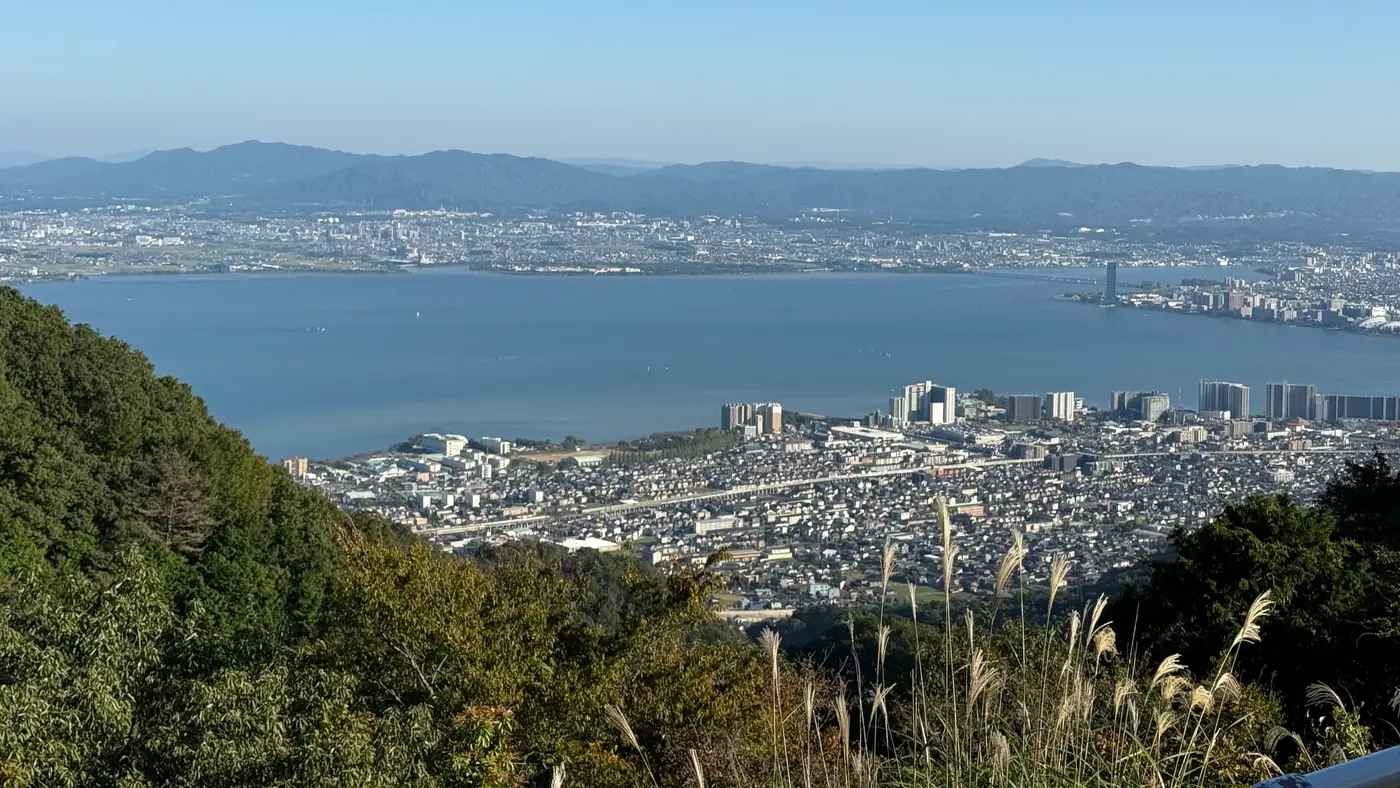
The organiser's 2021 course starts and finishes at Ojiyama Athletics Stadium in Otsu and turns in front of the new Seta water purification plant.
The course in short
3 lines
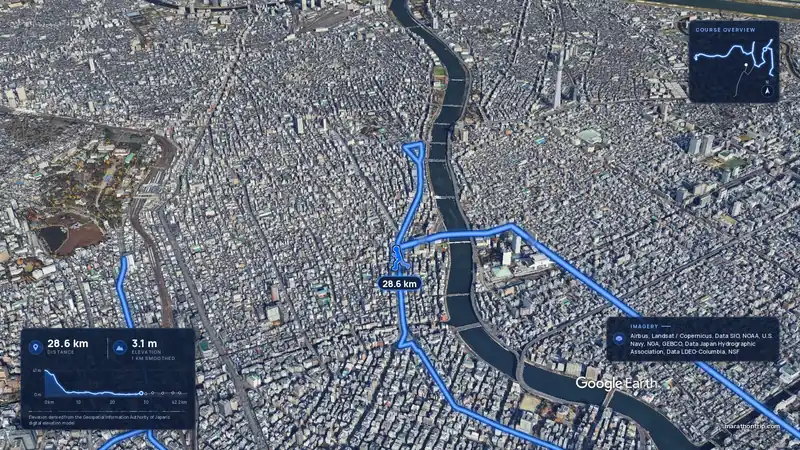
From Ojiyama stadium to the Seta turn and backOjiyama stadium, Yanagigasaki, Ishiyama-dera and the Seta river, turn at the water plant, back to the stadium.
A race for a qualified fieldThe 2021 race took qualified men only: a 2:30:00 marathon, or a federation invitation.
Run since 1946, on a course said to be flatFirst run in Osaka in 1946, in Otsu since 1962, on a course the organiser calls comparatively flat.
Course notes
3 short reads on the course
1Whole courseGeometryFrom Ojiyama stadium to the Seta turn and backOjiyama stadium, Yanagigasaki, Ishiyama-dera and the Seta river, turn at the water plant, back to the stadium.
The organiser describes the course as a list of places, in running order: 皇子山陸上競技場 (Ojiyama
Athletics Stadium), 柳が崎 (Yanagigasaki), 瀬田唐橋西詰 (the west end of the Seta Karahashi bridge), 石山寺
(Ishiyama-dera temple), 瀬田川洗堰 (the Seta river weir), 瀬田唐橋東詰 (the east end of the bridge), 県立漕艇場
(the prefectural rowing course), a turn in front of the new Seta water purification plant
(新瀬田浄水場前折り返し), and back to the stadium.
The organiser gives it as a Japan Association of Athletics Federations certified 42.195 km course (日本陸連公認).
This is the 2021 edition’s description.
Sourced
2Whole courseConditionsA race for a qualified fieldThe 2021 race took qualified men only: a 2:30:00 marathon, or a federation invitation.
The 2021 race was on Sunday 28 February, with the start at 9:15 (2021年2月28日(日) 9時15分スタート).
The organiser’s entry conditions name male athletes registered with the Japan Association of Athletics
Federations, aged 19 or over on race day, with a marathon of “2時間30分00秒以内” in the qualifying period, or a
shorter-distance standard such as 1:10:00 for the half marathon, and also “日本陸上競技連盟が推薦する男性競技者”,
men the federation recommends. The same page calls the race a World Athletics Gold Label race
(ゴールドラベルレース).
Gates closed at 15 km after 52 minutes and at 40 km after 2 hours 30 minutes
(◎40km地点 ……… 2時間30分), and the organiser stopped a runner who had not passed a gate by its closing time.
Sourced
3Whole courseGradientRun since 1946, on a course said to be flatFirst run in Osaka in 1946, in Otsu since 1962, on a course the organiser calls comparatively flat.
The organiser’s English page says the race “first fired its starting pistol in 1946 in Osaka and is
considered to be the oldest marathon held in Japan”, and that in 1962 it moved to Otsu, on the shore of
Japan’s oldest and largest lake.
Of the course it says: “The course is comparatively flat and considered to be ‘a fast-speed-course’.”
Sourced
At a glance
distance
42.2 km26.2 mi
Marathon, from the race name, not from a published programme
Climb summed after smoothing the heights over 1 km. The edge is this course's height profile on one scale for every race: 250 m above its lowest point fills it.
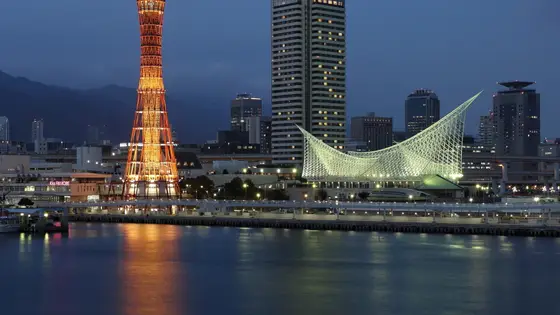
Climb summed after smoothing the heights over 1 km. The edge is this course's height profile on one scale for every race: 250 m above its lowest point fills it. Photo: Kobe, by Martin Falbisoner, CC BY-SA 4.0, via Wikimedia Commons.
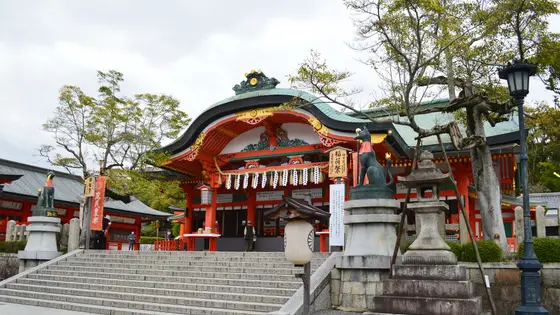
Climb summed after smoothing the heights over 1 km. The edge is this course's height profile on one scale for every race: 250 m above its lowest point fills it. Photo: Fushimi Inari-taisha, by Saigen Jiro, CC0, via Wikimedia Commons.
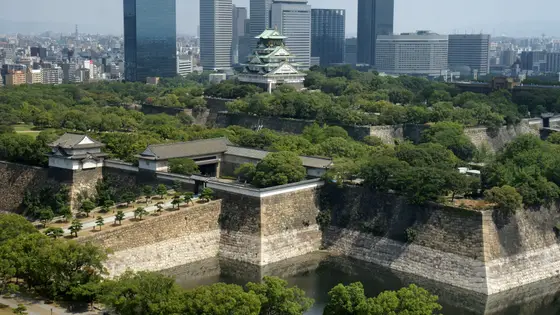
Climb summed after smoothing the heights over 1 km. The edge is this course's height profile on one scale for every race: 250 m above its lowest point fills it. Photo: Osaka Castle, by 663highland, CC BY 2.5, via Wikimedia Commons.
Climb summed after smoothing the heights over 1 km. The edge is this course's height profile on one scale for every race: 250 m above its lowest point fills it.
Climb summed after smoothing the heights over 1 km. The edge is this course's height profile on one scale for every race: 250 m above its lowest point fills it.
Climb summed after smoothing the heights over 1 km. The edge is this course's height profile on one scale for every race: 250 m above its lowest point fills it.
Climb summed after smoothing the heights over 1 km. The edge is this course's height profile on one scale for every race: 250 m above its lowest point fills it.
More races in Japan
We count visits anonymously. Accept, and PostHog (EU) also keeps an
analytics id in your browser. Privacy
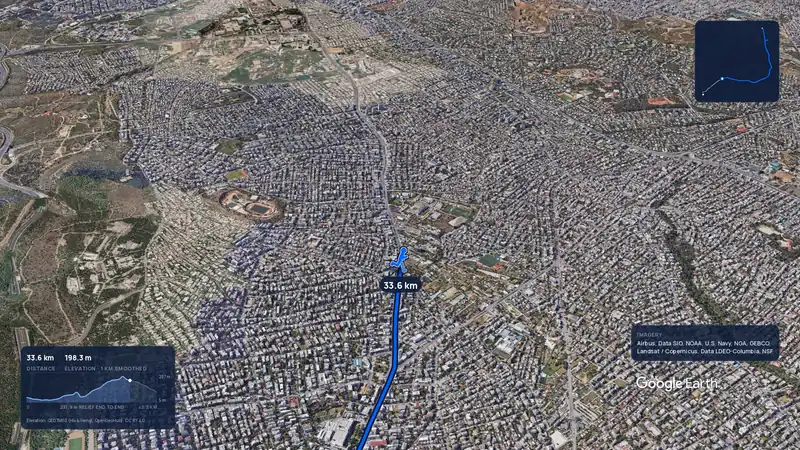
 Imagery: Google Earth4:01 film