
Entry through the organiser
Entry details on the organiser’s site →
The organiser, a third party. We take no entries and have no part in the race.
 Marathon Trip
Your trips on every device: sign in, or make a free account when you save one.
Signed in on this browser.
Sign in My marathons Account and dataLocked out? An export link you keep still opens your list in any browser.
No account: email it to me
One email with this trip and a link to open it again. We do not keep the address and send nothing else.
Only a race from our list can be emailed. An account keeps this one.
What we keep, and what we do notCheck your inbox at to confirm it.
Browse the racesEach edition the day it comes out, and nothing else. Off again with one click. How it is kept.
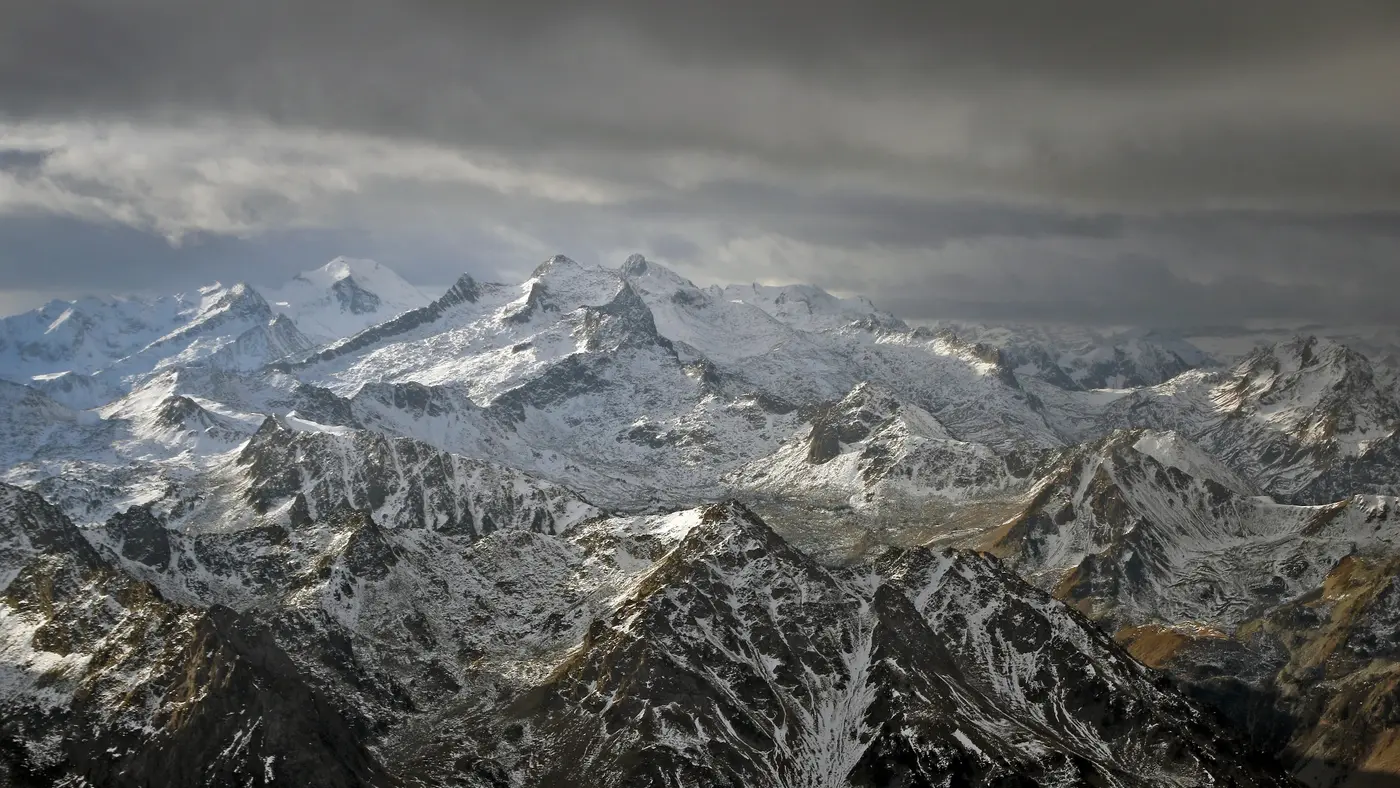
The 2026 Tour des Lacs was about 80 km with 5,100 m of climbing, starting on Saturday at 5:00 from the square in Vielle-Aure.
The organiser’s page for the 2026 Tour des Lacs gives a start at 5:00 on Saturday from the square in Vielle-Aure, about 80 kilometres and 5,100 metres of climbing. The best could finish in under 10 hours, and the time limit lets the last runners finish in under 25 hours. The route reaches 2,877 m at the summit of the Pic du Midi de Bigorre.
Sourced
Runners climb first on roads, then on ski slopes, to the Col de Portet, pass the Merlans aid station and enter the Néouvielle area at the Col de Bastanet. The long climb to the Col de Sencours leads to the summit of the Pic du Midi de Bigorre, and on the way back the route passes Tournaboup and returns to the Néouvielle by the Aygues Cluses aid station and the Hourquette Nère. A long descent to the Lac de l’Oule and the Bastanet fir forest comes before a last climb to the Col de Portet and the final descent by the Cap de Pède to Vielle-Aure. The organiser warns that many sections are mountain paths where running is difficult, notably around the Néouvielle, the Col de Bastanet and the Hourquette Nère.
Sourced
Entry through the organiser
The organiser, a third party. We take no entries and have no part in the race.
More races to look at after the Grand Raid des Pyrénées.
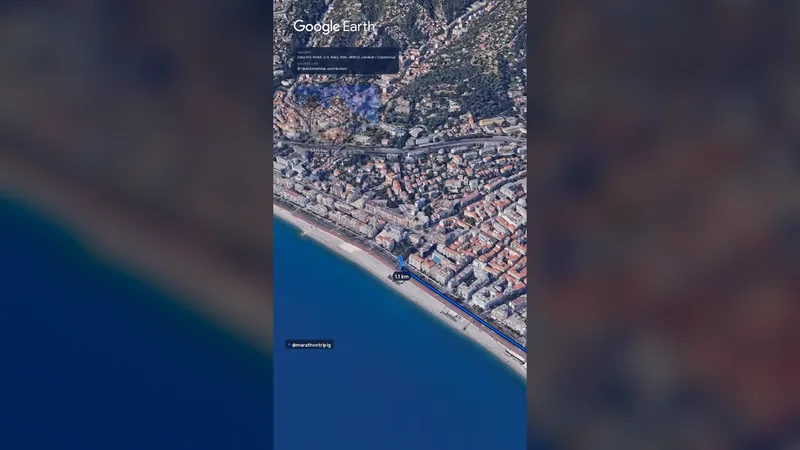 Imagery: Google Earth1:14 filmRace week
Nice, France
Sun 8 Nov42.2 kmClimb 71 m
Climb summed after smoothing the heights over 1 km. The edge is this course's height profile on one scale for every race: 250 m above its lowest point fills it.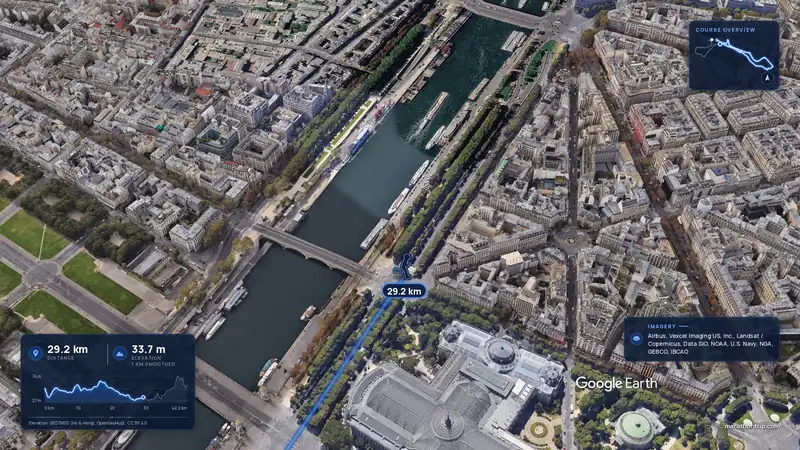 Imagery: Google Earth3:56 film
Paris, France
Sun 4 Apr 202742.2 kmClimb 142 m
Climb summed after smoothing the heights over 1 km. The edge is this course's height profile on one scale for every race: 250 m above its lowest point fills it.
Sapporo, Japan
Aug 202742.2 km
Photo: Sapporo TV Tower, by ノボホショコロトソ, CC BY 4.0, via Wikimedia Commons.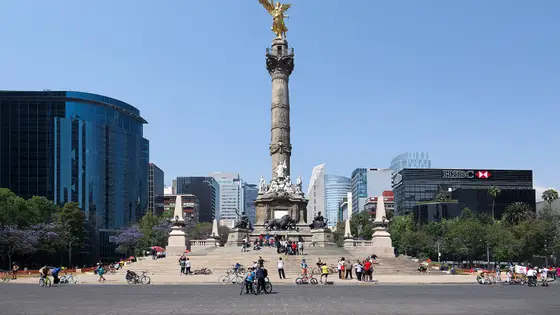
Mexico City, Mexico
Aug 202742.2 kmClimb 68 m
Climb summed after smoothing the heights over 1 km. The edge is this course's height profile on one scale for every race: 250 m above its lowest point fills it. Photo: Angel of Independence, by Carlos Valenzuela, CC BY-SA 4.0, via Wikimedia Commons.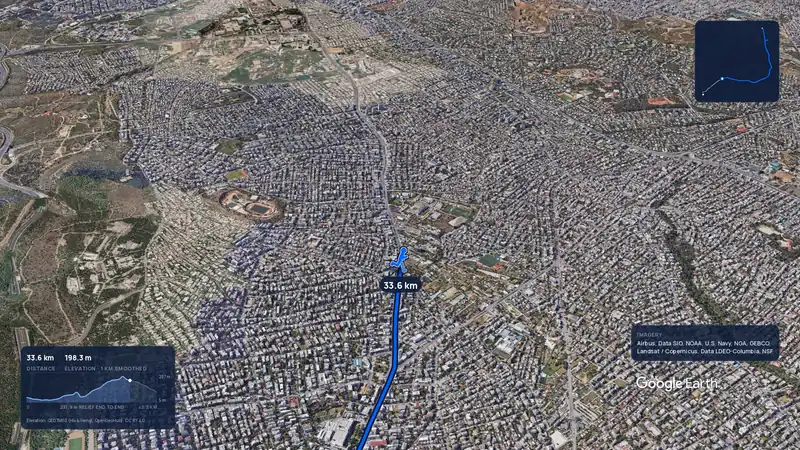 Imagery: Google Earth3:56 filmRace week
Athens, Greece
Sun 8 Nov42.2 kmClimb 281 m
Climb summed after smoothing the heights over 1 km. The edge is this course's height profile on one scale for every race: 250 m above its lowest point fills it.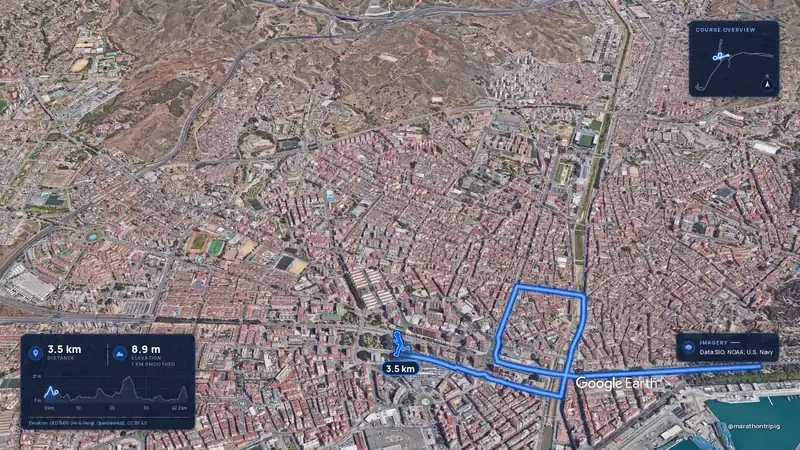 Imagery: Google Earth3:50 filmRace week
Malaga, Spain
Sun 8 Nov42.2 kmClimb 63 m
Climb summed after smoothing the heights over 1 km. The edge is this course's height profile on one scale for every race: 250 m above its lowest point fills it.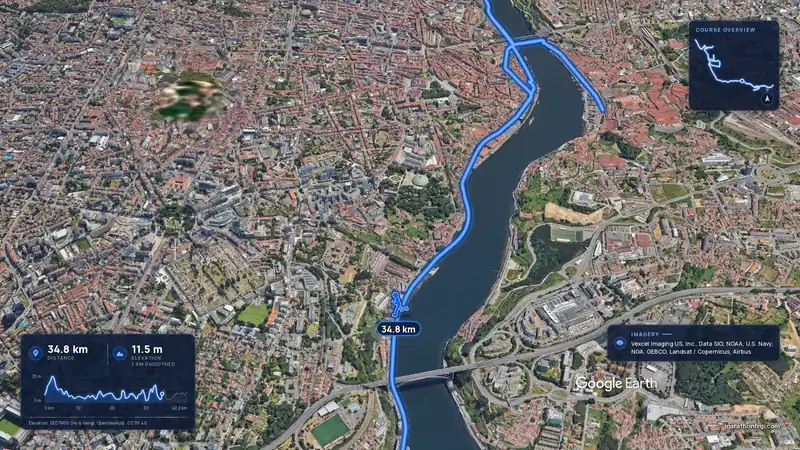 Imagery: Google Earth3:53 filmRace week
Porto, Portugal
Sun 8 Nov42.2 kmClimb 133 m
Climb summed after smoothing the heights over 1 km. The edge is this course's height profile on one scale for every race: 250 m above its lowest point fills it.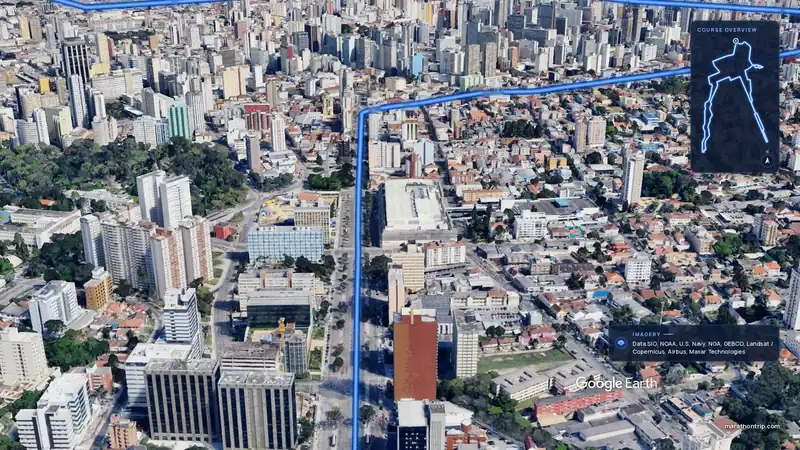 Imagery: Google Earth3:51 filmEntry open
Curitiba, Brazil
Sun 15 Nov42.2 kmClimb 128 m
Climb summed after smoothing the heights over 1 km. The edge is this course's height profile on one scale for every race: 250 m above its lowest point fills it.