


Entry through the organiser
Entry details on the organiser’s site →
RPM Sports (RPM MKTG S.L.), a third party. We take no entries and have no part in the race.
 Marathon Trip
Your trips on every device: sign in, or make a free account when you save one.
Signed in on this browser.
Sign in My marathons Account and dataLocked out? An export link you keep still opens your list in any browser.
No account: email it to me
One email with this trip and a link to open it again. We do not keep the address and send nothing else.
Only a race from our list can be emailed. An account keeps this one.
What we keep, and what we do notCheck your inbox at to confirm it.
Browse the racesEach edition the day it comes out, and nothing else. Off again with one click. How it is kept.
Downhill from km 7 to km 10, a slow rise of 18 m to km 16, then downhill again to km 24.
© OpenStreetMap contributors
km 3.8mile 2.4
Gaudí's Casa Batlló on Passeig de Gràcia, which the course crosses on Carrer d'Aragó at km 3.8.
Photo: Julian Lupyan, CC0
km 10.4mile 6.4
The cable-stayed footbridge by Santiago Calatrava in Sant Martí, on Carrer de Felip II at km 10.4.
Photo: Goyo Arriaga, CC BY 3.0
km 14.2mile 8.8
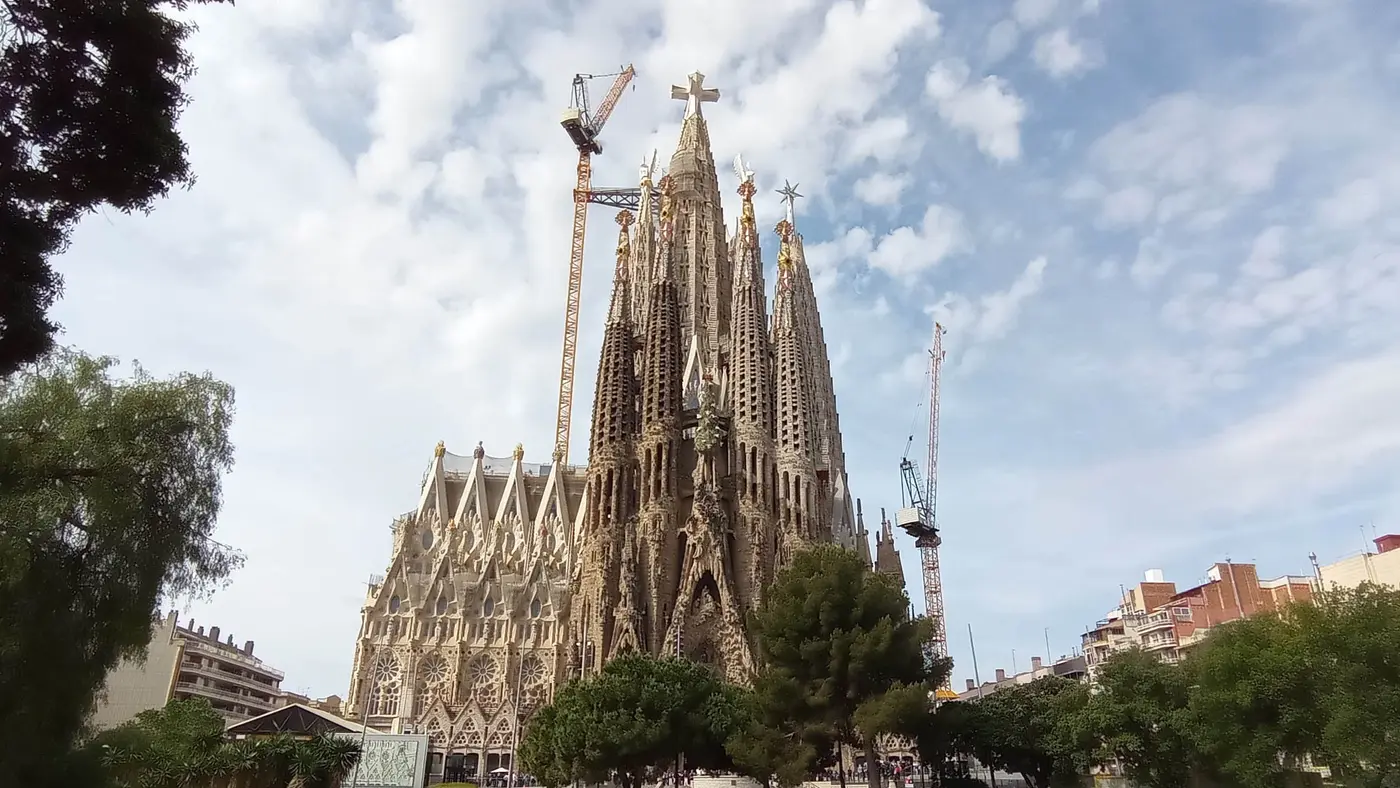
The Sagrada Família, which the course passes on Carrer de Mallorca at km 14.2.
Photo: Hetemacaba, CC0
km 15.6mile 9.7
Gaudí's Casa Milà on Passeig de Gràcia, about 170 m from the line on Carrer de Mallorca at km 15.6.
Photo: Leandro Neumann Ciuffo, CC BY 2.0
km 19mile 11.8
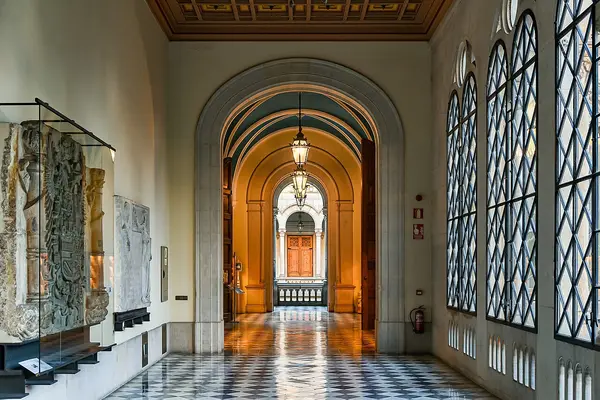
The historic building of the University of Barcelona on Plaça de la Universitat, where the course turns off Gran Via at km 19.
Photo: Jorge Franganillo, CC BY 2.0
km 19.4mile 12
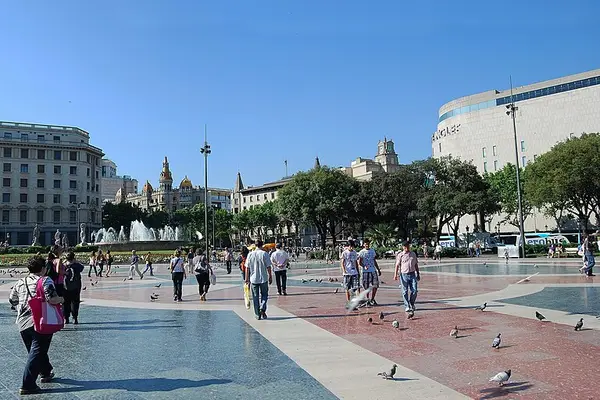
The course runs out along Ronda de la Universitat to the edge of Plaça de Catalunya and back, turning at km 19.4.
Photo: cisko66, CC BY 3.0
km 24.1mile 15
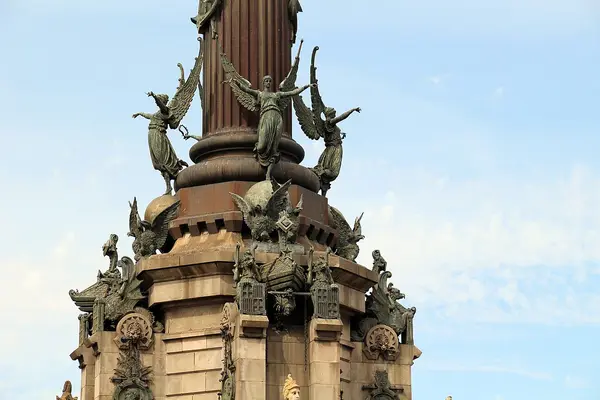
The Columbus Monument at the foot of La Rambla, passed on Passeig de Colom at km 24.1.
Photo: Fred Romero, CC BY 2.0
km 26mile 16.2
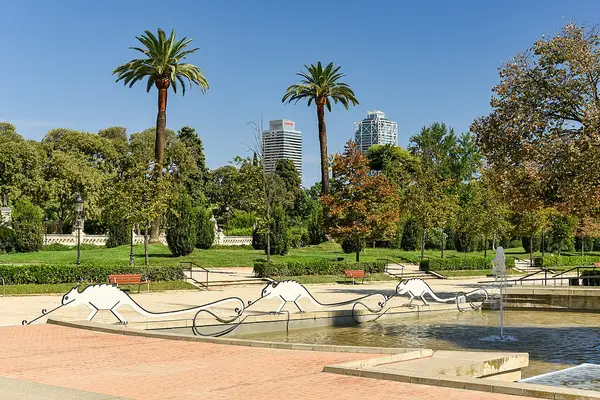
Parc de la Ciutadella, about 200 m from the line on Passeig de Pujades at km 26.
Photo: Jorge Franganillo, CC BY 2.0
km 27.4mile 17.1
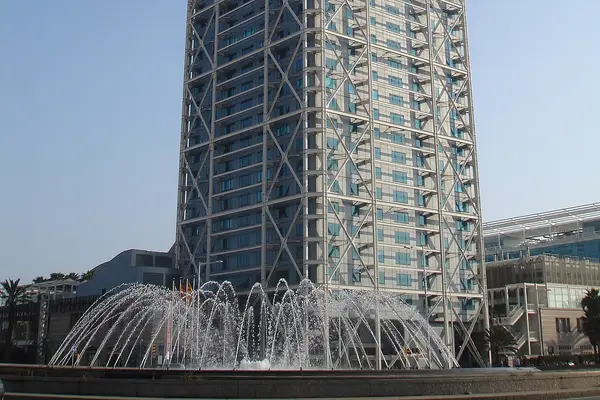
The Olympic Port of 1992 and the Hotel Arts tower, passed at the foot of Carrer de la Marina at km 27.4.
Photo: Borkur Sigurbjornsson from Barcelona, CC BY 2.0
km 31mile 19.3
The Fòrum waterfront at the far end of the course, passed on Carrer de Josep Pla at km 31.
Photo: Zarateman, CC0
km 33.3mile 20.7
Torre Glòries, in view from Avinguda Diagonal about 340 m from the turn at km 33.3.
Photo: Zarateman, CC0
km 42.2mile 26.2
The Arc de Triomf, at the end of Passeig de Lluís Companys, where the course finishes.
Photo: Fred Romero, CC BY 2.0
Height drawn many times taller than life. Heights: MDT05.
Dashed: bridge

Your 5 gels, at the orange marksFor a 4:00 finish, one every 40 minutes
Get them on AmazonAmazon partner link
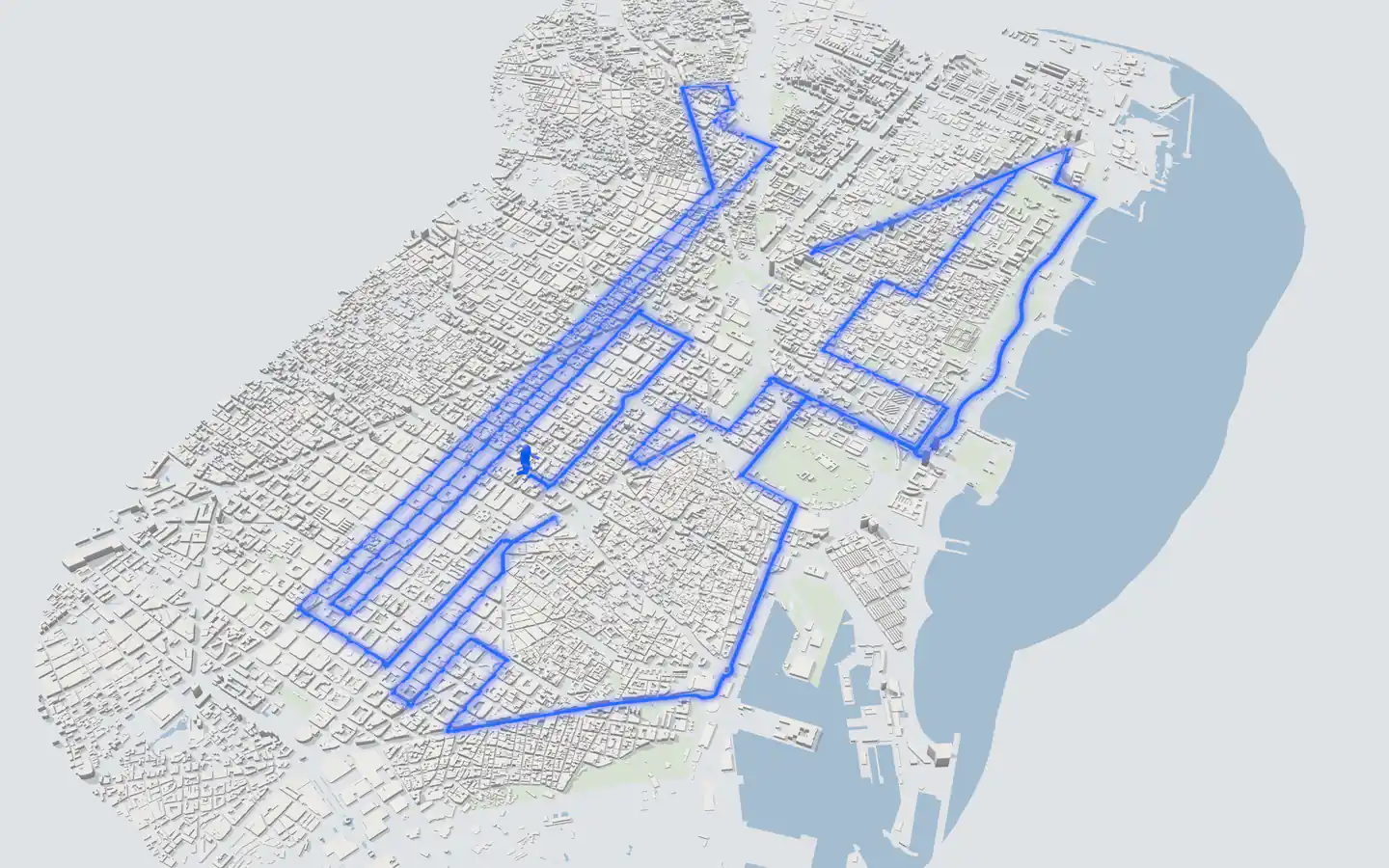
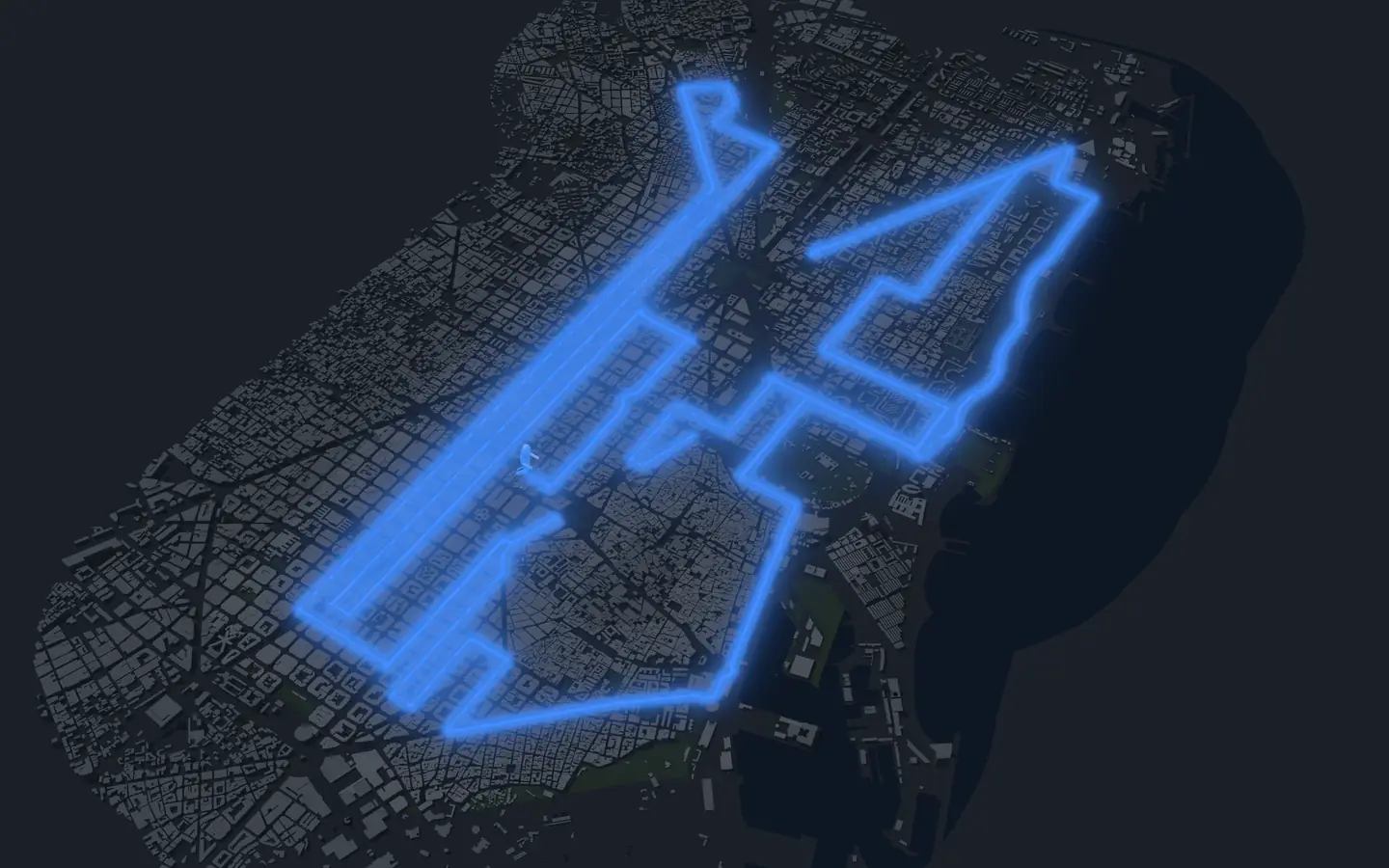
The matched course line, to scale
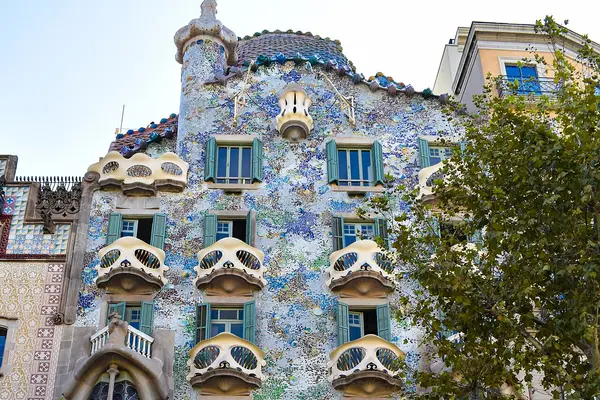
km 3.8mile 2.4
Gaudí's Casa Batlló on Passeig de Gràcia, which the course crosses on Carrer d'Aragó at km 3.8.
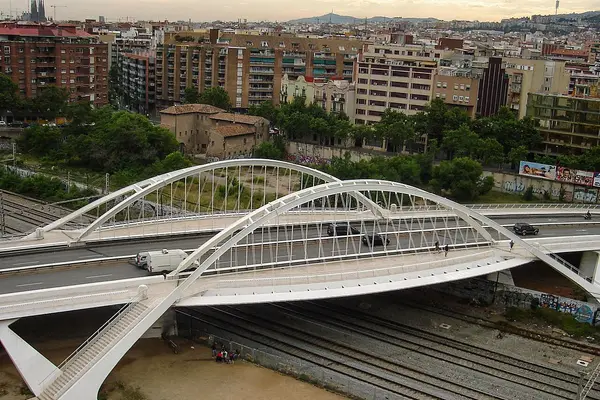
km 10.4mile 6.4
The cable-stayed footbridge by Santiago Calatrava in Sant Martí, on Carrer de Felip II at km 10.4.
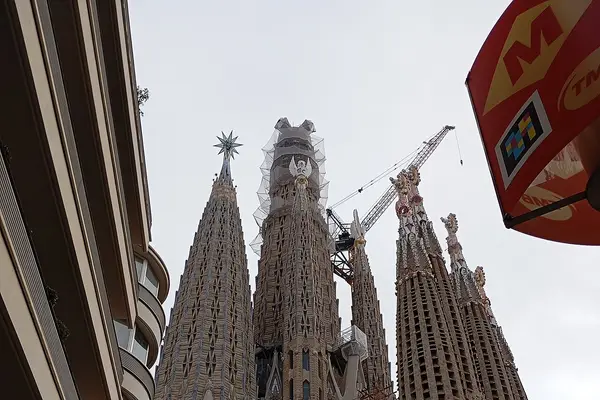
km 14.2mile 8.8
The Sagrada Família, which the course passes on Carrer de Mallorca at km 14.2.
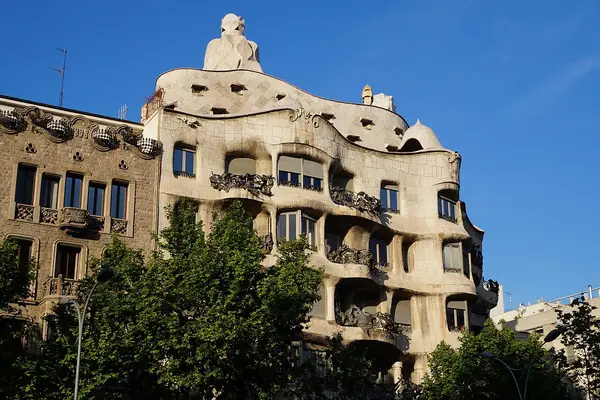
km 15.6mile 9.7
Gaudí's Casa Milà on Passeig de Gràcia, about 170 m from the line on Carrer de Mallorca at km 15.6.
km 19mile 11.8
The historic building of the University of Barcelona on Plaça de la Universitat, where the course turns off Gran Via at km 19.
km 19.4mile 12
The course runs out along Ronda de la Universitat to the edge of Plaça de Catalunya and back, turning at km 19.4.
km 24.1mile 15
The Columbus Monument at the foot of La Rambla, passed on Passeig de Colom at km 24.1.
km 26mile 16.2
Parc de la Ciutadella, about 200 m from the line on Passeig de Pujades at km 26.
km 27.4mile 17.1
The Olympic Port of 1992 and the Hotel Arts tower, passed at the foot of Carrer de la Marina at km 27.4.
km 31mile 19.3
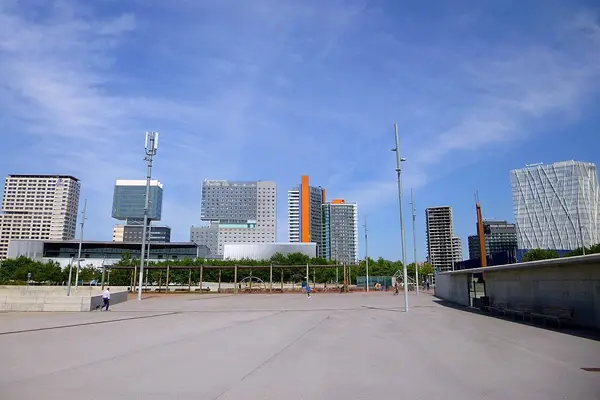
The Fòrum waterfront at the far end of the course, passed on Carrer de Josep Pla at km 31.
km 33.3mile 20.7
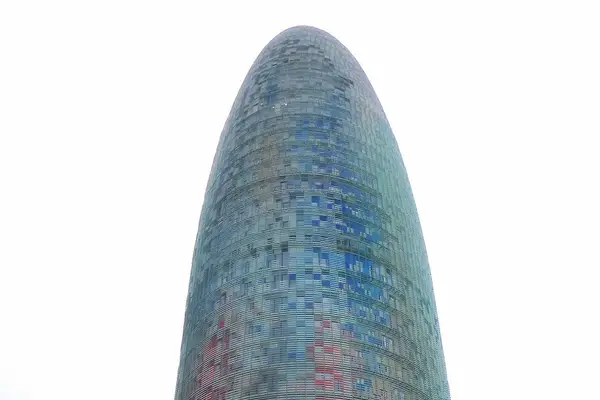
Torre Glòries, in view from Avinguda Diagonal about 340 m from the turn at km 33.3.
km 42.2mile 26.2
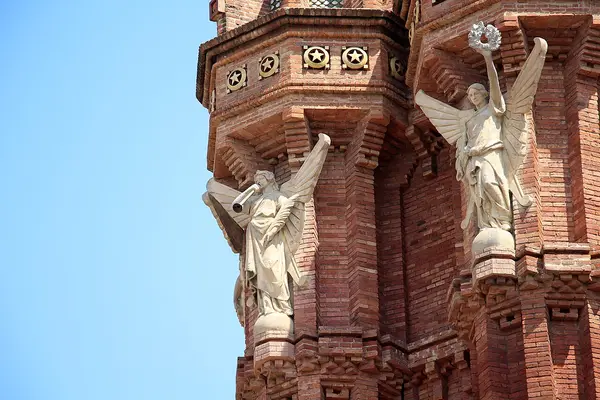
The Arc de Triomf, at the end of Passeig de Lluís Companys, where the course finishes.
Barcelona front-loads its hills, and they are small. The whole course climbs 58.5 m, and 41.5 m of that comes in the first half, on the long cross-town streets of the Eixample. The high point, 34.7 m, is near La Pedrera at about km 15.7. From there the road falls 31 m to the port by km 24, then holds within a few metres of sea level for 12 km along the seafront and out along the Diagonal. The only surprise is the end: the last 6 km climb about 11 m to the Arc de Triomf, which is gentle on paper and real in the legs.
The course starts on Passeig de Gràcia and finishes by the Arc de Triomf, about 1.1 km apart, after two out-and-back turns. It no longer starts and finishes at Plaça d’Espanya: works there forced the organiser to rethink the route, as Ara reported before the 2026 race. The kilometres and heights below are measured along the organiser’s course map of 15 March 2026, which is the map on its course page for 2027, on Spain’s national 5 m elevation model. The organiser has not said whether anything changes for 2027, so check the course page before you plan your pacing.
The start line is on Passeig de Gràcia between Plaça de Catalunya and Gran Via, at 22.9 m. After about 175 m the course turns onto Gran Via de les Corts Catalanes and runs east along it for 1.5 km, losing about 5 m, then turns a short way up Carrer de la Marina to Carrer d’Aragó. This is the crowded opening, and the gentle drop invites a fast first kilometre.
Carrer d’Aragó carries the course 3 km west, straight across the grid, and it gains about 11 m on the way. At about km 3.8 it crosses Passeig de Gràcia beside Gaudí’s Casa Batlló. A short link on Carrer de Viladomat at about km 5.2 turns the race onto Carrer de València, which brings it all the way back east for 5.2 km. València peaks at about 32 m near km 6.8, then falls about 15 m to its lowest at about km 10.1, so the second half of this stretch is a long, easy descent. At about km 10.4 the course crosses Santiago Calatrava’s Pont de Bac de Roda.
This is the only real climb of the race. Felip II, Josep Estivill, Gran de la Sagrera and Garcilaso lead into Avinguda Meridiana, which brings the course back toward the centre to Carrer de Mallorca at about km 12.8. Mallorca then runs west for 4.4 km, past the Sagrada Família at about km 14.2. Between km 10 and km 16 the road gains 21.1 m with only 3.2 m of descent, and it tops out at 34.7 m at about km 15.7, close to La Pedrera on Passeig de Gràcia. That is over a third of the race’s climbing in a seventh of its distance. Because it rises so gradually, it is easy to chase pace here; effort is the better guide.
Once over the top, the course comes down with hardly a break. Mallorca runs on to Carrer de Calàbria at about km 17.2, which drops to Gran Via, and Gran Via brings the race back east to Plaça de la Universitat and the historic university building at about km 19. A short out-and-back on Ronda de la Universitat turns at the edge of Plaça de Catalunya at about km 19.4, a few hundred metres from where the race began. Ronda de Sant Antoni and Carrer de Sepúlveda then lead west, and halfway falls around the corner from Carrer de Rocafort into Carrer de Floridablanca. Comte d’Urgell and Manso bring the course to Avinguda del Paral·lel at about km 22.4, and the Paral·lel runs straight down to the waterfront, losing about 8 m in 1.5 km. From km 16 to km 25 the road descends 31.2 m and climbs only 2.1 m.
At about km 24.1 the course passes the Columbus Monument at the foot of La Rambla and follows Passeig de Colom along the old port. Passeig d’Isabel II, Avinguda del Marquès de l’Argentera, Passeig de Picasso and Passeig de Pujades take it past Parc de la Ciutadella at about km 26, and Carrer de la Marina brings it back to the sea at the Port Olímpic, by the Hotel Arts tower, at about km 27.4. Avinguda del Litoral then runs nearly 3 km along the seafront, and Carrer de Josep Pla and Passeig del Taulat bring the course to the Fòrum at about km 31. This whole stretch sits between about 4 m and 8 m above the sea, as flat as a city marathon gets, and exposed to any wind off the water.
At Plaça de Llevant the course turns onto Avinguda Diagonal and runs out 2.3 km toward Torre Glòries, turning at about km 33.3, then comes back along the same avenue to Carrer de Llull at about km 35.1. On the way out you see the faster runners coming back, and on the way back you see everyone still heading out. It is flat, with about 1 m of climbing in 4 km. The lowest point of the whole race, about 3 m above the sea, comes soon after, at about km 36.3 on Carrer de Llull.
The last kilometres wind back toward the centre on Llull, Llacuna, Pallars, Pamplona and Salvador Espriu, then north on Carrer de la Marina from about km 39.1. From the low at km 36.3 the road climbs 11.6 m to a local high of 14.5 m at about km 41.5, and most of that, about 8 m, comes in the last 3 km, on Marina, Almogàvers, Roger de Flor and Ausiàs Marc. Carrer del Bruc and Ronda de Sant Pere bring the course to the line by the Arc de Triomf, at 13.4 m, 9.5 m lower than the start. Save something for it: it is the only real climb of the second half.
A loop from a start on Passeig de Gràcia to a finish by the Arc de Triomf, passing the Sagrada Família and the Mediterranean shoreline along the way.
The Barcelona Marathon is a loop of 42.2 km with 58.5 m of climbing. Its lowest point is 3 m and its highest 35 m above sea level. Next race: Sunday 14 March 2027, starting at 08:30.
30 Apr 2026
31 Jan 2027
16 Feb 2027
22 Feb 2027 · 23:5911:59 PM
7 Mar 2027
15:003:00 PM–20:008:00 PM
09:009:00 AM–20:008:00 PM
09:009:00 AM–20:008:00 PM
09:309:30 AM
10:0010:00 AM–13:001:00 PM
08:258:25 AM
08:308:30 AM
until 16:004:00 PM
Times as published by RPM Sports (RPM MKTG S.L.), in Barcelona time, checked .
The forecast for Sunday
Add to calendar .ics file, times in Barcelona time
The organiser had published most of its 2027 race-week details by the end of October 2026, but not the expo venue, the bag drop or the racebook. Check the bib pick-up page again in the weeks before the race.
Bibs and chips are handed out only in person at Expo Sports, the runners’ fair, and never on race day. Collection runs on Thursday 11 March from 3pm (the bib page still marks the Thursday as to be confirmed), and on Friday 12 and Saturday 13 March from 9am to 8pm. The last chance is 8pm on the Saturday, so a runner flying in on the Sunday morning cannot run. The expo page lists the fair itself open until 9pm. Bring photo ID (the organiser asks for a national identity card) and the email that shows your bib number. Another person can collect your bib if you authorise them, carrying your receipt and ID. The venue was still “coming soon” in October 2026.
The expo also has a stand for engraving your finisher medal, and there is another near the finish line on race day.
The start is organised in colour-coded corrals chosen at registration, and you may only enter the corral of your own colour. Changes close on 31 January 2027. Wheelchair athletes start at 8.25am, five minutes before the main start, and blind athletes start at a time they choose when they register.
The organiser runs 35 pacers on seven target times: 2:45, 3:00, 3:15, 3:30, 3:45, 4:00 and 4:30.
The time limit is six hours from the moment the last runner crosses the start line, and the race ends at 4pm. Runners overtaken by the closing vehicles are disqualified.
The regulation puts drinks stations at km 5, 7.5, 10, 12.5 and 15 and then about every 2.5 km to km 40, with drinks and food at the finish. The organiser’s FAQ, which still carries an older edition’s dates, lists the km 20 point with toilets, water, isotonic drink, nuts, grapes, bananas, medical services and a gel. The finisher medal is handed out once you pass the last refreshment point after the line.
On the Saturday morning a free, non-competitive 4 km Breakfast Run leaves from the Puig i Cadafalch towers on Montjuïc at 9.30am, limited to 2,000 entries, and its registration showed as sold out in September 2026. The kids’ races run on Passeig de Lluís Companys, by the finish, the same morning.
Entry through the organiser
RPM Sports (RPM MKTG S.L.), a third party. We take no entries and have no part in the race.
The organiser gives no airport advice. These times are from a Barcelona travel guide; fares change, so check them before you travel. The Aerobús runs around the clock, every 5 to 20 minutes, and takes about 35 minutes to Plaça de Catalunya, which is the end of Passeig de Gràcia where the race starts. The guide gave its one-way fare as EUR 7.75. Metro line L9 Sud reaches Plaça de Catalunya in about 50 minutes including a change, on an airport ticket of EUR 5.90. The Rodalies R2 Nord train takes about 20 minutes to Barcelona-Sants.
The start is on Passeig de Gràcia at Plaça de Catalunya and the finish by the Arc de Triomf, about 1.1 km apart, so the lower Eixample, Sant Pere and El Born all put both within a walk. The course itself runs through the Eixample twice in the first 20 km, and the Breakfast Run on the Saturday leaves from Montjuïc, across town. The organiser gives no area advice of its own.
The organiser had not published race-day transport or road-closure information for 2027 by the end of October 2026. The regulation says the Guardia Urbana is responsible for safety on the public roads, and that the route may change slightly because of roadworks. Check the organiser’s pages in race week for closures and any changes to metro hours.
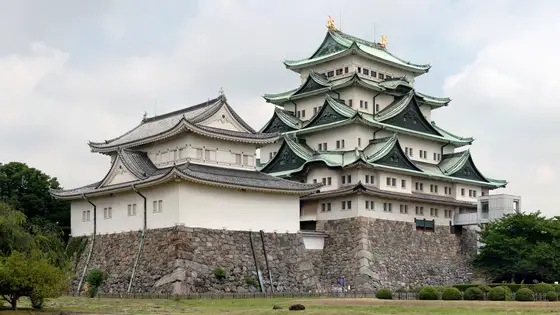
Nagoya, Japan
Sun 14 Mar 202742.2 kmClimb 52 m
Climb summed after smoothing the heights over 1 km. The edge is this course's height profile on one scale for every race: 250 m above its lowest point fills it. Photo: Nagoya Castle, by Base64, CC BY-SA 3.0, via Wikimedia Commons.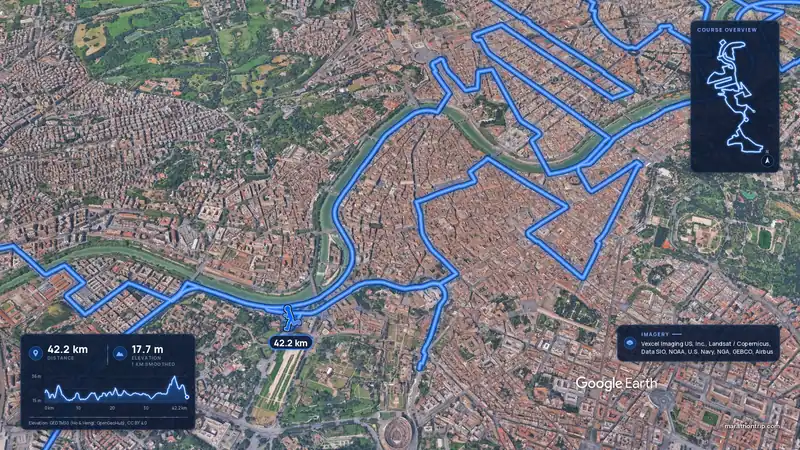 Imagery: Google Earth3:56 filmEntry open
Rome, Italy
Sun 14 Mar 202742.2 kmClimb 87 m
Climb summed after smoothing the heights over 1 km. The edge is this course's height profile on one scale for every race: 250 m above its lowest point fills it.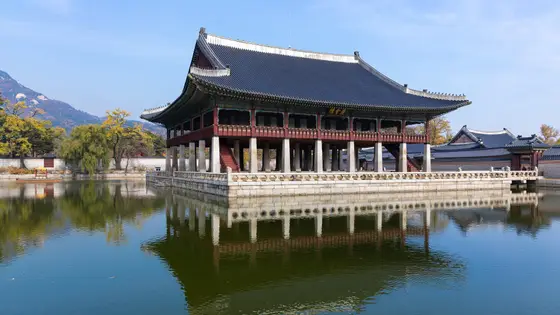
Seoul, South Korea
Sun 21 Mar 202742.2 kmClimb 59 m
Climb summed after smoothing the heights over 1 km. The edge is this course's height profile on one scale for every race: 250 m above its lowest point fills it. Photo: Gyeongbokgung, by Frank Schulenburg, CC BY-SA 4.0, via Wikimedia Commons.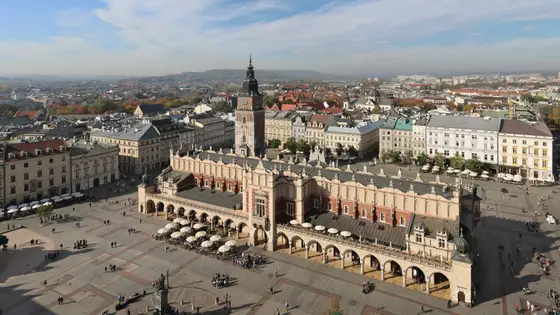
Krakow, Poland
Sun 18 Apr 202742.2 kmClimb 55 m
Climb summed after smoothing the heights over 1 km. The edge is this course's height profile on one scale for every race: 250 m above its lowest point fills it. Photo: Main Square, by Ingo Mehling, CC BY-SA 4.0, via Wikimedia Commons.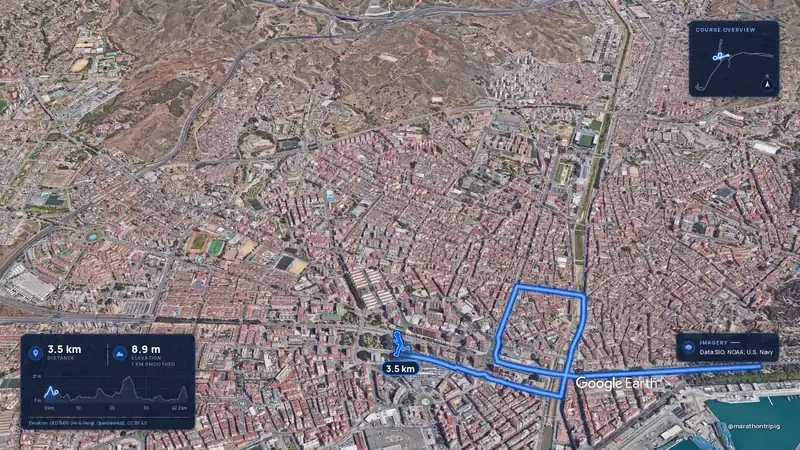 Imagery: Google Earth3:50 filmRace week
Malaga, Spain
Sun 8 Nov42.2 kmClimb 63 m
Climb summed after smoothing the heights over 1 km. The edge is this course's height profile on one scale for every race: 250 m above its lowest point fills it.Sunday 14 March 2027. The start is at 8.30am on Passeig de Gràcia, between Gran Via and Plaça de Catalunya, with wheelchair athletes away at 8.25am. The finish is by the Arc de Triomf.
There is no ballot. Registration opened on 30 April 2026 for 37,000 places and closes on 7 March 2027, or earlier if the quota fills. Entry is priced by bib number rather than by date, in tiers of 70, 80, 90 and 100 EUR, and the 100 EUR tier was the one on sale in September 2026. It includes the bib, the medal and a T-shirt. Runners must be 18 on race day.
Close to it. The whole course climbs 58.5 m, and the organiser calls it an urban circuit, flat and fast. The one sustained climb is in the Eixample, 21.1 m between about km 10 and km 16, up to the high point of 34.7 m near La Pedrera. From km 24 to km 36 the road stays within a few metres of sea level, and the last 6 km rise about 11 m to the finish.
Six hours, counted from the moment the last runner crosses the start line, and the race ends at 4pm. Runners overtaken by the closing vehicles are disqualified.
In person at Expo Sports, on Friday 12 or Saturday 13 March 2027, and on Thursday 11 March if the organiser confirms that session, with collection closing at 8pm on the Saturday. No bibs are handed out on race day. Bring photo ID and the email showing your bib number. Someone else can collect for you if you authorise them, with your receipt and ID. The organiser had not named the 2027 venue by the end of October 2026.
Yes. The organiser runs 35 pacers on seven target times: 2:45, 3:00, 3:15, 3:30, 3:45, 4:00 and 4:30.
Yes, until 31 January 2027, through Manage your registration. Each corral has a colour, and you may only enter the one on your bib.
Entry is through the organiser. Entry fee: €100 (for the 2027 race). Entry details on the organiser’s site
Runners have 6 hours to finish. The finish closes at 16:00.
13,437 runners finished in 2019.
Barcelona’s marathon goes back to 1978, when the first race was run not in the city but in Palafrugell, on the Costa Brava. The field passed 10,000 in 2010 and reached 13,437 finishers in 2019. It was smaller after the pandemic, with 9,145 finishers in 2021 and 5,410 in 2022, and then grew fast. In 2026 all 32,000 available bibs were taken, more than half of them by runners from abroad, according to Ara, and Diari Catalunya called it a record field, 5,000 up on the year before. For 2027 the organiser raised the quota to 37,000. World Athletics lists the race with an Elite Label.
The women’s record is new. Fotyen Tesfay of Ethiopia won the women’s race in 2:10:51 on her marathon debut, almost eight minutes clear, per World Athletics. The previous course record, Sharon Chelimo’s 2:19:33, fell by more than eight minutes. The men’s course record is Tesfaye Deriba’s 2:04:13 from 2025, which held in 2026, when Abel Chelangat of Uganda won in 2:04:57 ahead of Patrick Mosin of Kenya in 2:05:01.
Checked against these sources on .