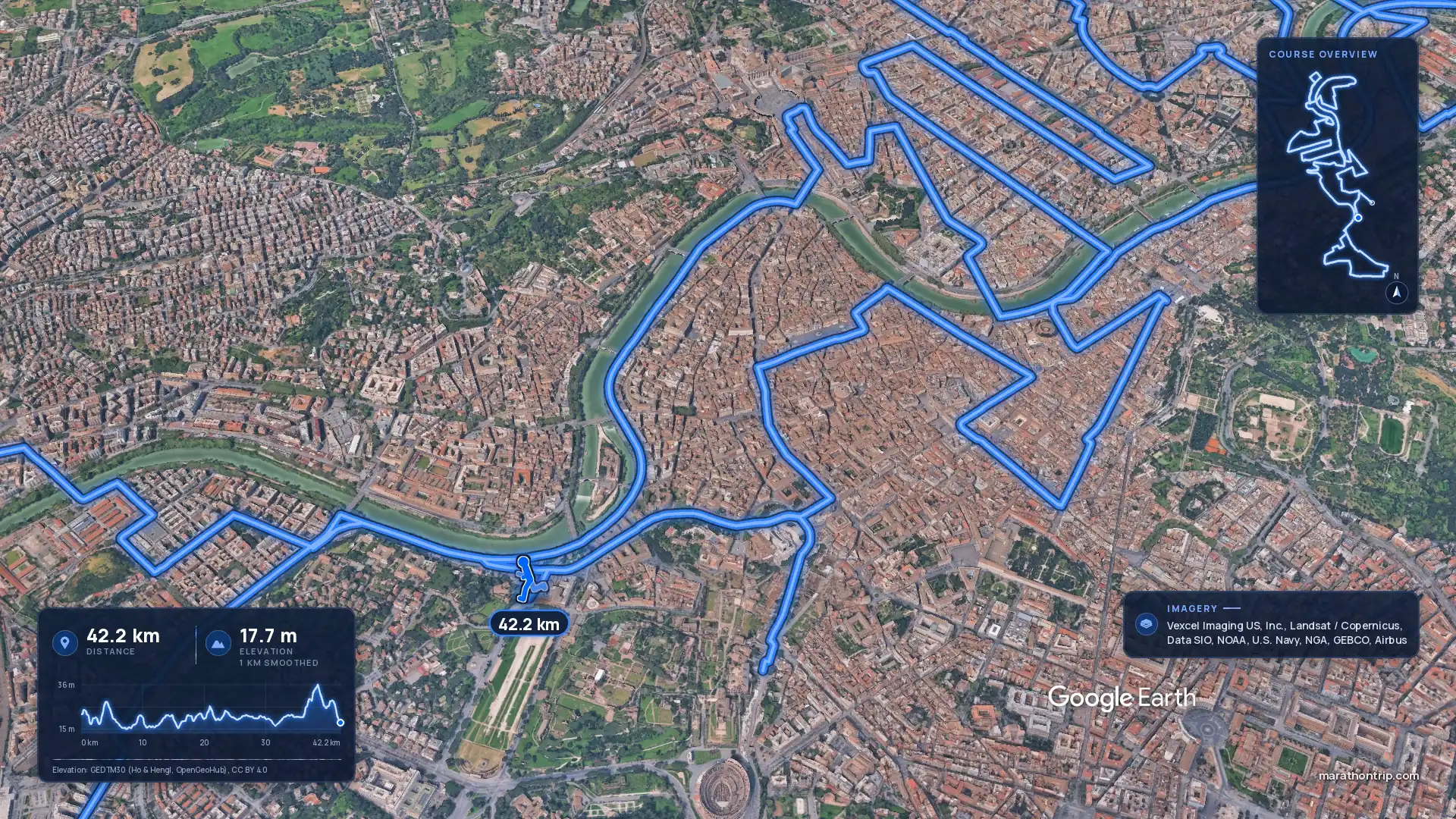
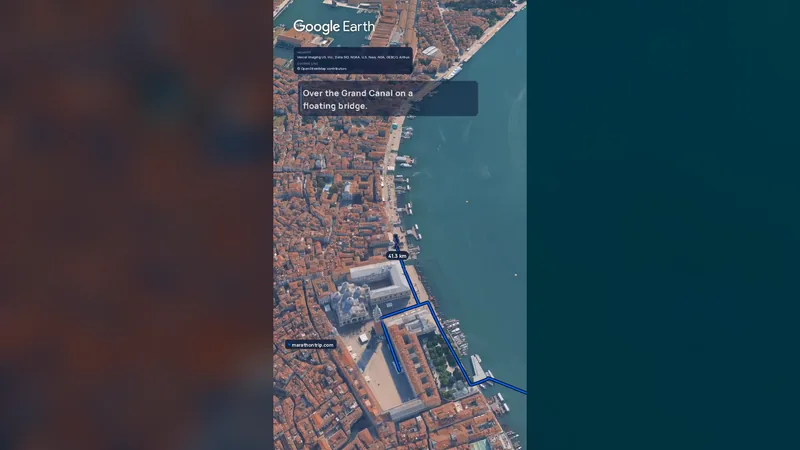
Rome hardly climbs. On the 2026 course the road never leaves a band 22.4 m deep, from 14.0 m by
the Tiber at km 7.4 to 36.4 m on the Via del Tritone at km 38.4, and the climbing comes to 87 m
over the whole distance. What makes it harder than those numbers is where the hard parts sit.
About 8.1 km of the course is on sampietrini, the small basalt setts of Rome’s old streets, and
3.45 km of that stone comes in the last 7.2 km, on the same stretch as the course’s only real
hill. A runner who has the legs for cobbles and a climb at km 36 will run well here; one who has
spent them on the flat Lungotevere will feel every stone of the Via del Corso.
The kilometres and heights below are for the 2026 course, walked along the organiser’s full
street list for that edition, with surfaces from OpenStreetMap. No 2027 course map is
published yet, though the organiser’s
course page describes it
through the same places. Check it before you plan your pacing.
Km 0 to 3: the Fori Imperiali to the Pyramid
km 1.1 Teatro di Marcello
km 1.4 Bocca della Verita
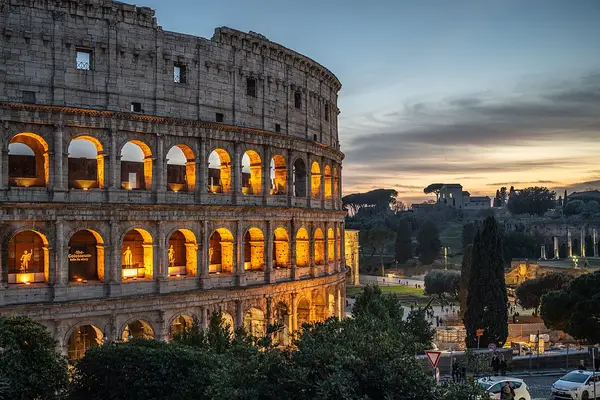
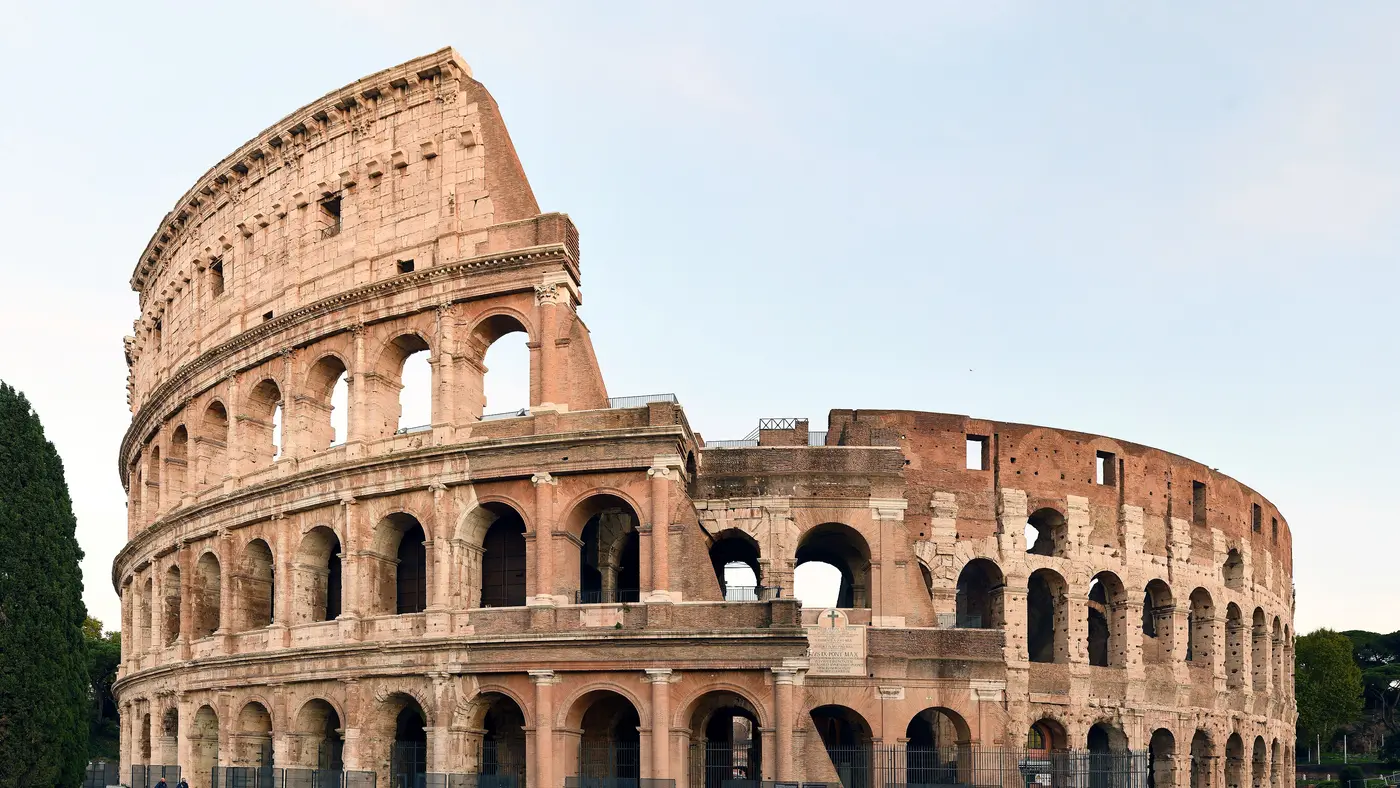
Km 0.0 Start beside the Colosseum
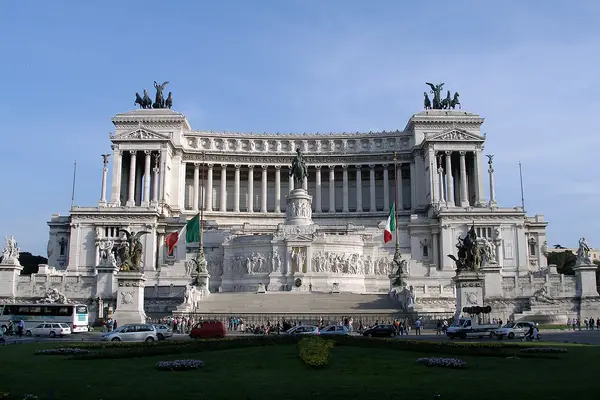
Photo: Wilfredor, CC0Km 0.5 Altare della Patria, Piazza Venezia
Photo: Vyacheslav Argenberg, CC BY 4.0
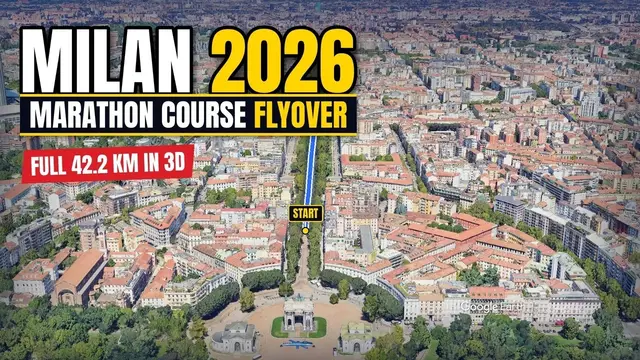
The start is on the Via dei Fori Imperiali, in the organiser’s words “with the Colosseo behind
you”, at 21.9 m. The first 1.3 km are on stone: the Fori Imperiali, Piazza Venezia, where the
Vittoriano stands at about km 0.5, and the Via del Teatro di Marcello to the theatre at about km
1.1. The Bocca della Verità comes at about km 1.4, and the course
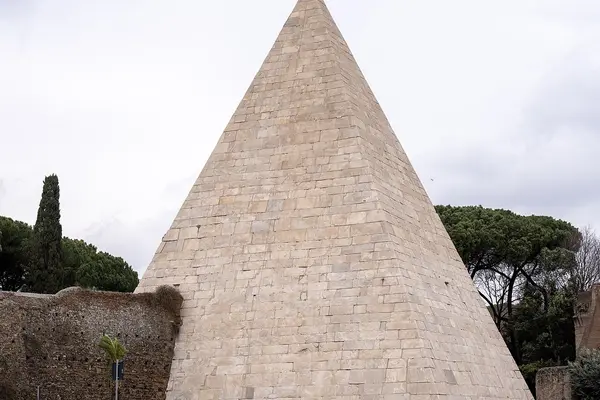
runs along the Lungotevere Aventino and up the Via Marmorata to the Pyramid of Cestius at about
km 3.
Km 3 to 7.4: Ostiense and the first rise
Km 3.0 Pyramid of Cestius
Photo: Tyrhénienne, CC BY 4.0
From the Piazzale Ostiense the course climbs about 11 m on the Viale Marco Polo and the Via
Cristoforo Colombo, from 17.0 m at km 3.0 to 28.1 m at km 4.1. It is the only rise of its kind
before km 36, and it is gone by km 5.5. The Circonvallazione Ostiense takes the course over the
Ponte Settimia Spizzichino at about km 5.8, a bridge over the railway rather than the river,
then past the Gazometro to the Ponte dell’Industria. That is the first of six crossings of the
Tiber, at about km 7.4, and the lowest point of the race, 14.0 m.
A short loop on the far bank brings the course back over the Ponte Testaccio at about km 8.4
and through the streets of Testaccio to the Lungotevere Aventino at about km 9.9. From there to
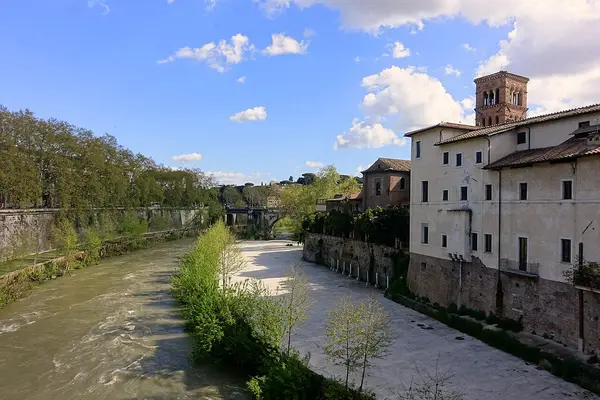
the Ponte Vittorio Emanuele II, km 9.8 to 12.9, the course runs beside the river the whole way,
its longest stretch on the embankments, passing Tiber Island at about km 11.1.
Km 12.8 to 17.5: the Vatican and Prati
Km 13.0 Via della Conciliazione and St Peter's
Photo: Jorge Franganillo, CC BY 2.0Km 13.9 Castel Sant'Angelo
Photo: Joseolgon, CC BY 4.0
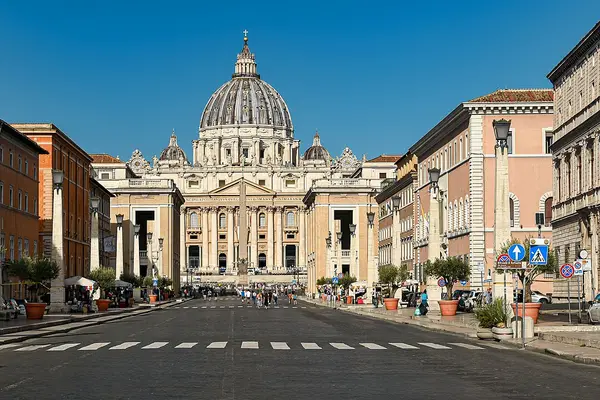
Across the Ponte Vittorio Emanuele II, the course runs up the Via della Conciliazione from about
km 13.0 with St Peter’s ahead, and turns at Piazza Pio XII, at the foot of St Peter’s Square,
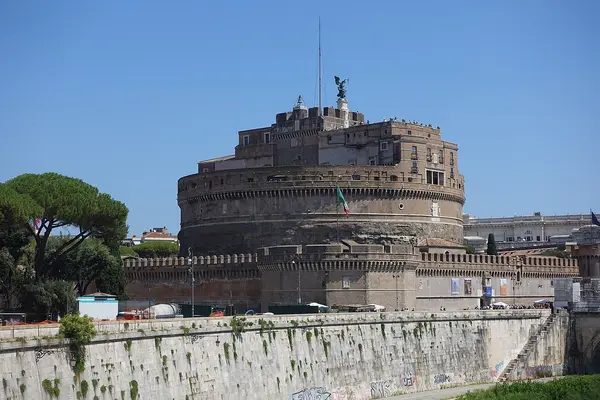
at about km 13.3. It does not enter the square. Back through the Borgo, past Castel Sant’Angelo
at about km 13.9, it heads into Prati along the Via Crescenzio to Piazza Cavour, crosses the
Ponte Cavour at about km 15.3 and comes straight back over the Ponte Regina Margherita at about
km 16.0, then runs the Via Cola di Rienzo to Piazza del Risorgimento. The Borgo, the
Conciliazione and these Prati streets are the second stretch of stone.
Km 17.5 to 24: north to Piazza Mazzini
The long avenues north of the Vatican follow: the Viale Giulio Cesare, the Viale delle Milizie
and the Circonvallazione Trionfale, where halfway falls just before Piazzale Clodio, then the
Viale Mazzini and the Viale Carso to Piazza Monte Grappa at about km 23.9. Through this whole middle
section the road stays between 14 m and 26 m.
Km 24 to 28.4: the Foro Italico
The Lungotevere della Vittoria leads to the Foro Italico, where the course runs a loop by
Piazza Lauro de Bosis and the Piazzale della Farnesina before crossing back over the Tiber on
the Ponte della Musica at about km 28.4, the sixth and last crossing.
Km 28.4 to 35.9: Flaminio and back down the river
Km 29.7 Ponte Milvio
Photo: Anthony Majanlahti from Rome, Italy, CC BY 2.0
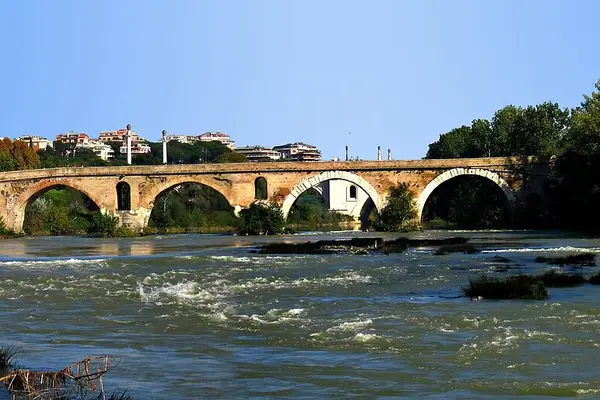
On the other bank the course runs north along the Lungotevere and passes the foot of the Ponte
Milvio at about km 29.7. The organiser’s course page says the race crosses it; its 2026
street list does not. It continues to the
Lungotevere dell’Acqua Acetosa at about km 30, turns along the Viale XVII Olimpiade and
the Via Flaminia, and from about km 33.7 comes back down the Lungotevere Flaminio towards the
centre, flat at around 20 m. This is the place to hold back; the climb starts where the river
road ends.
Km 35.9 to 38.4: the climb
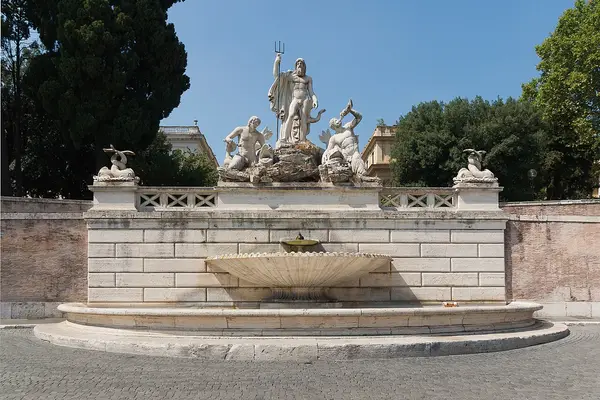
Km 37.1 Piazza del Popolo
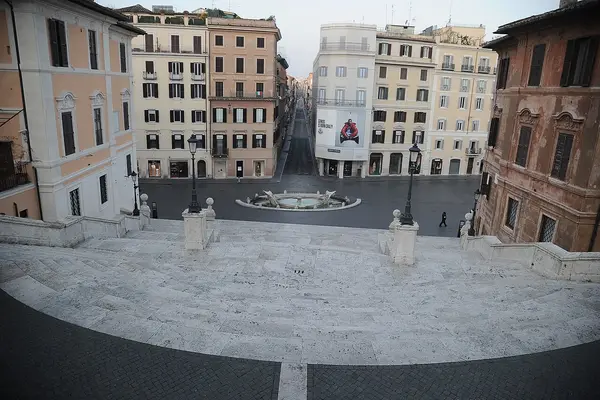
Photo: Jebulon, CC0Km 37.8 Piazza di Spagna
Photo: European Commission, CC BY 4.0
The road leaves the river at the Passeggiata di Ripetta and climbs about 16 m in 2.5 km: past
Piazza Augusto Imperatore, along the Via del Corso to Piazza del Popolo at about km 37.1, down
the Via del Babuino to Piazza di Spagna at about km 37.8, and up the Via del Tritone to the high
point, 36.4 m, at about km 38.4, much of it on setts.
Km 38.4 to the finish: the centre and the Circus Maximus
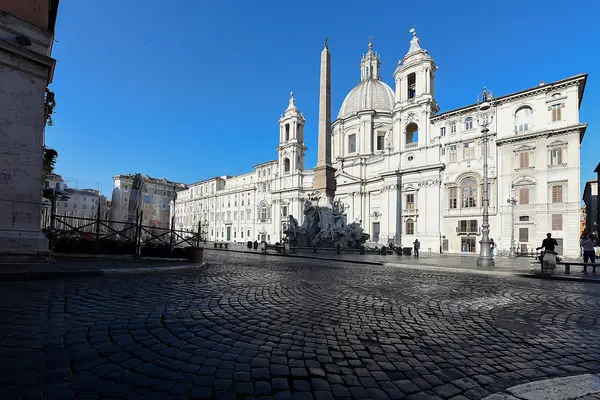
Km 40.1 Piazza Navona
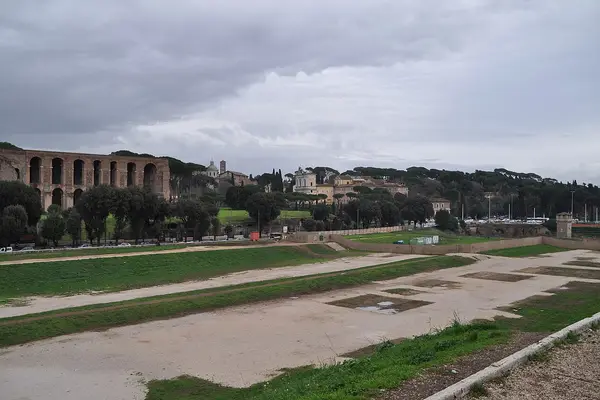
Photo: Meshari Alawfi, CC BY 4.0Km 42.2 Finish in the Circus Maximus
Photo: Schlurcher, CC BY 4.0
The road gives about 12 m back by km 39.9, along the Via del Corso again and past Piazza
Borghese, then runs the Corso del Rinascimento past Piazza Navona at about km 40.1. It rises
about 3.5 m along the Corso Vittorio Emanuele past Largo di Torre Argentina, then drops about
11 m over the last 1.7 km. In the organiser’s words: “In the final 2 km, you’ll face the
Vittoriano again, then pass the iconic Bocca della Verità before your triumphant finish inside
the Circo Massimo!” The line is at 17.7 m, 4.1 m below the start.
At a glance
distance
42.2 km26.2 mi
Point to point, asphalt and cobbles
climb
87 m285 ft
Highest point 22 m above lowest
cut-off
7:00 h
7 hours
first held
1982
A point-to-point course from beside the Colosseum on the Via dei Fori Imperiali to the Circus Maximus, crossing the Tiber six times, a fifth of it on cobbles, with its one real climb after km 35.
The Rome Marathon is a point-to-point course of 42.2 km with 87 m of climbing. Its lowest point is 15 m and its highest 36 m above sea level. Next race: Sunday 14 March 2027, starting at 08:30.
Race week
Timetable
Before race week 3 key dates
14 Jan 2027
Deadline to transfer your entry to another runnerRequest by email to rrtm@evodata.it, 30 EUR plus service charges. The replacement registers with a code sent to you. Entry fees are otherwise non-refundable.
14 Jan 2027
Deadline to defer your entry to the 2028 edition30 EUR, requested by email to rrtm@evodata.it.
17 Feb 2027
Deadline for a named bib and for declaring the personal best that sets your start areaRunners entered by this date get their name printed on the bib automatically (opt out by email to info@runromethemarathon.com by the same date). The start area is set from a marathon best (or half marathon if none) from the last 4 years, declared by this date.
Saturday 13 March The day before
09:009:00 AM
Fun Run: Saturday 5KStart Via dei Fori Imperiali, finish Circo Massimo. Non-competitive run or walk of about 5 km, open to all ages (under-14s with a parent or guardian), no medical certificate needed. Separate entry.
Sunday 14 March Race day
08:308:30 AM
Marathon startVia dei Fori Imperiali, the Colosseum behind the line. The 2027 rules give the start as approximately 08:30. Runners start in areas set by the personal best declared by 17 February; the area scheme and the wave times are to be published. Bibs are collected in person at the Expo Village, never posted; its place and hours are to be announced.
Time not published
Overall time limitFinish, inside the Circo Massimo. Seven hours to finish (it was 6 h 30 in 2026). The intermediate gate times are to be announced; runners behind them are asked to board the sweep buses or carry on along the pavement.7:00 limit: 9:57/km for 42.195 km7:00 limit: 16:01/mi for 26.2 mi
The expo, the start-area scheme, the bag drop and the intermediate cut-offs for 2027 are still
to be published. What follows is from the organiser’s
2026 race information
and event guide,
unless it says 2027.
The Expo Village and your bib
For 2027 the bib and race pack must be collected in person at the Expo Village, and the rules
say they will not be posted under any circumstances. The place and hours are still to come. In 2026 the Expo Village
was at the Circo Massimo, beside the finish, open on the Thursday and Friday from 9am to 8pm and
on the Saturday from 9am to 6pm. It is on Metro B at the Circo Massimo stop, two stops from
Termini. The 2026 pack included a personal sponge for the course.
On the Saturday, 13 March 2027, a non-competitive 5 km fun run starts at 9am from the Via dei
Fori Imperiali to the Circo Massimo, with its own entry.
Getting into the start
In 2026 every marathon runner had to enter the start area from Piazza di Porta Capena, on the
Via di San Gregorio, between 6am and 7:30am at the latest. From about 7am runners were led
along a fenced route on the Via di San Gregorio to their grids, and once inside a grid you
could not leave without being disqualified. The organiser recommended Metro B to the Circo
Massimo stop, as the Colosseo stops were closed, and the metro started at 5:30am.
Waves, grids and pacers
For 2027 your start area depends on the personal best you declare by 17 February 2027, set in
the last four years, and is printed on your bib. The 2026 waves went off from 8am:
Wheelchairs and pushers: 8:00am
Wave 1, corrals TOP and A (orange bibs): 8:10am
Wave 2, corral B (green): 8:20am
Wave 3, corral C (blue): 8:30am
Wave 4, corral D (white): 8:45am
Wave 5, corral E (red): 9:00am
Relay: 9:15am
With the 2027 start at approximately 8:30am, expect the wave times to move. In 2026 pacers carried balloons with their target time: wave A from 2:50 to 3:45 in
5-minute steps, wave B from 3:05 to 4:00, wave C from 3:30 to 4:15, and fitwalking and run-walk
pacers from 4:15 to 6:30, all from wave E.
The bag drop
Only the official backpack from the race pack was accepted in 2026. It had to be handed in by
7:30am at the lorries on the Viale delle Terme di Caracalla and the Via Valle delle Camene, and
it was collected after the finish on the Viale delle Terme di Caracalla.
Aid, cut-offs and the finish
There were 16 refreshment points on the 2026 course, at km 5.3, 9.9, 15.0, 16.4, 17.45, 17.9,
20.3, 22.4, 25.0, 30.0, 31.6, 33.8, 35.5, 38.6, 39.6 and 40.25, and one more at the finish.
All had water, mineral salts were handed out from km 15.5, and solid food at km 15.5 and the
finish. Twelve sponge stations ran from km 7.4 to km 39.8. At the finish runners got a pack of
water, mineral salts and food, and there was a separate coeliac refreshment area.
The 2027 limit is seven hours, with intermediate gates still to come. In 2026 the limit was 6
hours 30 minutes counted from the start of the last wave, with gates at km 14 by 10:40am,
halfway by 11:50am, km 25 by 12:20pm, km 30 by 1pm and km 35 by 1:50pm, and sweep buses at
Piazza Monte Grappa and on the Lungotevere dell’Acqua Acetosa. The 2027 rules do not yet say
which start the seven hours run from.
Trip
Getting a place
Entry open for the 2027 race As read 16 October 2026.
From Fiumicino, the organiser’s 2026 event guide gives the Leonardo Express train to Roma
Termini as 32 minutes, and Termini is two stops from Circo Massimo on Metro B. Check the fare
and timetable with the operator.
Where to stay
The start, the finish, the bag drop and, in 2026, the expo all sit within a short walk of each
other, in the corner of the city between the Colosseum, the Circus Maximus and the Baths of
Caracalla. The areas around that corner are the natural base: Monti, behind the Via dei Fori
Imperiali; the Celio, between the Colosseum and Caracalla; and the Aventine, above the Circus
Maximus. Testaccio, which the course crosses around km 9, is a little further out. Anywhere on
Metro B works too, since the line opened at 5:30am on race day in 2026.
Race-day transport and closures
The 2026 race information printed the full list of closed streets; no 2027 list is out yet. For
service changes the organiser points to ATAC, Rome’s transport operator, at atac.roma.it or on
06.06.06. Supporters reached the finish in 2026 from the Via del Circo Massimo or the Via dei
Cerchi, where runners met their companions after the race.
Climb summed after smoothing the heights over 1 km. The edge is this course's height profile on one scale for every race: 250 m above its lowest point fills it. Photo: Sagrada Família, by Canaan, CC BY-SA 4.0, via Wikimedia Commons.
Climb summed after smoothing the heights over 1 km. The edge is this course's height profile on one scale for every race: 250 m above its lowest point fills it. Photo: Nagoya Castle, by Base64, CC BY-SA 3.0, via Wikimedia Commons.
Climb summed after smoothing the heights over 1 km. The edge is this course's height profile on one scale for every race: 250 m above its lowest point fills it. Photo: Jaffa, by Ariel Manor, CC BY 2.5, via Wikimedia Commons.
Climb summed after smoothing the heights over 1 km. The edge is this course's height profile on one scale for every race: 250 m above its lowest point fills it.
Climb summed after smoothing the heights over 1 km. The edge is this course's height profile on one scale for every race: 250 m above its lowest point fills it.
Questions about the Rome Marathon
When is the Rome Marathon 2027?
Sunday 14 March 2027, the 32nd edition. The 2027 rules give the start as approximately 8:30am on the Via dei Fori Imperiali, and the finish is inside the Circus Maximus.
How do I enter the Rome Marathon 2027?
Entry is first come, first served, online through ENDU, until 17 February 2027 or until the field is full, when a waiting list opens. The last price step is EUR 129, plus an online service fee. Runners must be 20 or older and hold an athletics federation card, or a RUNCARD with a medical certificate for athletics.
What is the time limit for the Rome Marathon?
Seven hours in 2027, up from 6 hours 30 minutes in 2026. The intermediate cut-off times are still to be published. Runners behind them are asked to board the sweep buses or to carry on along the pavement.
9 more questions
Is the Rome Marathon course flat?
In height, yes: on the 2026 course it stays between 14.0 m and 36.4 m and climbs 87 m in all. The one real climb runs from about km 35.9 to km 38.4, past Piazza del Popolo and Piazza di Spagna. About 8.1 km, 19% of the course, is on sampietrini, Rome's stone setts, and 3.45 km of that comes in the last 7.2 km.
Where do I collect my bib for the Rome Marathon?
In person at the Expo Village; bibs are never posted. The 2027 place and hours are still to be announced. In 2026 the Expo Village was at the Circo Massimo, open Thursday and Friday 9am to 8pm and Saturday 9am to 6pm, reached on Metro B at the Circo Massimo stop.
How do I get to the start of the Rome Marathon?
In 2026 the organiser recommended Metro B to the Circo Massimo stop, because the Colosseo stops were closed, and the metro started at 5:30am. All marathon runners had to enter the start area from Piazza di Porta Capena, on Via di San Gregorio, between 6am and 7:30am.
Can I transfer my Rome Marathon entry to someone else?
Yes, until 14 January 2027, for EUR 30 plus service charges, by email to the entry service. The same deadline and fee apply to moving your entry to the 2028 edition.
How do I enter the Rome Marathon?
Entry for the 2027 race is open. It opened on 23 April 2026 and closes on 17 February 2027. Entry fee: €129 (for the 2027 race). Entry details on the organiser’s site
What is the time limit at the Rome Marathon?
Runners have 7 hours to finish.
Where does the Rome Marathon start?
Start: Via dei Fori Imperiali, the Colosseum behind the line.
The Rome Marathon was first run in 1982, won by Emiel Puttemans of Belgium and Laura Fogli of
Italy. It doubled as the Italian marathon championship in 1983 and 1986, and was not held from
1992 to 1994. In 2000 it moved to 1 January for a Millennium Marathon starting in St Peter’s
Square, and the 2020 race was cancelled because of the coronavirus pandemic. The organisers
number the 2027 race as the 32nd edition. It is run by Infront Italy with the Corriere dello Sport
and Rome Marathon Runners, and carries the FIDAL Gold Label.
The men’s course record is 2:06:24, by Asbel Rutto of Kenya in 2024. He won again in 2026 in
2:06:32, eight seconds outside it. The women’s record fell in 2026, when Pascaline Kibiwot of
Kenya ran 2:22:44, eight seconds under the old mark. The 2025 winners were Robert Ngeno and
Betty Chepkwony, both of Kenya, and in 2024 Rutto won with Ivyne Jeruto.