Photo: J L C A from Rio de Janeiro, Brasil / Brazil, CC BY 2.0
Photo: Julian Herzog ( Website ), CC BY 4.0
Photo: Johan Wessman / News Oresund, CC BY 2.0
Photo: Rob Deutscher from Melbourne, Australia, CC BY 2.0
km 0mile 0
The start on Øster Allé
The race starts on Øster Allé beside Fælledparken and finishes in the same place, so the course is a loop through the city and out over Amager's side of the harbour.
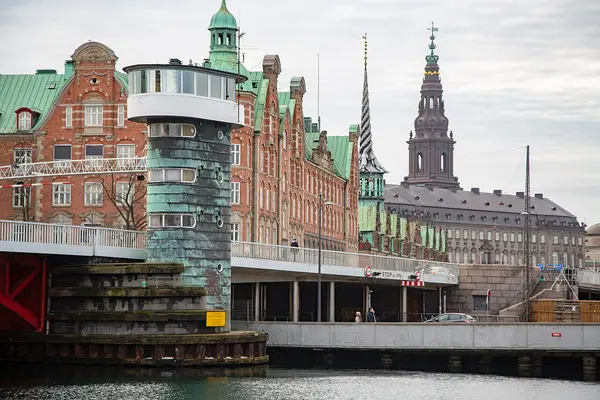
km 9.5mile 5.9
Knippelsbro
The bascule bridge that carries the course over the harbour from Slotsholmen to Christianshavn, about 9.5 km in.
Photo: News Oresund, CC BY 2.0
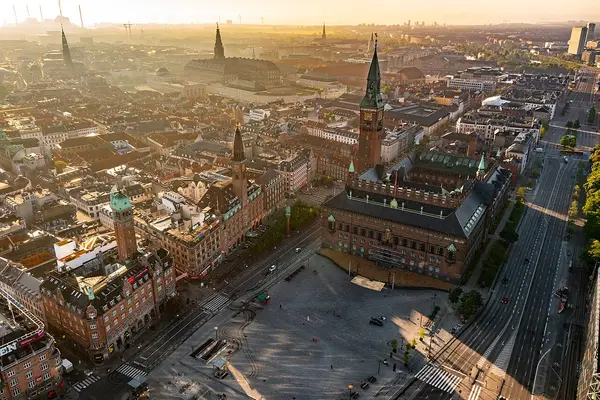
km 12.4mile 7.7
City Hall Square
The course passes Regnbuepladsen, the square in front of Copenhagen City Hall, at about 12.4 km.
Photo: European Commission, CC BY 4.0
km 14.1mile 8.7
The Lakes at Dronning Louises Bro
The course crosses Sankt Jørgens Lake on Dronning Louises Bro, the bridge between Nørrebro and the old town, at about 14 km.
Photo: Diana, CC BY 2.0
km 24mile 14.9
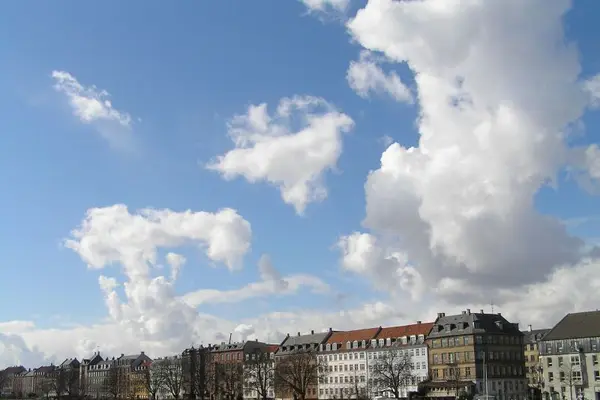
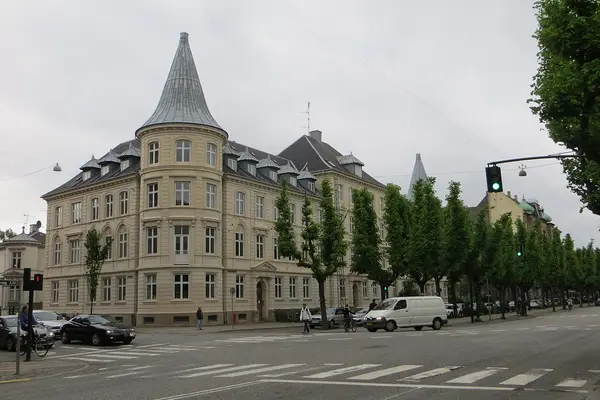
Frederiksberg Alle
The avenue through Frederiksberg, a separate municipality inside Copenhagen, where the road is closed to traffic only from 7:00 to 15:00 on race day.
Photo: J L C A from Rio de Janeiro, Brasil / Brazil, CC BY 2.0
km 32mile 19.9
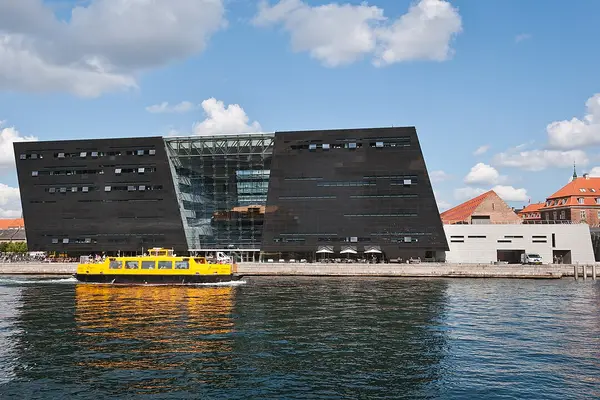
The Black Diamond
The Royal Library's extension on Christians Brygge, on the harbour front, passed at about 32 km.
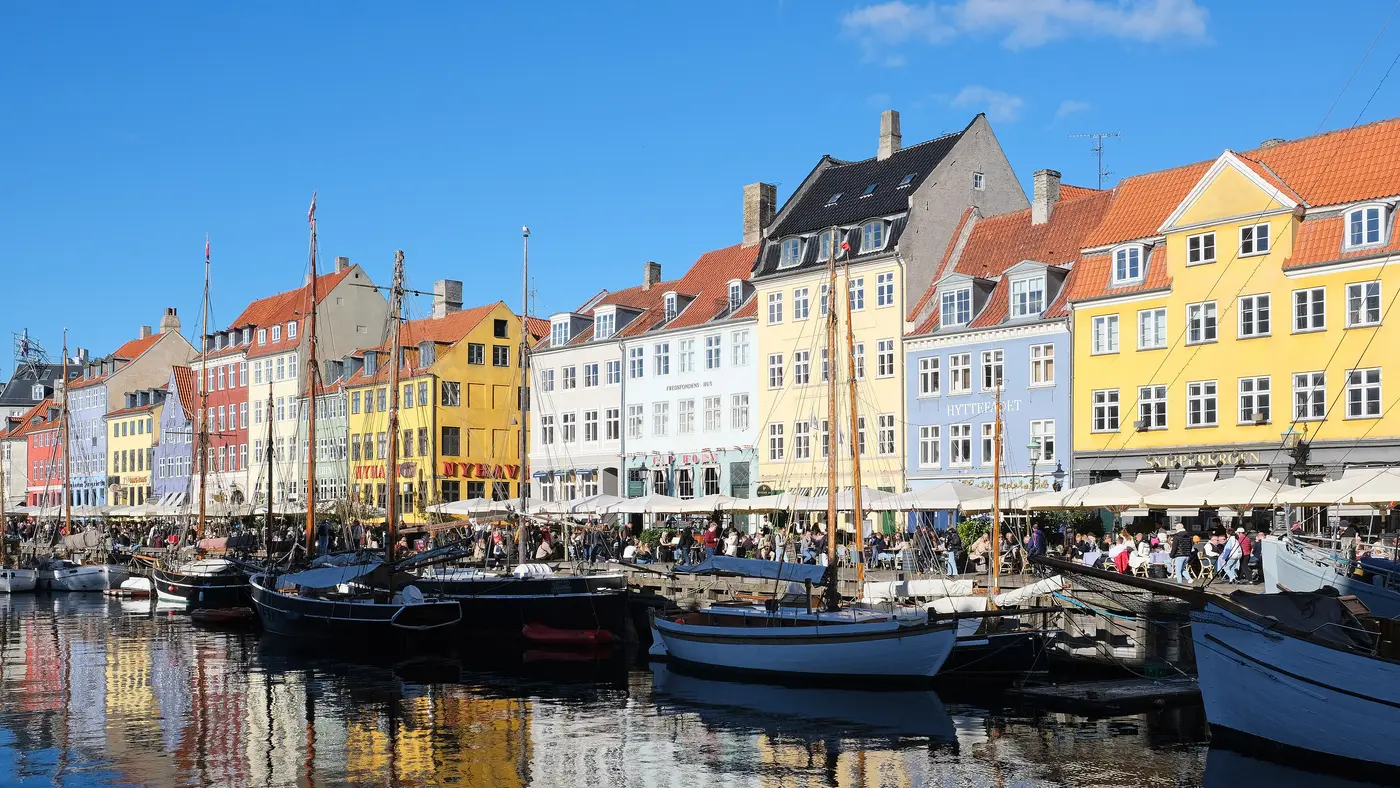
Photo: Julian Herzog ( Website ), CC BY 4.0
km 32.9mile 20.4
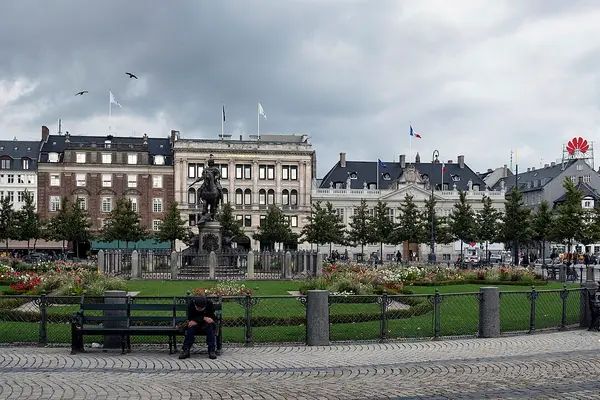
Kongens Nytorv
The square at the head of Nyhavn, passed at about 33 km as the course turns onto Bredgade.
Photo: Johan Wessman / News Oresund, CC BY 2.0
km 33.4mile 20.8
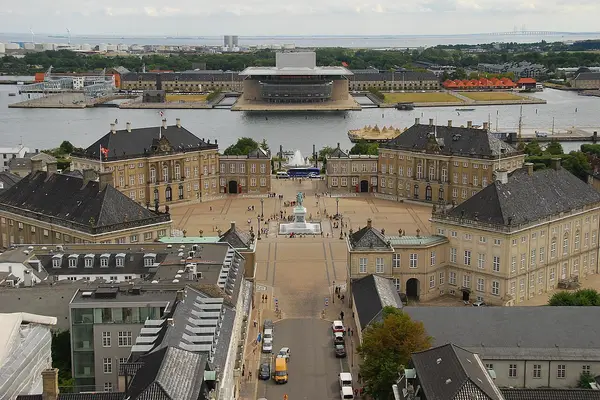
Bredgade and Amalienborg
Bredgade runs past Frederik's Church and the royal palace of Amalienborg; the course follows it from about 33 to 34 km.
Photo: Rob Deutscher from Melbourne, Australia, CC BY 2.0
km 42.2mile 26.2
The finish on Øster Allé
The finish is where the start was, on Øster Allé at Fælledparken.
Height drawn many times taller than life. Heights: GEDTM30.
Cut-off, km 21.1mile 13.1
0 10 20 30 40 km
0 10 20 26.2 mi
Dashed: bridge
flat 13 to 22
downhill to 31
flat home
Your 5 gels, at the orange marksFor a 4:00 finish, one every 40 minutes
Copenhagen is as flat as a city marathon gets. On the 2026 course the whole race sits within
14.2 m of its lowest point, and its 69.3 m of climbing comes in small swells, never a hill. What
it asks of a runner is patience at the end. The lowest ground of the race is at km 31, on the
harbour front, and from there the road works upward almost all the way home: a third of the
climbing comes in the last 12 km, on the legs least able to pay for it.
The course is one loop that starts and finishes on Øster Allé beside Fælledparken in Østerbro
and passes through the inner city, Christianshavn, Nørrebro, Frederiksberg and Vesterbro on the
way. The kilometres and heights below are measured along the organiser’s 2026 course map,
matched to the streets and sampled on a bare-earth elevation model. The 2027 course is not
published yet, so check the organiser’s course
page before you plan your pacing.
Km 0 to 6.3: round Østerbro
km 0.0 The start on Øster Allé
From Øster Allé the course turns through Trianglen at about km 0.6 and heads up Østerbrogade.
The road rises almost 6 m in the first two kilometres, from 7.9 m at the start to about 13.8 m,
before a loop out along Jagtvej, Vennemindevej and Kildevældsgade brings it back to Østerbrogade
at km 3.4. Strandboulevarden and Nordre Frihavnsgade take it down towards the harbour side of
Østerbro, to under 6 m at about km 5, and Østerbrogade leads back south to the Lakes at km 6.3.
Øster Søgade runs along the eastern edge of the Lakes, then Sølvgade, Øster Voldgade and
Gothersgade take the course into the old town. It runs down through the centre on Christian IX’s
Gade, Kristen Bernikows Gade and Bremerholm to Havnegade, and crosses the harbour on Knippelsbro
at about km 9.5.
Km 9.6 to 14.2: Christianshavn, Langebro and the city hall
Km 12.4 City Hall Square
Photo: European Commission, CC BY 4.0Km 14.1 The Lakes at Dronning Louises Bro
Photo: Diana, CC BY 2.0
On the far side the course runs through Christianshavn on Torvegade, then follows Ved
Stadsgraven and Amager Boulevard, and the ground drops to under 3 m around km 10.7. Langebro
takes it back over the harbour at km 11.4, the second harbour bridge inside 2 km of road. H.C.
Andersens Boulevard leads past City Hall Square at about km 12.4, and Vester Voldgade and Nørre
Voldgade climb gently round the western edge of the old town to Dronning Louises Bro, where the
course crosses the Lakes at about km 14.
Km 14.2 to 20.3: Nørrebro
Nørrebrogade carries the course into Nørrebro, and for the next six kilometres it zigzags
through the district on Fælledvej, Nørre Allé, Møllegade, Jagtvej, Mimersgade, Stefansgade and
Borups Allé. The ground rises to almost 15 m near km 15.6 before easing back.
Km 20.3 to 24.6: Nordre Fasanvej and Frederiksberg
Km 24.0 Frederiksberg Alle
Photo: J L C A from Rio de Janeiro, Brasil / Brazil, CC BY 2.0
Nordre Fasanvej is the course’s longest single street, 2.1 km south from km 20.3, and the
halfway mark falls on it. So does the high point of the race, 16.4 m at about km 22.2. The
three-hour half-way cut-off is measured at 21.1 km. Smallegade and Allégade lead to
Frederiksberg Allé, which the course follows for just over a kilometre from km 23.5.
Frederiksberg is a separate municipality, and in 2026 the organiser’s map showed the avenue
closed to traffic only from 7am to 3pm.
Km 24.6 to 30.3: Vesterbro and down to the harbour
From the end of Frederiksberg Allé the road mostly falls. Vesterbrogade, Gammel Kongevej and
Vester Søgade take the course past the southern end of the Lakes, then back out along
Vesterbrogade, Istedgade and Enghavevej through Vesterbro. Ingerslevsgade leads to Dybbølsbro at
about km 30.2.
Km 30.3 to 33.0: the harbour front
Km 32.0 The Black Diamond
Photo: Julian Herzog ( Website ), CC BY 4.0Km 32.9 Kongens Nytorv
Photo: Johan Wessman / News Oresund, CC BY 2.0
Kalvebod Brygge runs along the harbour, and the lowest point of the race, 2.2 m, comes at about
km 31. Christians Brygge passes the Black Diamond, the Royal Library’s harbour-front extension,
at about km 32, and the course crosses Christian IV’s Bro at about km 32.4. Holmens Kanal leads
into Kongens Nytorv, at the head of Nyhavn, at about km 32.9.
Km 33.0 to 42.2: Bredgade and the long road home
km 42.2 The finish on Øster Allé
Km 33.4 Bredgade and Amalienborg
Photo: Rob Deutscher from Melbourne, Australia, CC BY 2.0
From Kongens Nytorv the course runs up Bredgade past the Marble Church and Amalienborg, between
about km 33 and 34, and the climb back from the harbour starts here: the ground is back above 10
m by km 33.2. Store Kongensgade, Kronprinsessegade and Øster Voldgade take it north, and
Sølvgade, Øster Farimagsgade and Dag Hammarskjölds Allé lead back into Østerbro.
The last long street is Strandboulevarden, 1.9 km from km 38.5. Then the course turns onto
Østerbrogade at km 40.5 and climbs to the last high ground of the race, 13.1 m at about km 41.
From the low point at km 31 the road has gained about 11 m, with 23 m of climbing in all since
km 30. The final turn onto Øster Allé leaves about 600 m to the finish, which is where the race
started.
At a glance
distance
42.2 km26.2 mi
Loop, asphalt
climb
69.3 m227 ft
Highest point 14 m above lowest
cut-off
6:00 h
6 hours
finishers
18,508
Finishers in 2025
first held
1980
A flat loop through the heart of Copenhagen, starting and finishing on Øster Allé by Fælledparken and running through Østerbro, Christianshavn, Vesterbro, Nørrebro and Frederiksberg, a course built for a fast, crowd-lined city run.
The Copenhagen Marathon is a loop of 42.2 km with 69.3 m of climbing. Its lowest point is 2 m and its highest 16 m above sea level. Next race: Sunday 9 May 2027, starting at 09:30.
Race week
Timetable
Sunday 9 May Race day
09:309:30 AM
Marathon startStart time as published on the organiser's 2027 homepage. Runners go off in waves; wave times for 2027 are not yet published.
Time not published
Half-way cut-off at 21.1 km3 hours net (chip time) at the half-marathon mark. Standing rule from the organiser's FAQ, not restated for 2027.3:00 limit: 8:31/km for 21.1 km3:00 limit: 13:43/mi for 13.1 mi
Time not published
Overall time limitOverall time limit 6 hours net for the full distance. Standing rule from the organiser's FAQ, not restated for 2027; no finish-closing clock time is published for 2027.6:00 limit: 8:31/km for 42.195 km6:00 limit: 13:43/mi for 26.2 mi
The 2027 expo dates are not out yet. In 2026 the expo ran from Wednesday to Saturday before the
race at Forum København, Julius Thomsens Plads 1 in Frederiksberg: Wednesday from 2pm to 7pm,
Thursday from noon to 7pm, and Friday and Saturday from 10am to 7pm. Your start card is emailed
to you no later than a week before the race; at the expo you show it on your phone with a valid
ID, and your bib is printed there. The race bag and the T-shirt are handed out at the expo too.
The organiser is plain about the rule: you cannot pick up your bib on race day.
The start
The race starts at 9.30am, and the start groups line up in colour-coded blocks, your colour
printed on your bib. The 2027 group times are not published. In 2026 the start area opened at
7.30am and the organiser asked runners to arrive at least an hour before the start. Water and
toilets are in the start area.
The Runners Area is in Fælledparken, behind the start and finish. That is where you check in
your bag before the race, and where you collect it afterwards. In 2026 bags left unclaimed on
race day could be collected the following Monday from noon. The finish is in the same place: you
cross the line, get water and your medal, and the family exit is at the far end of the Runners
Area.
Pacers and aid
The organiser runs pace teams for a range of target times; the 2027 list is not out. The 2026
course page lists refreshment zones at km 3.8, 8.1, 12.3, 16, 19.8, 21.1, 24.3, 27.8, 32.7,
35.3, 35.7 and 38.3, with water and High5 energy drink at every one, though its introduction
counts ten zones.
Cut-offs
There is a cut-off of three hours net at the half-marathon mark and six hours net for the whole
distance, both timed from when you cross the start line. Both work out at the same pace, about 8
minutes 32 seconds a kilometre. A runner on track for six hours is on track for the half-way cut
too, but has no time to lose in the first half and make up later.
Trip
Getting a place
Ballot closed for the 2027 race As read 22 September 2026.
Past years and every way in
For the 2026 race it opened 27 May 2025 and closed 28 May 2025.
Copenhagen Airport is close. The M2 Metro reaches Nørreport in about 15 minutes, running every 4
to 6 minutes through the day and evening, and the train takes about 15 minutes to Copenhagen
Central Station.
Where to stay
The organiser gives no advice on areas to stay. The start and finish are in Østerbro, beside
Fælledparken, so Østerbro and the old town to its south keep race morning to a walk or a short
Metro ride. The expo is in Frederiksberg, a separate trip earlier in the week. The course also
runs through Vesterbro, Nørrebro and Frederiksberg, so a base in any of them puts a supporter on
the route without crossing the city.
Race-day transport and closures
The organiser recommends cycling, walking or taking the Metro to and from the start area, and
names Trianglen, Vibenshus Runddel and Poul Henningsens Plads as the nearest stations. For 2026
it pointed runners to a 12-hour event ticket in DOT’s Rejsebillet app: 30 DKK for the small
ticket, which covers central Copenhagen including the airport (zones 1 to 4), or 60 DKK for the
large one across Greater Copenhagen, with two children under 12 travelling free.
Several roads and car parks close on race day, several bus routes do not run their normal
service, and the organiser asks people not to drive. A full 2027 closure list is not published.
Climb summed after smoothing the heights over 1 km. The edge is this course's height profile on one scale for every race: 250 m above its lowest point fills it. Photo: Jet d'Eau, by Ank Kumar, CC BY-SA 4.0, via Wikimedia Commons.
Climb summed after smoothing the heights over 1 km. The edge is this course's height profile on one scale for every race: 250 m above its lowest point fills it. Photo: Gamla stan, by Arild Vågen, CC BY-SA 3.0, via Wikimedia Commons.
Climb summed after smoothing the heights over 1 km. The edge is this course's height profile on one scale for every race: 250 m above its lowest point fills it. Photo: Charles Bridge, by Dietmar Rabich, CC BY-SA 4.0, via Wikimedia Commons.
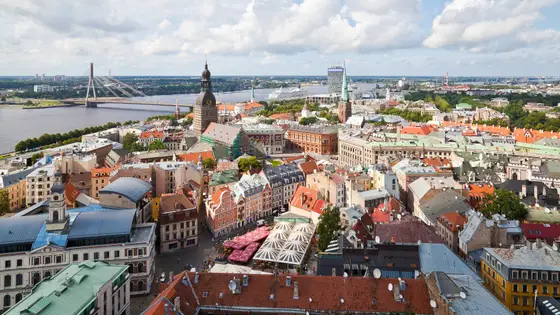
Climb summed after smoothing the heights over 1 km. The edge is this course's height profile on one scale for every race: 250 m above its lowest point fills it. Photo: Riga, by Diego Delso, CC BY-SA 3.0, via Wikimedia Commons.
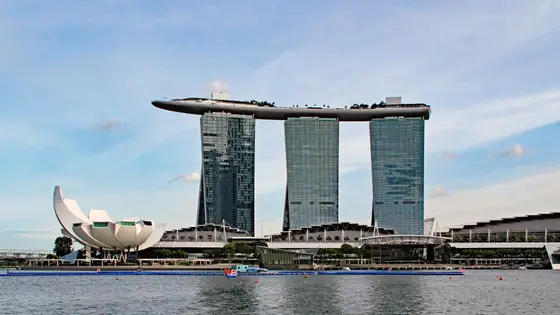
Climb summed after smoothing the heights over 1 km. The edge is this course's height profile on one scale for every race: 250 m above its lowest point fills it. Photo: Marina Bay Sands, by Tony Hisgett from Birmingham, UK, CC BY 2.0, via Wikimedia Commons.
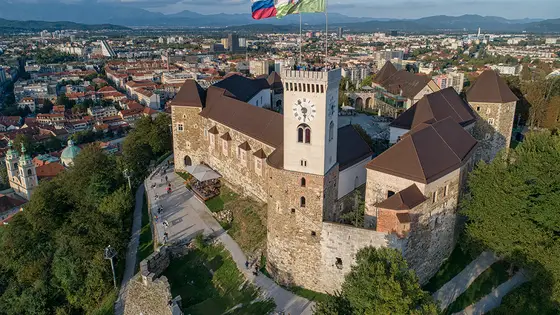
Climb summed after smoothing the heights over 1 km. The edge is this course's height profile on one scale for every race: 250 m above its lowest point fills it. Photo: Ljubljana Castle, by LjGrad, CC BY-SA 4.0, via Wikimedia Commons.
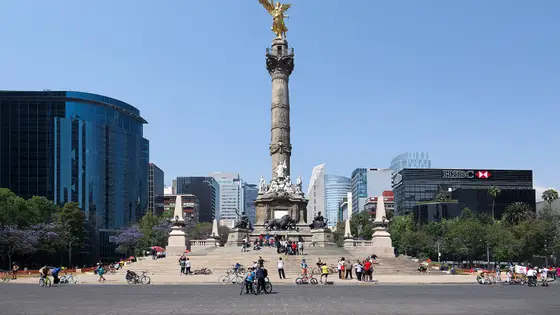
Climb summed after smoothing the heights over 1 km. The edge is this course's height profile on one scale for every race: 250 m above its lowest point fills it. Photo: Angel of Independence, by Carlos Valenzuela, CC BY-SA 4.0, via Wikimedia Commons.
Questions about the Copenhagen Marathon
When is the Copenhagen Marathon 2027?
Sunday 9 May 2027, starting at 9.30am. The runners go off in colour-coded start groups, and the 2027 group times are not published yet.
How do I get an entry for the Copenhagen Marathon 2027?
The main 2027 lottery, the first in the race's history, ran from 13 May to 3 June 2026 and drew 80,937 applicants for 35,000 entries in all. Places are still sold through partner charities and the official travel partners, and the organiser says there is no resale or waiting list from 2027.
Is the Copenhagen Marathon course flat?
Yes. On the 2026 course the whole race runs between 2.2 m above the sea, at about km 31, and 16.4 m, at about km 22.2, and it climbs 69.3 m in total in small swells rather than hills. A third of that climbing comes in the last 12 km, from km 30 to the finish.
8 more questions
What is the cut-off time for the Copenhagen Marathon?
Six hours net for the whole distance, and three hours net at the half-marathon mark, both measured from the moment you cross the start line.
Where do I collect my bib for the Copenhagen Marathon?
At the expo. In 2026 it was at Forum København, Julius Thomsens Plads 1 in Frederiksberg, from Wednesday to Saturday before the race. You show the start card emailed to you and a valid ID. Bibs cannot be collected on race day. The 2027 expo days are not published yet.
How do I get to the start of the Copenhagen Marathon?
The organiser recommends cycling, walking or the Metro. The nearest stations to the start area by Fælledparken are Trianglen, Vibenshus Runddel and Poul Henningsens Plads. In 2026 the start area opened at 7.30am, and the organiser asks runners to arrive at least an hour before the start.
How do I get from Copenhagen Airport to the city?
The M2 Metro reaches Nørreport in about 15 minutes, running every 4 to 6 minutes through the day and evening, and the train takes about 15 minutes to Copenhagen Central Station.
What is the course record of the Copenhagen Marathon?
The women's record is 2:22:08, set by Mercy Chebwogen of Kenya in 2026. The men's record is Birhane Tsegay's 2:08:23 from 2022.
How do I enter the Copenhagen Marathon?
The 2027 lottery has closed. It opened on 13 May 2026 and closed on 3 June. There are 4 ways in: Entry lottery, Charity entry, Official travel packages and Company agreement. Entry details on the organiser’s site
What is the time limit at the Copenhagen Marathon?
The first Copenhagen Marathon was run on 24 May 1980 with 995 registered runners. Two Danes won
it: Arne Stigsen in 2:19:27 and Lone Dybdal in 2:58:09. The race grew steadily over its first
thirty years, to 3,220 registered runners in 1990, 6,106 in 2000 and 12,644 in 2010, and it was
cancelled in 2020 and 2021 because of Covid-19.
The real growth is recent. 11,295 runners were registered in 2022 and 12,271 in 2023, then
16,363 in 2024 and 20,965 in 2025, the 45th edition. The 2026 entries sold out in 23 hours, all
23,000 of them, and 22,424 runners stood at the start that May. That rush is why 2027 went to a
lottery for the first time: 80,937 people applied for 35,000 entries.
The women’s course record fell in 2026, when Mercy Chebwogen of Kenya ran 2:22:08 and took more
than a minute off it. The year before, Sharon Kiptugen had won in 2:23:19, five seconds outside
the old record. The men’s record is Birhane Tsegay’s 2:08:23 from 2022. It has come close to
falling twice since. In 2025 the first man across the line, Berhane Tesfaye, ran 2:08:25, two
seconds outside it, and was disqualified for a banned substance, so the win went to Vincent Mutai
of Kenya. In 2026 Tadesse Kassa of Ethiopia won a few seconds outside the record.