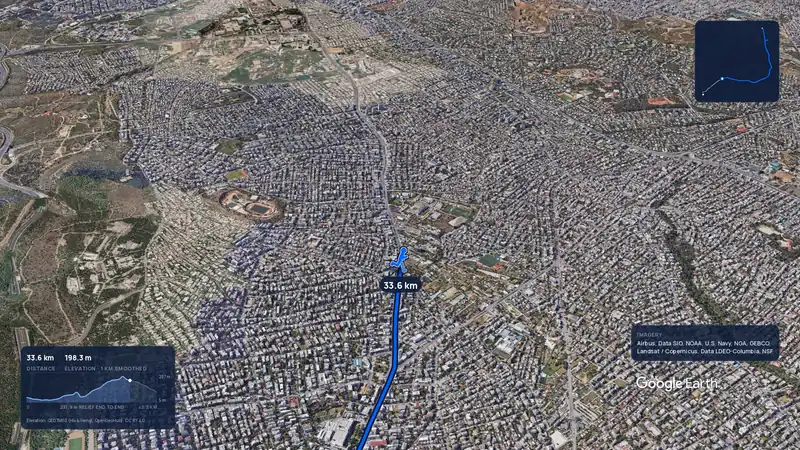
Valencia is flat in the way that matters for pacing and gently tilted in a way most runners
never notice. The 2026 course starts at 9.4 m, runs down to 1.9 m behind the beach by km 4.3,
and stays low through the first half. After halfway the road begins to rise, 22.8 m over the
next 13.9 km, an average of 0.16%, to the highest point of the race at km 35. Then it only
falls: 21.5 m in the last 7.2 km to the finish. A runner who holds an even effort through the
long, imperceptible drift from km 21 to km 35 gets the last 7 km downhill.
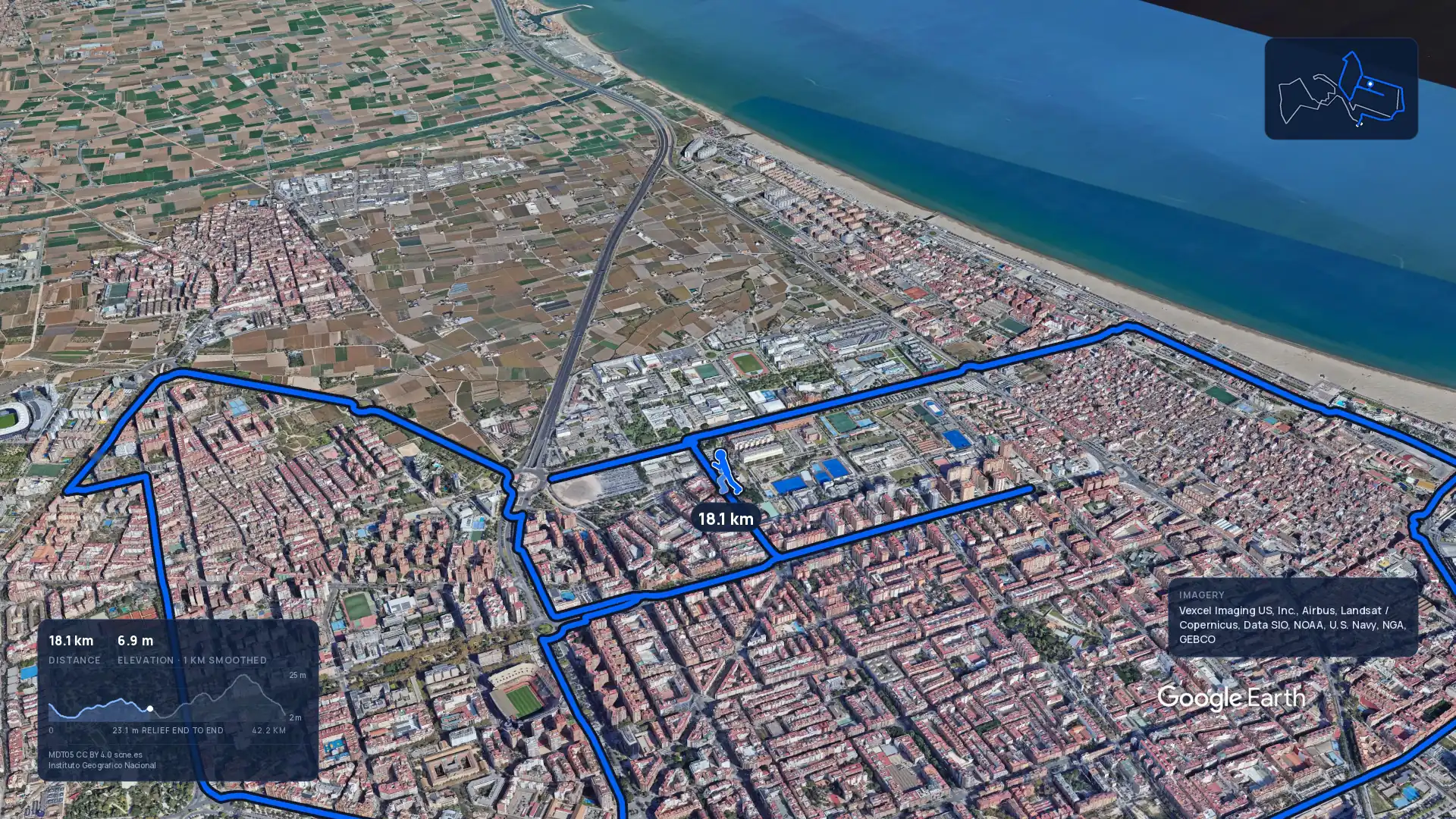
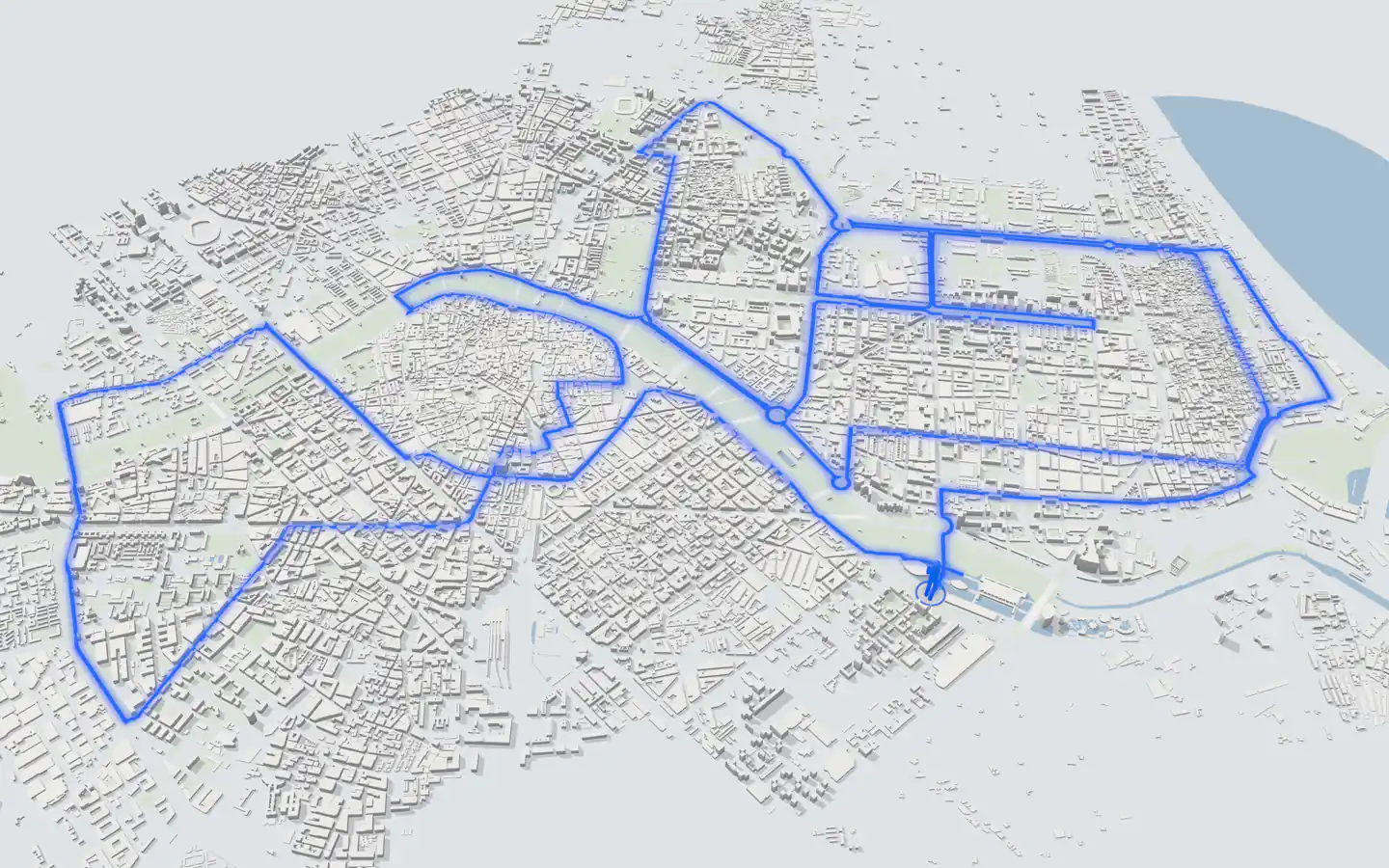
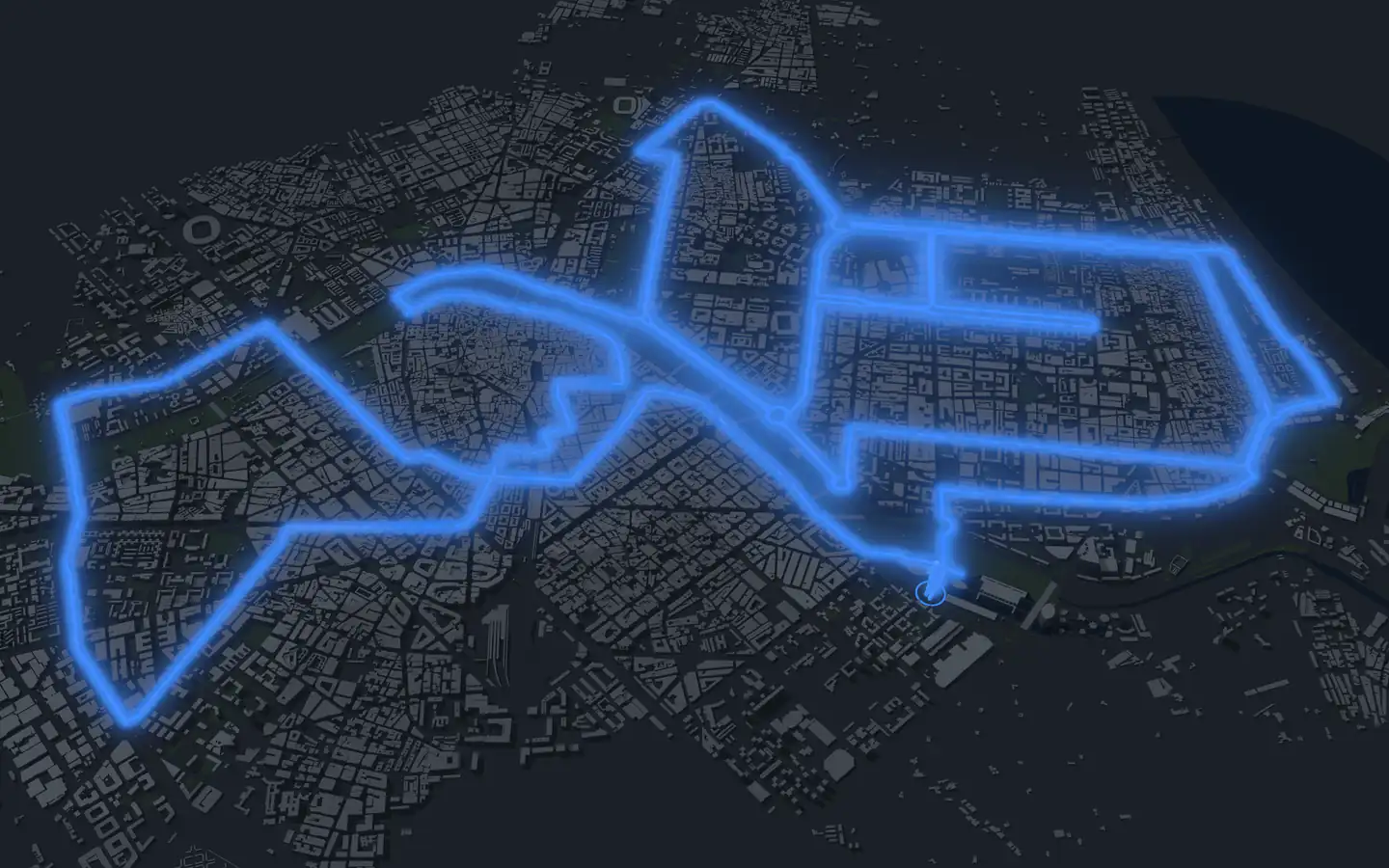
The course is one loop through the east of the city, the university district, the port, the
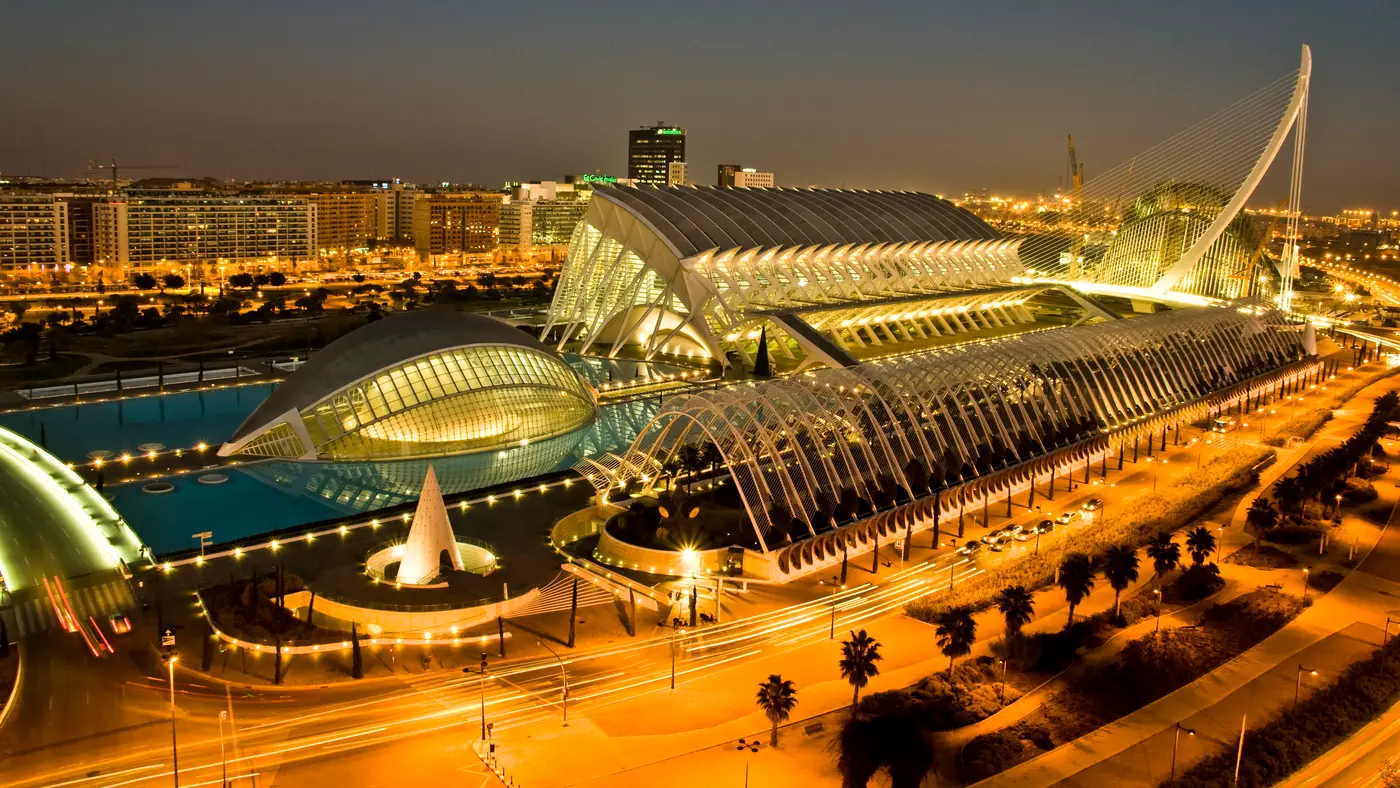
old town and the western avenues, starting and finishing close together by the City of Arts
and Sciences. The kilometres and heights below are measured along the organiser’s 2026 course
map. The loop turns sharply 68 times, it crosses four bridges, and none of the bridge decks is
longer than 340 m.
Km 0 to 4.7: down to the sea
Km 0.0 The start, on the Pont de Montolivet
Photo: MCAE Consulting, CC0
The start is at the south end of the Pont de Montolivet, by the Plaça de la Marató, and the
course crosses the old Turia riverbed on the bridge in its first 400 m. Past the Plaça
d’Europa, the Avinguda de les Balears gives a straight 1.6 km, from about km 0.7 to km 2.3,
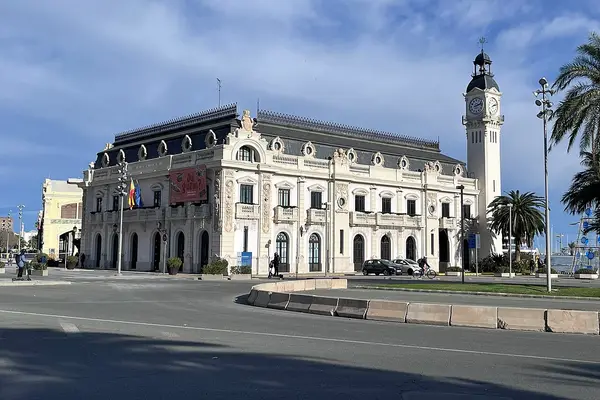
and the route reaches the port at about km 2.6, passing the Edifici del Rellotge, the port’s
clock building. The Carrer del Doctor Marcos Sopena and the Carrer d’Eugènia Viñes then run
behind the beach. At about km 4.3 the course is at 1.9 m, the lowest point of the race. The
first 4 km lose about 7 m, so the opening pace comes easily; with nine waves and up to 36,000
runners, the risk is going out faster than planned.
Km 4.7 to 13.3: the university district and the north
The Avinguda dels Tarongers carries the course west from about km 4.7 to km 7.4, then the
Carrer de Ramon Llull, a first stretch of the Avinguda de Blasco Ibáñez and the Avinguda de
Catalunya lead north. The Avinguda dels Germans Machado, from about km 9.5 to km 10.9, and the
Carrer de Dolores Marqués and the Carrer de Cavanilles, a straight 1.5 km from about km 11.8 to
km 13.3, bring the course back toward the river. The road rises a few metres on the way, to
about 12 m around km 13. The aid stations in the first half are at km 5, 10, 15 and 20.
Km 13.3 to 21.3: Mestalla, Blasco Ibáñez and halfway
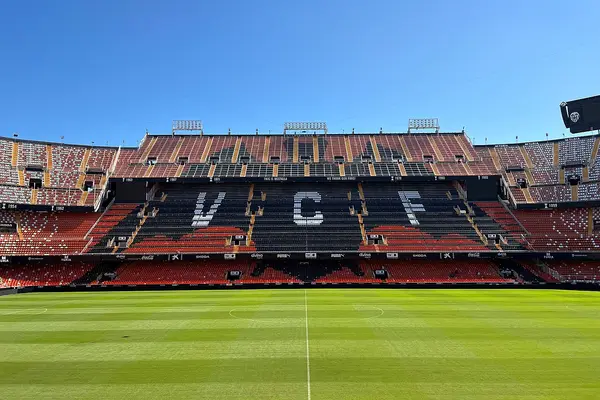
Km 15.0 Estadi de Mestalla
Photo: MCorellacas, CC0
The Passeig de l’Albereda follows the old riverbed from about km 13.3 to km 14.4, and the
Avinguda d’Aragó passes the Mestalla stadium at about km 15.0. Then comes the longest avenue
of the first half: the Avinguda de Blasco Ibáñez, from about km 15.2 to km 17.9. Back through
the Carrer de Ramon Llull and the Avinguda dels Tarongers, the course turns south down the Carrer
de la Reina at about km 20.1, and halfway falls on that street at km 21.1. It is
back down at about 2 m here, and from this point the long rise begins.
Km 21.3 to 28.5: the port and back along the river
Km 21.7 Edifici del Rellotge
Photo: MCAE Consulting, CC0
The course passes the Edifici del Rellotge a second time at about km 21.7 and turns onto the
Avinguda del Port, the longest straight of the race: 2.2 km, from about km 21.8 to km 23.9, with
the road climbing gently away from the sea. The Passeig de l’Albereda takes it back along the
riverbed from about km 24.2 to km 26.1. The km 25 check comes on this stretch: a runner who
reaches km 25 after 12.57pm is taken out of the race.
Past the Carrer de Sant Pius V and the Pla de la Saïdia, the course crosses the riverbed on the
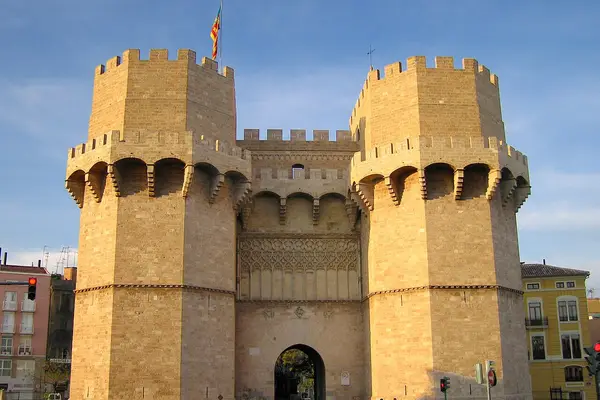
Pont de les Arts at about km 27.8 and runs along the Carrer de la Blanqueria under the walls of
the Torres de Serrans, the old city gate, at about km 28.5.
Km 28.5 to 35.0: the old town and the top of the course
Km 28.5 Torres de Serrans
Photo: Felivet, Public domain
The next 2.5 km are the old town: the Plaça de Tetuan at about km 29.3, the Carrer de la Pau
and the Carrer de les Barques, and the Plaça de l’Ajuntament, the city hall square, at about
km 30.5. The Carrer de Guillem de Castro and the Gran Via de Ferran el Catòlic lead west, and
the course crosses the riverbed twice more, on the Pont de les Glòries Valencianes at about km
32.4 and the Pont del Nou d’Octubre at about km 34.5. The Carrer de la Vall de la Ballestera,
from about km 32.9 to km 34.1, is a straight 1.2 km.
This is where the rise from halfway comes to a head. The road is at about 12 m at km 30 and
about 25 m at km 35, the top of the course, as the Avinguda de les Tres Creus begins. Aid comes
closer together here, at km 30, 32 and 35.
Km 35.0 to 42.2: downhill to the City of Arts and Sciences
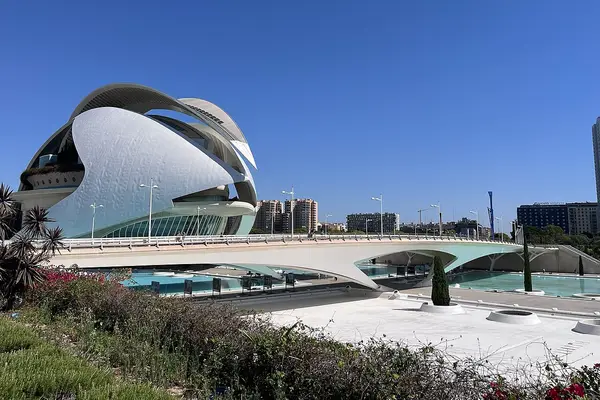
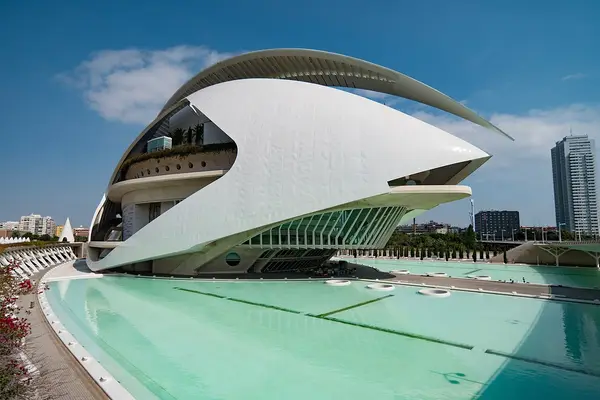
Km 42.0 Palau de les Arts
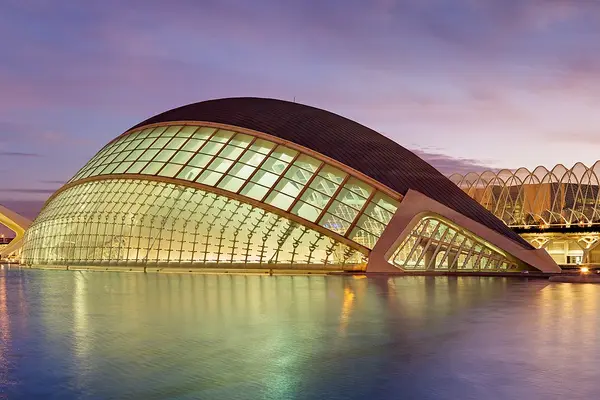
Photo: Nan Palmero from San Antonio, TX, USA, CC BY 2.0Km 42.2 The finish, by the Hemisfèric
Photo: Diliff, CC BY 2.5
After km 35 the course never climbs again. The Avinguda de les Tres Creus and the Carrer de
l’Arxiduc Carles, from about km 35.0 to km 37.6, are two straight avenues, the second 1.3 km
long, and the last two aid stations stand at about km 37.5 and km 40. The Plaça d’Espanya at
about km 38.5, the Carrer de Xàtiva and the Carrer de Colón bring the course through the centre
to the Plaça de la Porta de la Mar at about km 40. The Avinguda de Jacinto Benavente and the
Carrer de l’Alcalde Reig lead to the City of Arts and Sciences at about km 41.9. The final
300 m pass the Palau de les Arts, the opera house, to the finish beside the Hemisfèric, at
3.6 m.
At a glance
distance
42.2 km26.2 mi
Loop, asphalt
climb
41.8 m137 ft
Highest point 23 m above lowest
cut-off
5:30 h
5 h 30 min. Finish closes 15:15
places
36,000
Places
first held
1981
A flat December loop from the old riverbed near Pont de Montolivet, finishing beside the City of Arts and Sciences on the coast.
The Valencia Marathon is a flat loop of 42.2 km with 41.8 m of climbing. Its lowest point is 2 m and its highest 25 m above sea level. Next race: Sunday 6 December 2026, starting at 08:15.
Race week
Bib pickup at Feria Valencia, Av. de les Fires, s/n, 46035 València
Timetable
Before race week 4 key dates
6 Nov 2026
Last day for free start-box (wave) changes and registration changesA faster start box can be requested free of charge in the Runner Area ('Solicitar cambio de Box') with a link proving the improved time. Any other change to the registration is also free until this date.
7 Nov 2026
Authorising someone else to collect your bib opensA third party can be authorised in the Runner Area of the ticketing platform to collect the bib, wristband and runner's bag from 7 November.
26 Nov 2026
Last day for paid start-box or registration changes (EUR 25)From 7 to 26 November, box changes and other registration changes cost EUR 25 for bib reprinting and handling. No changes after that, online or at the expo.
29 Nov 2026
Refund insurance: last day to cancel for an 80% refundOnly for runners who bought the refund service at registration; the insurance fee and any charity contribution are not returned.
Thursday 3 December Bib pickup
17:005:00 PM–21:009:00 PM
Expo 42K Feria Valencia opens: bib and runner's bag collectionFeria Valencia, Av. de les Fires, s/n, 46035 València. Bib-chip collected only in person at the expo, or by a third party you authorised in the Runner Area. Check your chip at the expo stand when you collect. The organiser advises avoiding the busiest hours, 12:00 to 14:00 and 17:00 to 19:00.
Friday 4 December Bib pickup
09:009:00 AM–21:009:00 PM
Expo 42K Feria Valencia: bib and runner's bag collectionFeria Valencia, Av. de les Fires, s/n, 46035 València
Saturday 5 December Last bib day
09:009:00 AM–19:007:00 PM
Expo 42K Feria Valencia: last day of bib collectionFeria Valencia, Av. de les Fires, s/n, 46035 València. No bibs or race bags are handed out on Sunday.
Sunday 6 December Race day
08:158:15 AM
Wave 1 start (sub 2:50:00)Nine waves by accredited time; your wave is emailed in advance and printed on your bib. Wheelchair athletes start early, in the third wave. Visually impaired athletes may start at the front of their own wave.
09:359:35 AM
Wave 9 start (4:10:00 and slower)Last wave.
15:153:15 PM
Race finishes: official finish closesFinish, Ciudad de las Artes y las Ciencias. Official maximum time 5:30:00 from crossing the start line, and it may not be exceeded in any case. Only finishers within the limit receive the commemorative medal.5:30 limit: 7:49/km for 42.195 km5:30 limit: 12:35/mi for 26.2 mi
Cut-offs and the other waves (8)
08:258:25 AM
Wave 2 start (2:50:00 to 2:59:59)
08:358:35 AM
Wave 3 start (3:00:00 to 3:11:59)
08:458:45 AM
Wave 4 start (3:12:00 to 3:19:59)
08:558:55 AM
Wave 5 start (3:20:00 to 3:31:59)
09:059:05 AM
Wave 6 start (3:32:00 to 3:42:59)
09:159:15 AM
Wave 7 start (3:43:00 to 3:55:59)
09:259:25 AM
Wave 8 start (3:56:00 to 4:09:59)
12:5712:57 PM
Course cut-off at km 25Any runner reaching km 25 after 12:57 must hand in their bib and leave the race or board the sweeper vehicle ('coche escoba'), as they are projected to miss the overall 5:30:00 limit once the wave offsets are allowed for.
Times as published by SD Correcaminos, in Valencia time, checked .
Bibs are handed out only at the Expo 42K at Feria Valencia, on the Avinguda de les Fires: on
Thursday 3 December from 5pm to 9pm, Friday 4 December from 9am to 9pm and Saturday 5 December
from 9am to 7pm. The English rules misprint the Thursday’s date, and the Spanish pages give 3
December. No bibs or runner’s bags are given out on Sunday. If you cannot go, you can authorise
someone else in your Runner Area from 7 November to collect the bib, wristband and runner’s bag
for you. Check your chip at the expo stand when you collect it.
Tram line 4 runs from the city to the main entrance of Feria Valencia, and EMT bus 62, between
Benimàmet and the Estació del Nord, also serves it. There are 3,000 parking spaces. The
organiser advises avoiding the busiest hours, 12 noon to 2pm and 5pm to 7pm.
Waves and box changes
Runners start in nine waves by accredited time, from 8.15am, with each wave about ten minutes
behind the one before. Your wave is emailed to you and printed on your bib. Until 6 November
you can ask for a faster box free of charge in the Runner Area, with a link that proves the
time; from 7 to 26 November a change costs 25 euro, and after that nothing changes, online or
at the expo. Your time limit runs from the moment you cross the start line, not from the gun.
The cloakroom
The organiser’s cloakroom page, which carries no year, describes a paid service booked in
advance, at 6 euro for one of 8,000 places, on the Avinguda del Profesor López Piñero by
l’Umbracle, beside the start and the finish. It showed the places as sold out when read in
September 2026. Check the page before race week.
Aid and what is not out yet
The rules promise drinks at about km 5, 10, 15, 20, 25, 30, 32, 35, 37.5 and 40, and drinks and
food at the finish. The organiser’s race guide page was still empty for 2026 when checked, so
start-area opening times, cloakroom hours, pacers and the road closures are not yet published.
Runners from abroad must be over 18 on race day.
Trip
Getting a place
Sold out for the 2026 race As read 17 October 2026.
City of Arts and Sciences. Photograph by Jcca76, CC BY-SA 4.0
From the airport
Valencia Airport is in Manises, about 8 km from the city. Metro lines 3 and 5 both serve it,
running about every 15 to 20 minutes and reaching the centre in about 20 minutes. Metrobus line
150 is the direct bus, every 20 to 30 minutes and about 45 minutes to the city, and a taxi to
the centre costs about 20 euro, according to
Visit Valencia.
Where to stay
The start, the cloakroom and the finish are all at the City of Arts and Sciences, so the streets
around it spare you any race-morning transport. The old town, around the Plaça de l’Ajuntament,
is on the course between km 28.5 and km 31 and close to the last kilometres along the Carrer de
Colón. The university district along the Avinguda de Blasco Ibáñez and the Avinguda dels
Tarongers is on the course twice. The expo at Feria Valencia is a tram ride from the city, so
allow time for the trip. The organiser’s trip page sends visitors to welcometovalencia.com for
rooms and says that transfers to and from the start on race day are included for hotels more
than 2 km away.
Race-day transport and closures
The 2026 closure plan and any race-day changes to the metro and buses had not been published by
30 October. The course crosses the riverbed four times and loops the old town, so plan to move around
on foot through the morning, and check the organiser’s site in race week.
Climb summed after smoothing the heights over 1 km. The edge is this course's height profile on one scale for every race: 250 m above its lowest point fills it. Photo: Pudong, by https://www.pxfuel.com/en/free-photo-ovozr, CC0, via Wikimedia Commons.
Climb summed after smoothing the heights over 1 km. The edge is this course's height profile on one scale for every race: 250 m above its lowest point fills it. Photo: Marina Bay Sands, by Tony Hisgett from Birmingham, UK, CC BY 2.0, via Wikimedia Commons.
Climb summed after smoothing the heights over 1 km. The edge is this course's height profile on one scale for every race: 250 m above its lowest point fills it.
Climb summed after smoothing the heights over 1 km. The edge is this course's height profile on one scale for every race: 250 m above its lowest point fills it.
Climb summed after smoothing the heights over 1 km. The edge is this course's height profile on one scale for every race: 250 m above its lowest point fills it. Photo: Edinburgh Castle, by Stephencdickson, CC BY-SA 4.0, via Wikimedia Commons.
Climb summed after smoothing the heights over 1 km. The edge is this course's height profile on one scale for every race: 250 m above its lowest point fills it. Photo: Taipei 101, by Another Believer, CC BY-SA 4.0, via Wikimedia Commons.
Questions about the Valencia Marathon
When is the Valencia Marathon 2026?
Sunday 6 December 2026. It is the 46th edition, the first wave starts at 8.15am and the race closes at 3.15pm. Up to 36,000 bibs are available.
Is the Valencia Marathon course flat?
Yes. Measured along the 2026 course, the lowest point is 1.9 m at about km 4.3 and the highest 25.0 m at about km 35.0, so the whole race sits inside 23 m, with 41.8 m of climbing in all. The only sustained rise is 22.8 m spread over the 13.9 km from halfway to km 35, an average of 0.16%, and the last 7.2 km are downhill to the finish.
What is the cut-off time for the Valencia Marathon?
Five and a half hours from the moment you cross the start line. There is also a check at km 25: a runner who reaches it after 12.57pm must hand in the bib and leave the race or board the sweeper vehicle. The finish closes at 3.15pm, and only runners inside the limit receive the medal.
7 more questions
Where do I collect my bib for the Valencia Marathon?
Only at the Expo 42K at Feria Valencia: Thursday 3 December from 5pm to 9pm, Friday 4 December from 9am to 9pm and Saturday 5 December from 9am to 7pm. No bibs or runner's bags are handed out on race day. From 7 November you can authorise someone else, in your Runner Area, to collect the bib, wristband and bag for you.
Can I change my start wave at the Valencia Marathon?
Until 6 November 2026 a faster box can be requested free of charge in the Runner Area, with a link proving the faster time. From 7 to 26 November a change costs 25 euro, and no changes are made after that, online or at the expo.
How do I get from Valencia Airport to the city?
The airport is in Manises, about 8 km from the city. Metro lines 3 and 5 run about every 15 to 20 minutes and reach the centre in about 20 minutes. Metrobus line 150 runs every 20 to 30 minutes and takes about 45 minutes, and a taxi to the centre costs about 20 euro, according to Visit Valencia.
Where are the start and finish of the Valencia Marathon?
On the 2026 course map the start is at the south end of the Pont de Montolivet, by the Plaça de la Marató, and the finish is beside the Hemisfèric in the City of Arts and Sciences, close to the start.
How do I enter the Valencia Marathon?
The 2026 race is sold out. The ballot opened on 16 December 2025, closed on 26 December and the results came out on 13 January 2026. There are 6 ways in: Loyalty period, Public ballot, Waiting list, Transfer of an entry, Official travel packages and Sub-elite entry. Entry fee: €180 (for the 2026 race). Entry details on the organiser’s site
What is the time limit at the Valencia Marathon?
Runners have 5 h 30 min to finish. The finish closes at 15:15.
Is there a video of the Valencia Marathon course?
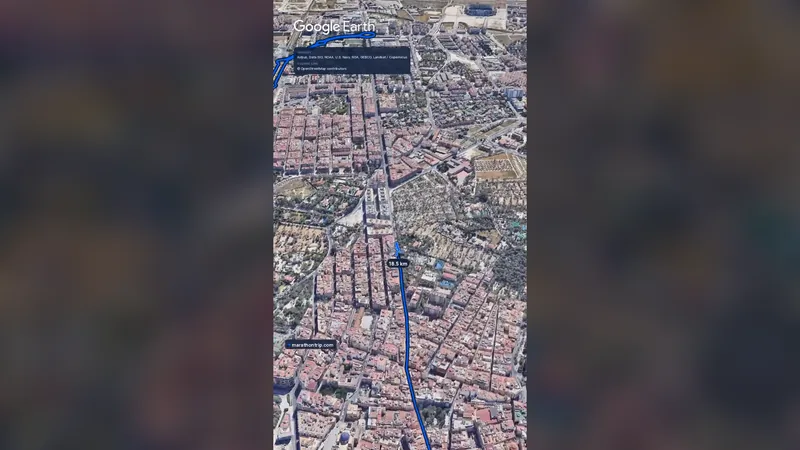
Yes. A 3D flyover film of the whole course, start to finish (3:44), plays at the top of this page.
The first Valencia Marathon, in 1981, began as the Marató Popular de València. Teodoro Pérez won
in 2:26:57 and Nuria De Miguel in 3:20:50. It grew into one of Europe’s biggest marathons: 19,504
took part in 2018, 21,225 in 2019 and 30,000 in 2022, according to Wikipedia, which also lists
it as a World Athletics Platinum Label road race. In 2020, during the pandemic, it was held for
elite runners only, and 134 finished.
Places became the hard part. The 2024 race sold all 35,000 entries in order of arrival, a little
over two months after general entry opened. For 2026 the race held its first ballot: 57,572
people applied for 20,755 places left after a loyalty period for the previous year’s runners.
Valencia is known for fast times. The men’s course record is 2:01:48, by Sisay Lemma of
Ethiopia in 2023, which beat Kelvin Kiptum’s 2:01:53 from 2022. The women’s is 2:14:00, by
Joyciline Jepkosgei of Kenya in 2025. Recent winners, from the organiser’s table: in 2025 John
Korir in 2:02:24, in 2024 Sebastian Sawe in 2:02:05 and Megertu Alemu in 2:16:49, and in 2022
Amane Beriso in 2:14:58 alongside Kiptum. In the elite-only 2020 race, Evans Chebet ran 2:03:00
and Peres Jepchirchir 2:17:16, both records at the time.