
Entry through the organiser
Entry details on the organiser’s site →
VCM Group, a third party. We take no entries and have no part in the race.
 Marathon Trip
Your trips on every device: sign in, or make a free account when you save one.
Signed in on this browser.
Sign in My marathons Account and dataLocked out? An export link you keep still opens your list in any browser.
No account: email it to me
One email with this trip and a link to open it again. We do not keep the address and send nothing else.
Only a race from our list can be emailed. An account keeps this one.
What we keep, and what we do notCheck your inbox at to confirm it.
Browse the racesEach edition the day it comes out, and nothing else. Off again with one click. How it is kept.
A climb of 48 m from km 8 to km 19, downhill to km 23, then a slow rise of 21 m home from km 34.
© OpenStreetMap contributors
km 0mile 0
Photo: Leonhard Lenz, CC0
km 0.5mile 0.3
The first bridge of the course, over the Danube.
Photo: Leonhard Lenz, CC0
km 2.8mile 1.7
Photo: Jebulon, CC0
km 10mile 6.2
Beside the Ring at the Stadtpark.
Photo: Gugerell, CC0
km 11.4mile 7.1
On the Linke Wienzeile, the market runs along the road.
Photo: Dguendel, CC BY 4.0
km 15.8mile 9.8
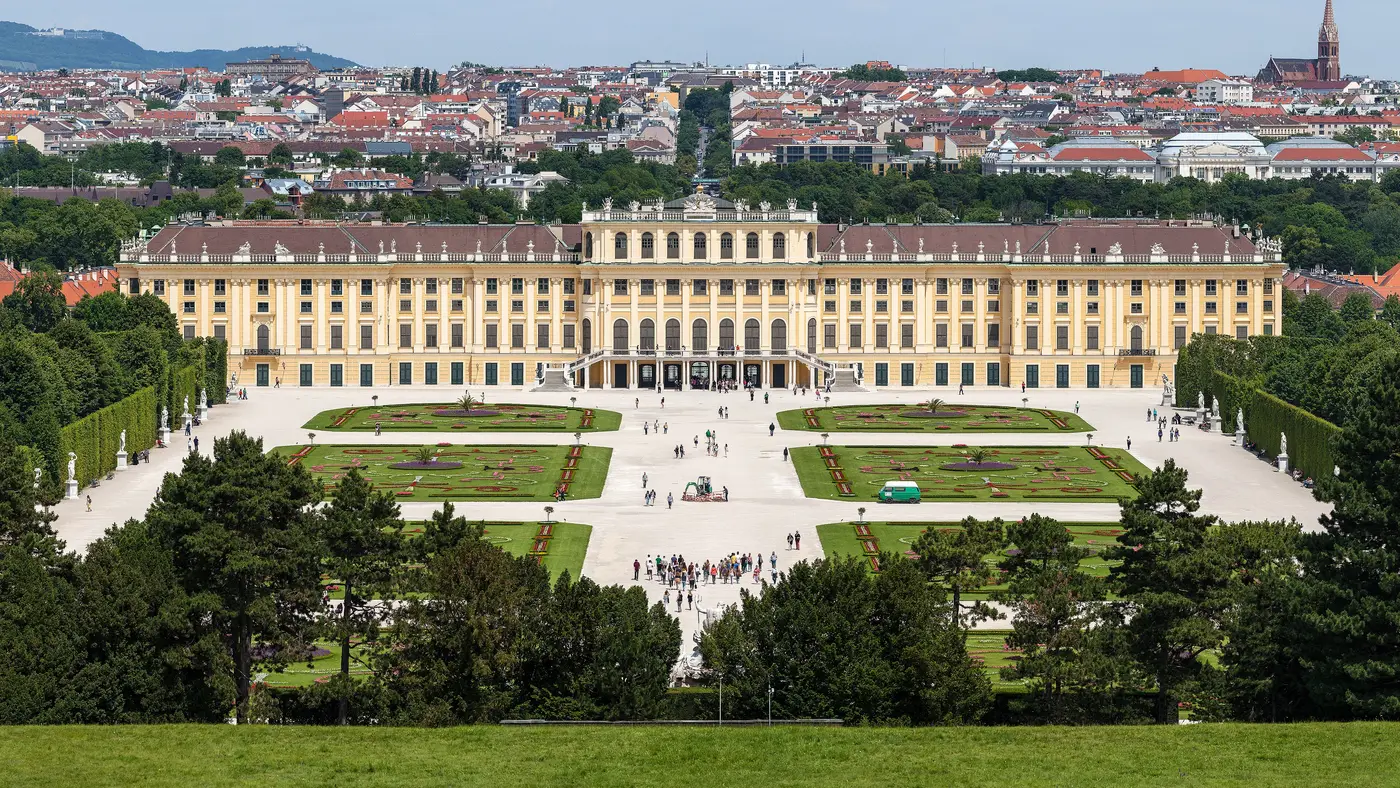
The Linke Wienzeile runs past the palace's gate side; the organiser's relay handover is at Schoenbrunn.
Photo: Dguendel, CC BY 4.0
km 20mile 12.4
On the Ring at Maria-Theresien-Platz.
Photo: Dguendel, CC BY 4.0
km 21.7mile 13.5
Near the Universitaetsstrasse stretch after the half.
Photo: Dguendel, CC BY 4.0
km 30.2mile 18.8
The stadium lies beside the Prater stretch; the organiser's relay handover three is at Meiereistrasse/Ernst-Happel-Stadion.
Photo: Peter Gugerell, Public domain
km 40.9mile 25.4
On the Opernring, passed on the way to the finish.
Photo: Jebulon, CC0
km 41.9mile 26
On the Dr.-Karl-Renner-Ring in the last kilometre.
Photo: Dguendel, CC BY 4.0
km 42.2mile 26.2
Photo: Gugerell, CC0
Height drawn many times taller than life. Heights: GEDTM30.
Dashed: bridge

Your 5 gels, at the orange marksFor a 4:00 finish, one every 40 minutes
Get them on AmazonAmazon partner link
Vienna is a race of two halves that do not look alike. The first half is a long, almost unnoticed climb: from about km 5 in the Prater the road rises 51 m, out along the Linke Wienzeile and back up Mariahilfer Strasse, to its high point at km 19. The second half drops away from there, down to the Danube Canal and then to the Prater Hauptallee, where the course reaches its lowest point at km 33.6. The half marathon runners, more numerous than the marathoners in 2026, leave at km 20.3, so the road thins out just as it turns downhill. The Hauptallee is where the 2026 men’s race was decided, and the Ringstrasse, run twice, is where the women’s was.
The marathon is a point-to-point course from the Reichsbrücke to the Ringstrasse. The kilometres and heights below are measured along the organiser’s 2026 course line on an open elevation model. The organiser’s maps are still those of the 2026 race, and it has not said whether the course changes for 2027, so check its course page before you plan your pacing.
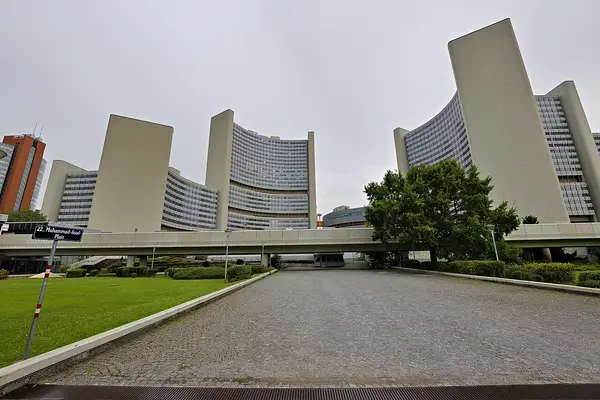
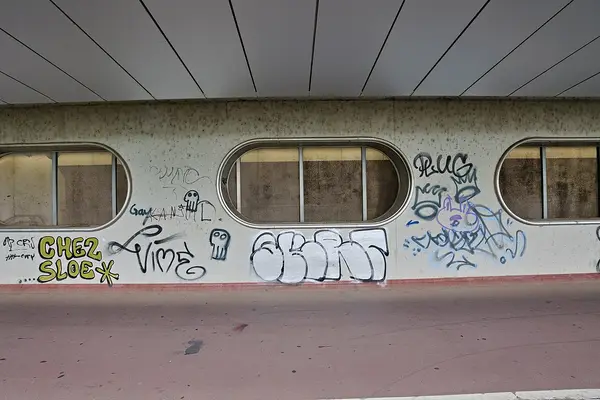
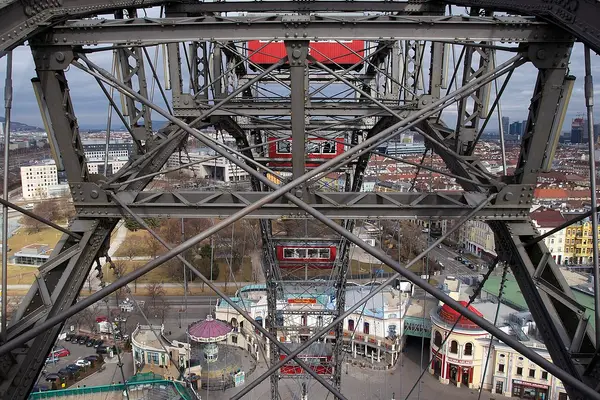
The start is on Wagramer Strasse beside the Vienna International Centre, home of the UN offices. Within 100 m the field is on the Reichsbrücke, which carries it across the Danube to about km 1.0. Lassallestrasse leads to the Praterstern roundabout at about km 2.1, with the Riesenrad, the giant wheel of the Prater, just off the course at about km 2.8. The road loses about 12 m in the first 5 km, so the opening is quick if you let it be.
The course turns down the Hauptallee, the long straight avenue through the Prater, and leaves it at about km 4.8 for Stadionallee and Lusthausstrasse. The first refreshment points are at km 3.9 on Kaiserallee and km 4.8 on the Hauptallee. Schüttelstrasse and Untere Donaustrasse then run along the Danube Canal from about km 5.8 to km 8.9, where the course crosses it on the Aspernbrücke. This is the low ground of the first half, around 160 m to 167 m.
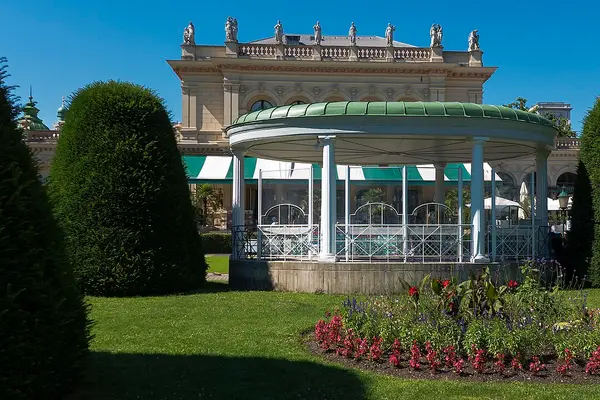
The first lap of the Ringstrasse lasts under 2 km: Stubenring, Parkring past the Stadtpark and its Kursalon at about km 10, Schubertring, Kärntner Ring and the Opernring, which the course leaves at about km 10.8 for the Linke Wienzeile.
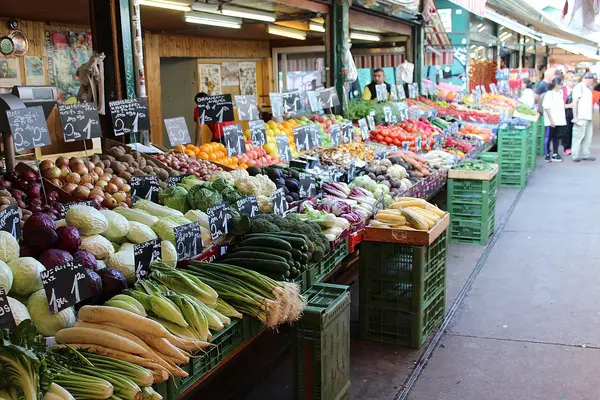
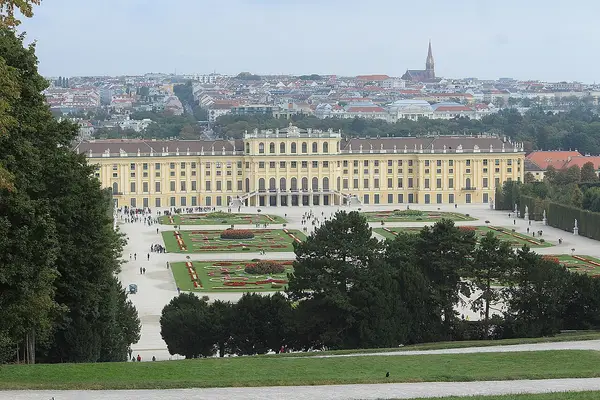
The Linke Wienzeile passes the Naschmarkt at about km 11.4 and runs west for nearly 5 km, with refreshment points at km 11.7, 12.5, 13.1, 15.0 and 15.5. It climbs all the way, but only about 14 m, from roughly 175 m to 189 m, which a runner barely notices. The turn comes at about km 15.8 by Schönbrunn, where the first relay handover is.
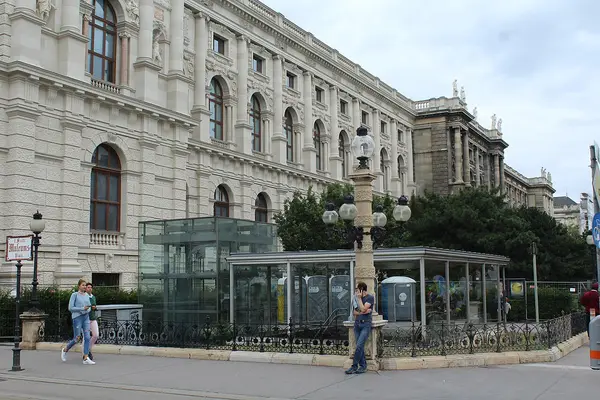
Mariahilfer Strasse brings the course back towards the centre, across the Gürtel at about km 18.1, and this is the real climb of the race: about 21 m in 3 km, to the high point of 210 m at km 19.0. The refreshment points at km 17.8 and km 19.6 sit either side of the top. Straight after it the road falls about 1.9% between km 19.1 and km 20.3, the steepest stretch of a kilometre or more on the course, down to Museumsplatz and Museumstrasse. At km 20.3 the fields separate: marathon runners keep left and go straight on, half marathon runners turn right into Bellariastrasse. The organiser allows a marathon runner to switch to the half here “in exceptional cases”, with no refund of the fee difference.
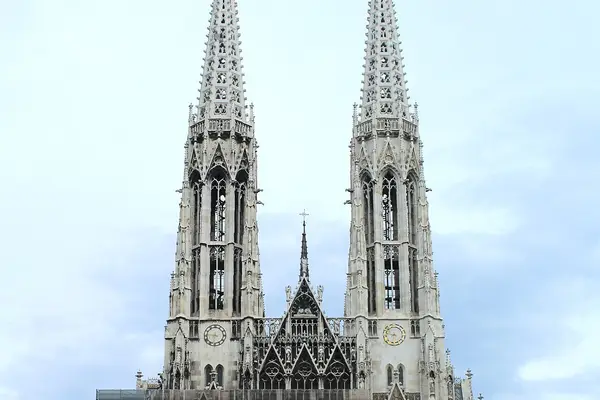
Auerspergstrasse and Landesgerichtsstrasse lead behind the Rathaus to Universitätsstrasse at about km 21.7, by the Votivkirche. From there the course drops to the Danube Canal, about 18 m in a kilometre, and follows Rossauer Lände to the second relay handover. It crosses the canal on the Friedensbrücke at about km 23.6 and comes back down the other bank on Brigittenauer Lände, Obere Donaustrasse and Untere Donaustrasse. Praterstrasse leads back to the Praterstern at about km 26.9. These kilometres are flat, between about 165 m and 170 m.
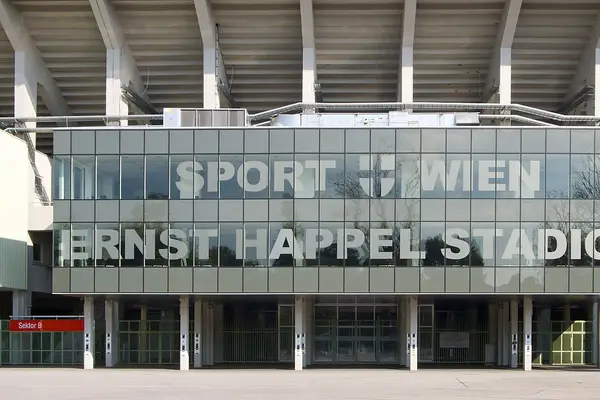
The second visit to the Prater is the long one. The Hauptallee runs out to the Lusthaus, where the course turns at about km 32.7, and back as far as about km 34.8. It is the same avenue on which Eliud Kipchoge ran 1:59:40 for the marathon distance in October 2019, on laps between the Praterstern and the Lusthaus. The road keeps falling gently to the low point of the course, 156 m, at km 33.6, and refreshment points come thick here: km 27.2, 28.5, 29.4, 30.5, 31.4, 33.5 and 34.0. The third relay handover is at Meiereistrasse by the Ernst-Happel-Stadion. In 2026 the men’s winner, Fanny Kiprotich, broke away at a refreshment station on the Hauptallee and dropped the favourite around km 32.
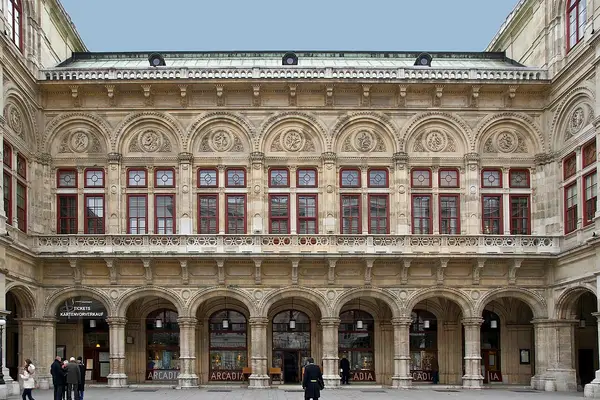
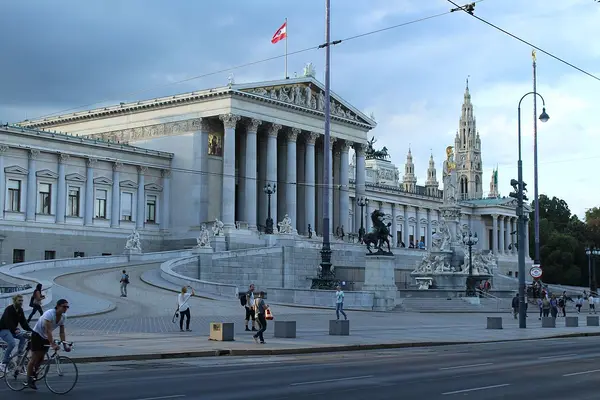
Stadionallee and Schüttelstrasse take the course back along the canal, the same street as at km 6. It crosses on the Franzensbrücke at about km 38.3 and reaches the Ring by Radetzkystrasse, Vordere Zollamtsstrasse and the Stubenbrücke. From here the course climbs 21 m over its last 8.6 km, and most of that, about 12 m, comes between km 39.4 and km 41.4, on the Ring itself. The second lap passes the Parkring, the State Opera at about km 40.9, the Burgring and the Parliament at about km 41.9 before the finish on the Ring between the Burgtheater and the Rathausplatz. In 2026 the women’s winner, Tigist Gezahagn, shook off her last rival on this stretch and said she knew she could win at 41 km.
A point-to-point run from the Reichsbrücke over the Danube into the old city, along the Ringstrasse past the State Opera and the Hofburg to the finish between the Burgtheater and Rathausplatz.
The Vienna City Marathon is a point-to-point course of 42.2 km with 109.7 m of climbing. Its lowest point is 156 m and its highest 210 m above sea level. Next race: Sunday 18 April 2027, starting at 09:00.
19 Apr 2026
20 Sept 2026
31 Dec 2026
7 Mar 2027
12 Mar 2027
12 Mar 2027
09:009:00 AM–19:007:00 PM
09:009:00 AM–18:006:00 PM
07:007:00 AM–08:308:30 AM
09:009:00 AM
09:009:00 AM–16:304:30 PM
until 15:303:30 PM
Times as published by VCM Group, in Vienna time, checked .
The forecast for Sunday
Add to calendar .ics file, times in Vienna time
Race numbers are collected at the expo, Vienna Sports World, in the Marx Halle at Karl-Farkas-Gasse 19 in the third district, with 100 exhibitors and brands and free entry for companions. The 2027 pick-up hours are not published yet. In 2026 the expo ran on the Friday from 9am to 7pm and the Saturday from 9am to 6pm, with no numbers on race morning, and the 2027 bag drop is expected at the Marx Halle on Friday 16 and Saturday 17 April (the organiser has not yet published the 2027 days). You need the pick-up confirmation sent to you by email, and photo ID. Someone else can collect for you with your confirmation, a signed power of attorney and their own ID.
Your target time decides your block. For 2027 a marathon target of 3:35 or faster needs proof: a result from 2025, 2026 or 2027 uploaded by 12 March 2027, which is also the last day to change your target time. Without proof you go to a rear block. In 2026 the field started in six blocks, A to F, from 9:00 to 9:33, and the start closed at 9:40; your block letter and its colour are printed on your number, and blocks cannot be changed once you have it. Timing is net, from the moment you cross the line.
The organiser names the U1 underground as the way to the start. In 2026 it advised Alte Donau station for blocks E and F and for anyone dropping a bag, and Kaisermühlen/Vienna International Centre for blocks A to D without a bag. On race morning in 2026 the U1 ran every two and a half minutes instead of every five, and the organiser warned that when crowds built up, trains could run through Donauinsel, Kaisermühlen and Alte Donau without stopping. Your race number is a ticket on Vienna’s public transport around your start, from 2 hours before to 6 hours after it in 2026.
The bag drop must be booked, for EUR 3, by 12 March 2027, and there is no drop-off without a booking. Bags go in at the Marx Halle on the Friday or Saturday before the race (expected to be 16 and 17 April; 9am to 7pm and 9am to 6pm in 2026), or at the start on Wagramer Strasse from 7am to 8.30am on race morning, in the VCM 2027 clothing bag with its sticker. You collect it in the finish area from 9am to 4.30pm by showing your number; in 2026 the marathon bags were at Lichtenfelsgasse, next to the Rathaus. The wait between the 8.30am bag deadline and your wave can be long, so bring old clothes: those left at the start are collected by the city’s waste department and reused where possible.
There are eight refreshment stations with water and Powerade, one every 5 km, with bananas from 15 km, and 15 more water points. Official pacemakers run for 3:00, 3:15, 3:30, 3:45, 4:00, 4:15, 4:30 and 4:45, and sweep runners accompany the end of the field to the finish. The organiser counts more than 60 cheering zones along the course and 2,500 volunteers.
Entry through the organiser
VCM Group, a third party. We take no entries and have no part in the race.
The City Airport Train runs non-stop between Vienna Airport and Wien Mitte, which connects to the U3, U4 and the S-Bahn and is a 12-minute walk from Stephansplatz. The operator gives the journey as 21 minutes, every 12 minutes between 7am and 7pm and every 15 minutes otherwise. It is running as premium coaches rather than trains, and the operator expects that to continue until 31 October 2027, so race weekend falls inside it. In September 2026 the airport said the S7 was running between the airport and Wien St. Marx, while the long-distance trains from Wien Hauptbahnhof and the Vienna Airport Lines buses ran without restrictions. Check current timetables before you travel.
The start is across the Danube in Donaustadt, the finish is in the first district on the Ring, and the expo is in Landstrasse, so no single area is next to everything. The U1 is the one line the organiser points runners to on race morning, which makes the first district, or Leopoldstadt between it and the Danube, the natural base: the finish is a walk away and the start a short ride out.
The course runs twice on the Ringstrasse and twice through the Prater, but the organiser had not published a 2027 list of road closures by October 2026. In 2026 drivers were pointed to the Park and Ride at the U2 in the 22nd district, and e-scooter parking zones at the start and finish were closed.
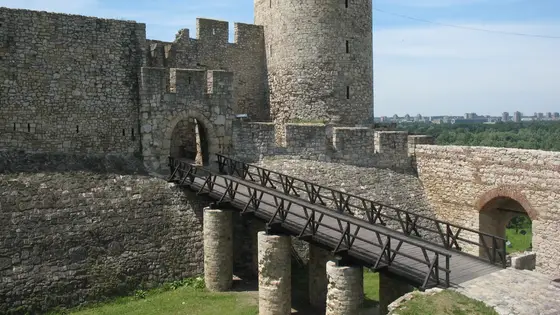
Belgrade, Serbia
Sun 18 Apr 202742.2 kmClimb 92 m
Climb summed after smoothing the heights over 1 km. The edge is this course's height profile on one scale for every race: 250 m above its lowest point fills it. Photo: Belgrade Fortress, by CrniBombarder!!!, CC BY-SA 3.0, via Wikimedia Commons.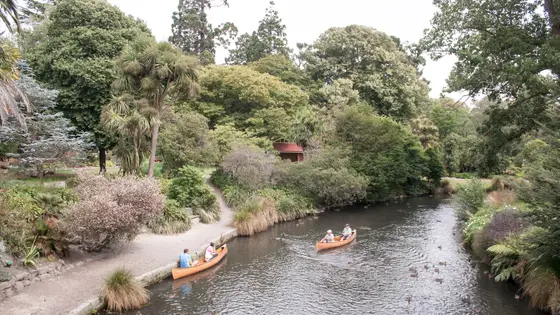
Christchurch, New Zealand
Sun 18 Apr 202742.2 kmClimb 49 m
Climb summed after smoothing the heights over 1 km. The edge is this course's height profile on one scale for every race: 250 m above its lowest point fills it. Photo: Christchurch Botanic Gardens, by Szilas, Public domain, via Wikimedia Commons.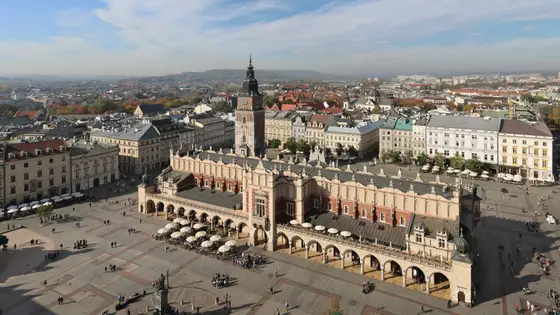
Krakow, Poland
Sun 18 Apr 202742.2 kmClimb 55 m
Climb summed after smoothing the heights over 1 km. The edge is this course's height profile on one scale for every race: 250 m above its lowest point fills it. Photo: Main Square, by Ingo Mehling, CC BY-SA 4.0, via Wikimedia Commons.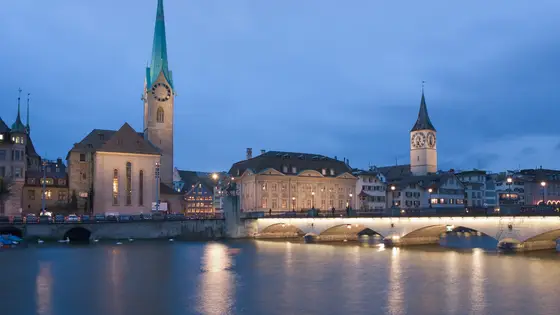
Zurich, Switzerland
Sun 11 Apr 202742.2 kmClimb 27 m
Climb summed after smoothing the heights over 1 km. The edge is this course's height profile on one scale for every race: 250 m above its lowest point fills it. Photo: Zürich, by Ikiwaner, CC BY-SA 3.0, via Wikimedia Commons.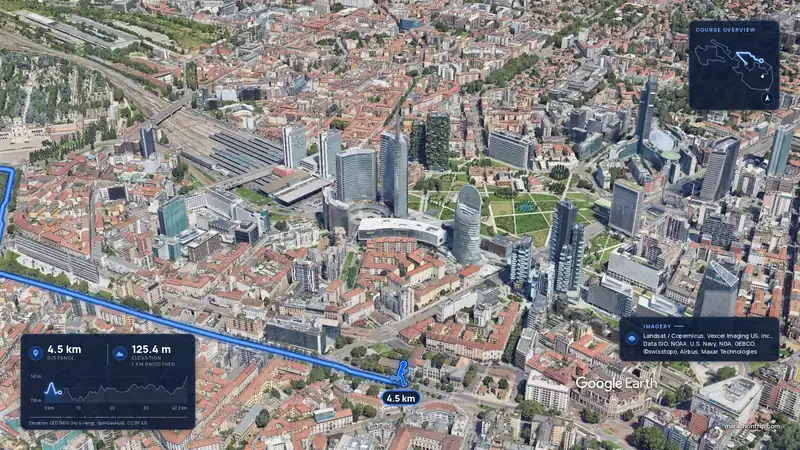 Imagery: Google Earth3:52 film
Milan, Italy
Sun 4 Apr 202742.2 kmClimb 88 m
Climb summed after smoothing the heights over 1 km. The edge is this course's height profile on one scale for every race: 250 m above its lowest point fills it.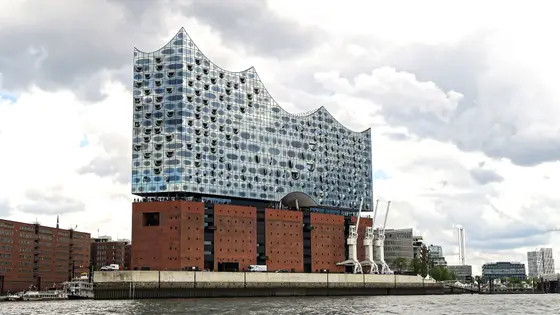
Hamburg, Germany
Sun 25 Apr 202742.2 kmClimb 98 m
Climb summed after smoothing the heights over 1 km. The edge is this course's height profile on one scale for every race: 250 m above its lowest point fills it. Photo: Elbphilharmonie, by Burkhard Mücke, CC BY-SA 4.0, via Wikimedia Commons.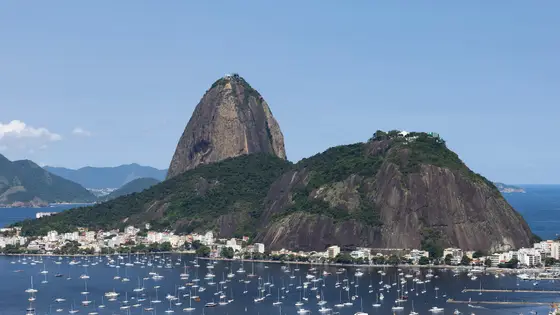
Rio de Janeiro, Brazil
Sun 30 May 202742.2 kmClimb 110 m
Climb summed after smoothing the heights over 1 km. The edge is this course's height profile on one scale for every race: 250 m above its lowest point fills it. Photo: Sugarloaf Mountain, by Arne Müseler, CC BY-SA 3.0 de, via Wikimedia Commons.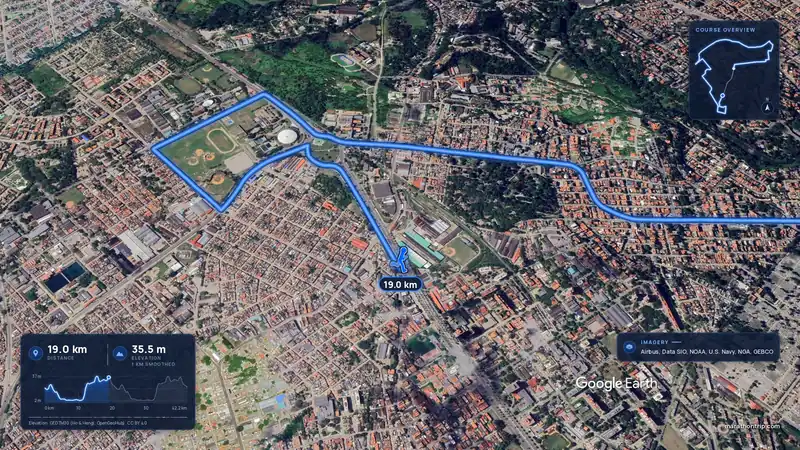 Imagery: Google Earth3:57 filmEntry open
Havana, Cuba
Sun 15 Nov42.2 kmClimb 108 m
Climb summed after smoothing the heights over 1 km. The edge is this course's height profile on one scale for every race: 250 m above its lowest point fills it.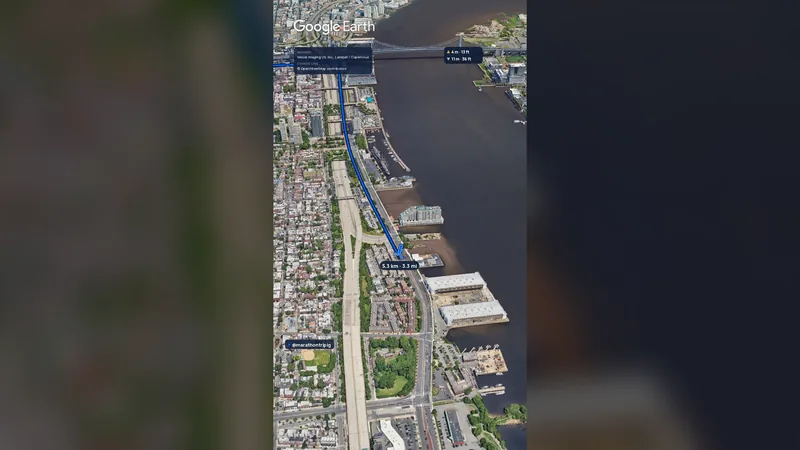 Imagery: Google Earth1:15 film
Philadelphia, United States
Sun 22 Nov42.2 kmClimb 108 m
Climb summed after smoothing the heights over 1 km. The edge is this course's height profile on one scale for every race: 250 m above its lowest point fills it.Sunday 18 April 2027. The marathon starts from 9am in several waves on Wagramer Strasse by the Reichsbrücke, and the cut-off is 3.30pm at the finish on the Ringstrasse by the Burgtheater.
Only through the waiting list. Marathon registration closed on 20 September 2026, the earliest the race has ever sold out. Joining the waiting list is free and guarantees nothing; places returned by 7 March 2027 go to people on it in order, and the EUR 155 entry fee is then charged automatically. There is no lottery and no entry on the day.
Nearly. It climbs about 110 m in all. The road rises gently from about km 5 to the high point, 210 m, at km 19.0 on Mariahilfer Strasse, then falls to its low point, 156 m, at km 33.6 in the Prater. The last 8.6 km climb 21 m back up to the Ringstrasse, and the finish is 6 m higher than the start.
3.30pm on race day. The start runs in waves from 9am, and no intermediate cut-off points are published. Official sweep runners run at the back of the field to the finish.
By the U1 underground. Alte Donau is the station for the rear blocks and for anyone dropping a bag; Kaisermühlen/Vienna International Centre serves the front blocks without a bag. In 2026 the U1 ran every two and a half minutes on race morning, and the race number was a ticket on all Wiener Linien public transport from 2 hours before to 6 hours after your start.
Yes. The bag drop costs EUR 3 and must be booked in your registration account by 12 March 2027; without a booking there is no drop-off and no later booking. Bags go in at the expo on 16 or 17 April 2027 or at the start between 7am and 8.30am, and come back in the finish area until 4.30pm.
Yes. Official pacemakers run for 3:00, 3:15, 3:30, 3:45, 4:00, 4:15, 4:30 and 4:45.
On the Ringstrasse between the Burgtheater and the Rathausplatz, in the first district. The Medal Plaza is on the Rathausplatz.
Entry is through the organiser. Entry fee: €155 (for the 2027 race). Entry details on the organiser’s site
Start: Wagramer Strasse / Reichsbruecke.
The first Vienna City Marathon was run on 25 March 1984 with 794 competitors. It is now Austria’s largest road running event and the country’s only World Athletics Elite Label race. The 2020 race was cancelled because of the coronavirus pandemic and the 2021 race was moved to September.
The weekend keeps growing. In 2026 it drew 49,000 registrations across all its races, up from 46,000 in 2025, with 13,000 in the marathon and 14,000 in the half. For 2027 the half marathon sold out on 2 September 2026 and the marathon on 20 September, the earliest either has ever filled. ORF reported a record 15,000 places taken in the marathon, about 2,000 more than the year before, which puts it at the top of the weekend’s races by size, and about 50,000 runners expected in all.
The men’s course record is 2:05:08, by Samwel Mailu of Kenya in 2023. The women’s record fell in 2026, when Tigist Gezahagn of Ethiopia, a visually impaired runner who has won Paralympic gold over 1,500 m, ran 2:20:06 and took 53 seconds off the 2:20:59 Vibian Chepkirui set in 2022. Fanny Kiprotich of Kenya won the 2026 men’s race in 2:06:53.
Checked against these sources on .